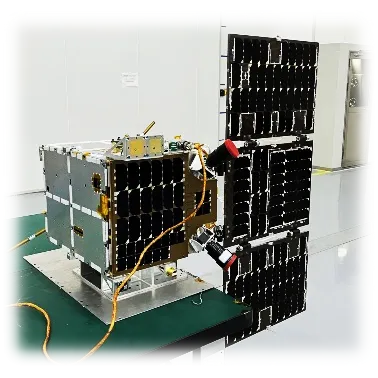
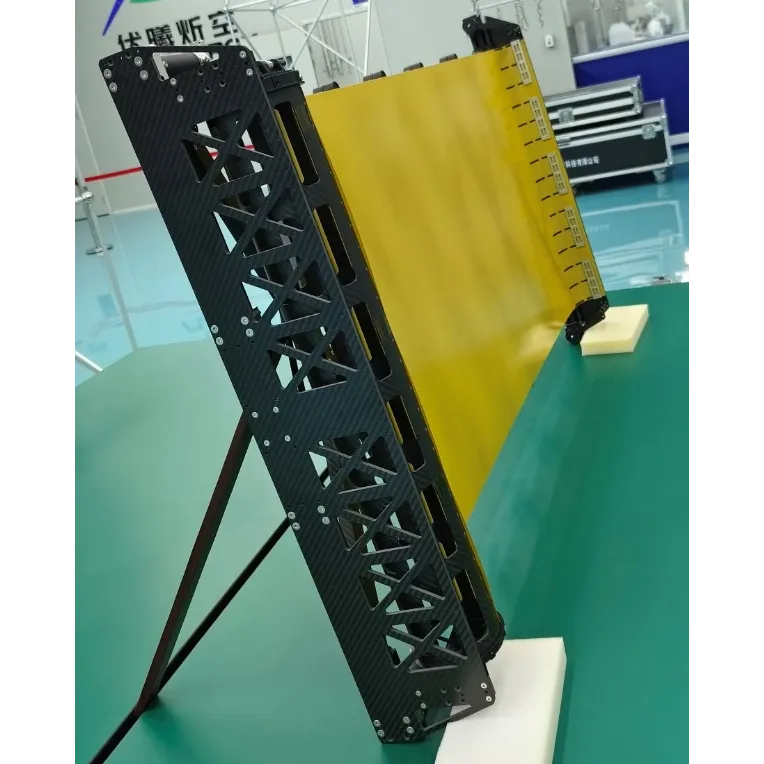
Image not available
Other industries
HighPrecision CMOS Focal Plane Suppliers and Factory in China
Looking for high-precision CMOS Focal Plane sensors? As leading China suppliers and a certified factory, we provide space-grade MOS imaging solutions for satellites and UAVs with ultra-low noise and multi-spectral capabilities.
SupplierAstralink Science and Technology Co., Ltd.www.space-navi.com
Source categories
About this product
Product information from the supplier.
The CMOS Focal Plane is a state-of-the-art imaging sensor engineered for high-precision optical applications in the aerospace and satellite industries. Utilizing a sophisticated metal-oxide-semiconductor (MOS) structure, this technology ensures superior sensitivity, ultra-low noise, and a high dynamic range, making it an indispensable component for critical missions requiring pinpoint accuracy.
Specifically optimized for remote sensing, astronomical observation, and high-resolution satellite imaging, the CMOS Focal Plane delivers exceptional performance across a broad spectral range. By integrating high-speed readout capabilities with optimized power consumption, it significantly enhances operational efficiency and image clarity for UAVs and orbital spacecraft.
Detailed Parameters
| Imaging Mode | Push-broom, Noctilucent, Video Imaging | Sensor Type | Single/Triple CMOS Chip Sensors |
|---|---|---|---|
| Pixel Size | 4.25μm to 5.5μm (Model Dependent) | Pixel Scale | Up to 12000×5000 (High Resolution) |
| Spectral Band | P/R/G/B/IR/Red edge (Up to 20 Bands) | Power Consumption | ≤ 8.3W to ≤ 25W |
| Device Weight | 0.5kg to 1.5kg | Supply Cycle | 3 to 8 Months |
| Structure | Metal-Oxide-Semiconductor (MOS) | Application | Remote Sensing & Space Observation |
Key Advantages
Superior Sensitivity
Advanced MOS structure minimizes noise and maximizes photon capture for clearer images in low-light environments.
High-Speed Readout
Rapid data processing allows for real-time video imaging and high-throughput push-broom scanning.
Wide Spectral Range
Supports diverse bands including IR and Red edge, essential for multi-spectral remote sensing analysis.
High Dynamic Range
Captures exceptional detail in both the brightest and darkest areas of a scene without saturation.
Precision Resolution
With pixel scales up to 12000×5000, it provides unmatched clarity for satellite-based observations.
Low Power Design
Optimized energy consumption ensures long-term stability for power-constrained space missions.
Product Gallery
Management Platforms
Integration Support
Seamless integration into satellite components and UAV optical payloads.
Calibration Services
Professional spectral and geometric calibration for high-precision data accuracy.
Thermal Management
Advanced heat dissipation control to maintain sensor stability in extreme space temperatures.
Data Interface
High-speed data transmission protocols for real-time satellite-to-ground communication.
Quality Assurance
Rigorous space-grade testing including vacuum and vibration simulation.
Lifecycle Tracking
Comprehensive documentation and tracking from fabrication to orbital deployment.
Investment Return Comparison
| Performance Metric | Standard CMOS Sensor | Advanced MOS Focal Plane |
|---|---|---|
| Signal-to-Noise Ratio | Moderate | Ultra-High |
| Power Efficiency | Standard Consumption | Optimized Low-Power |
| Spectral Versatility | Limited Bands | Multi-Spectral (20 Bands) |
| Imaging Speed | Standard Readout | High-Speed Real-time |
| Space Durability | Industrial Grade | Space-Level Certified |
Frequently Asked Questions
Q: What is the primary application of the CMOS Focal Plane in aerospace?
It is primarily used for high-resolution remote sensing, satellite-based astronomical observation, and precision imaging for UAVs, providing critical data for earth observation and deep space exploration.
Q: How does the push-broom imaging mode benefit satellite data?
Push-broom imaging allows the sensor to capture continuous strips of the earth's surface as the satellite moves, enabling high-resolution mapping with exceptional geometric consistency.
Q: Can this sensor handle the extreme temperature variations of space?
Yes, the MOS structure is engineered for space-level stability, ensuring reliable performance and low noise across the extreme thermal gradients found in orbital environments.
Q: What is the significance of the 20 spectral bands offered?
Multiple spectral bands allow for precise material identification and environmental analysis, such as detecting vegetation health (Red edge) or atmospheric composition.
Q: What is the typical lead time for customized focal plane arrays?
Depending on the specific model and requirements, the supply cycle typically ranges from 3 to 8 months, including rigorous quality testing and calibration.
Q: How does the power consumption impact satellite battery life?
With consumption as low as 8.3W for certain models, the CMOS Focal Plane minimizes the load on the Power Sub System, extending the operational lifespan of the satellite.
Ready to Elevate Your Space Imaging Capabilities?
Contact UsMore from this supplier
Astralink Science and Technology Co., Ltd.