Image not available
Other industries
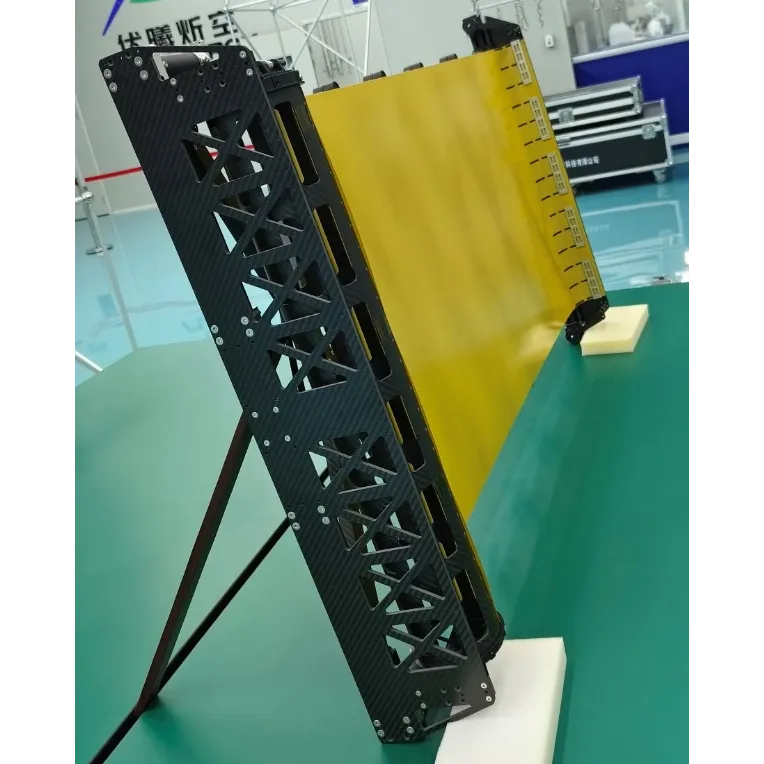
HighPrecision Folding and Unfolding Mechanism China Factory Suppliers
Leading China factory and suppliers of high-precision folding and unfolding mechanisms for satellites and UAVs. Our aerospace-grade solutions feature sequential multifolding and low-impact cushion release for maximum reliability.
SupplierAstralink Science and Technology Co., Ltd.www.space-navi.com
Source categories
About this product
Product information from the supplier.
The Folding and Unfolding Mechanism is a high-precision aerospace engineering solution designed for critical space-saving and dynamic structural adjustments. Specially engineered for the rigorous demands of satellite deployment and UAV systems, this mechanism ensures a seamless transition from a compact launch configuration to a fully operational extended state with absolute reliability.
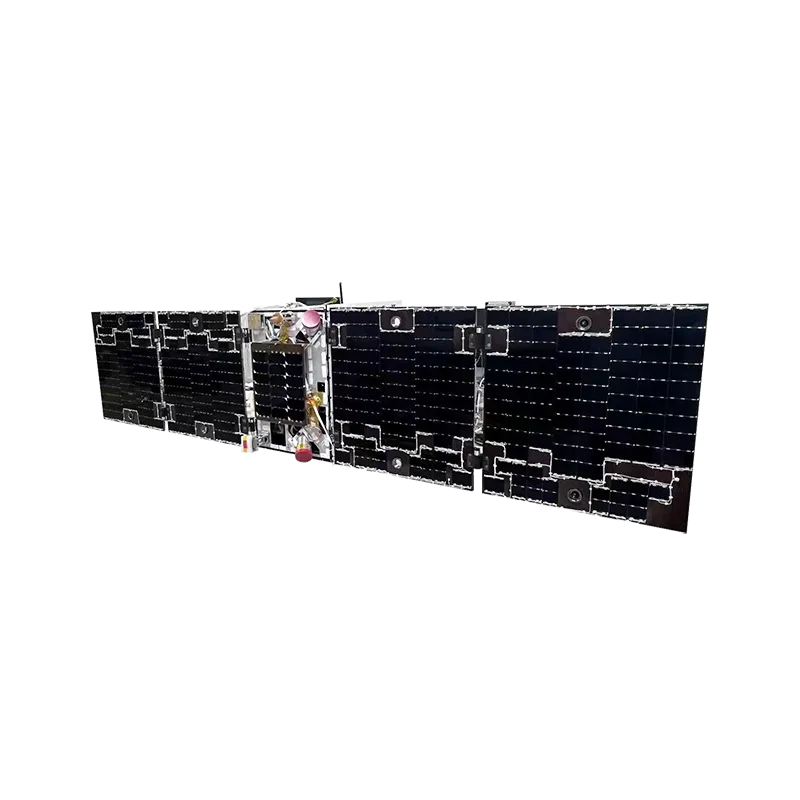
Integrating advanced sequential multifold technology, our system optimizes space utilization for solar arrays and aerospace components. By combining low-impact cushion releases with versatile multi-angle deployment capabilities, it provides the stability and precision required to protect sensitive solar cells while achieving exact positioning in the vacuum of space.
Detailed Parameters
| Deployment Logic | Primary & Secondary Sequential Multifolding | Deployment Angles | 90°, 120°, 135°, 180° |
|---|---|---|---|
| Mechanism Type | Automated & Manual Hybrid | Core Components | High-Strength Hinges & Lockable Joints |
| Protection System | Low-Impact Cushion Release | Application Scope | Solar Arrays, Space-Level Components |
| Operational Life | High-Cycle Durability Optimized | Structural Integrity | Space-Grade Reinforced Material |
| Control Mode | Time-Sequential Triggering | Maintenance Need | Low-Maintenance Industrial Design |
Key Advantages
Cell Protection
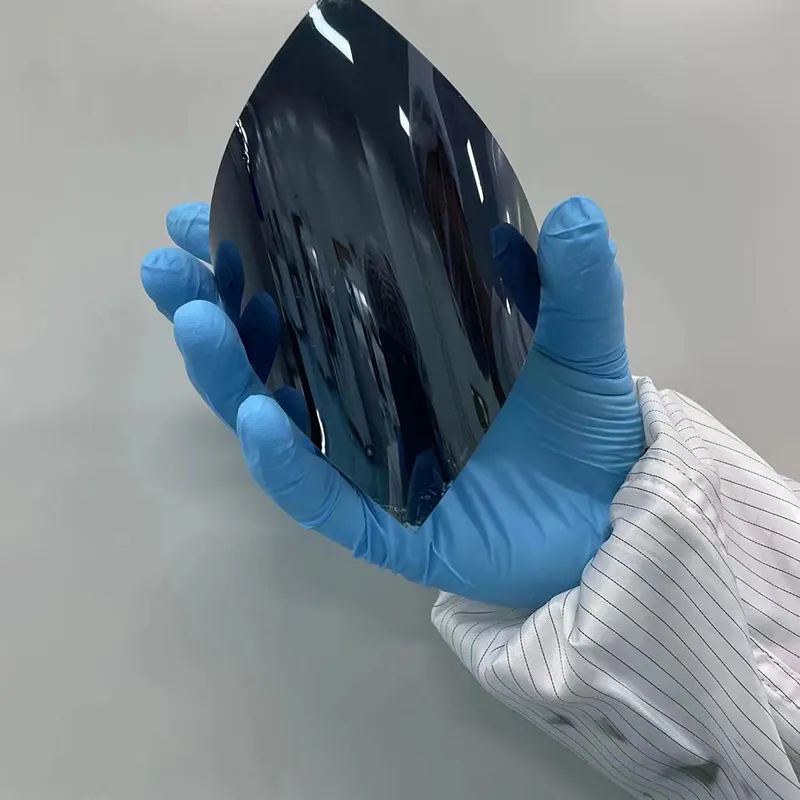
Equipped with low-impact cushion releases specifically designed to safeguard fragile solar cells during rapid deployment.
Time-Sequential Motion
Sophisticated secondary time-sequential unfolding allows for precise, controlled movements based on user requirements.
Space Optimization
Maximizes volume utilization during transport and launch through efficient multifold compression techniques.
Multi-Angle Versatility
Supports diverse deployment angles including 90° to 180°, enabling flexible orientation of solar wings.
High Reliability
Optimized mechanical design ensures smooth, repeated transitions without compromise to structural performance.
Operational Flexibility
Capable of both manual and automated operation to fit a wide range of industrial and aerospace applications.
Product Gallery
Management Platforms
Payload Integration
Seamlessly integrates with satellite components and UAV frames for maximum spatial efficiency.
Deployment Control
Precision management of folding sequences via automated triggers and timing controllers.
Stress Monitoring
Real-time structural integrity verification during the unfolding cycle to prevent mechanical failure.
Angle Calibration
Dynamic adjustment of deployment angles to optimize energy capture for solar arrays.
Component Sync
Synchronized movement across multiple folding axes for balanced structural expansion.
Cycle Analytics
Tracking and analyzing repeated movement cycles to ensure long-term durability.
Investment Return Comparison
| Performance Metric | Standard Mechanisms | Our Advanced Mechanism |
|---|---|---|
| Space Efficiency | Moderate | Maximum (Multifold) |
| Deployment Shock | High Risk | Low (Cushioned) |
| Angle Precision | Fixed / Limited | Dynamic (90°-180°) |
| Maintenance Cost | Periodic/High | Low/Minimal |
| Mission Reliability | Standard | Aerospace Grade |
Frequently Asked Questions
Q: What makes the sequential multifolding process beneficial for satellites?
Sequential multifolding allows large solar arrays to be packed into extremely small launch volumes and deployed in a controlled, step-by-step manner, reducing the risk of entanglement and maximizing space utilization.
Q: How does the low-impact cushion release protect solar cells?
It absorbs the kinetic energy during the final stage of unfolding, preventing harsh mechanical shocks that could crack or degrade sensitive photovoltaic cells.
Q: Can this mechanism be adapted for UAV applications?
Yes, its precision design and ability to switch between manual and automated operation make it ideal for foldable UAV wings and portable sensor arrays.
Q: What are the available deployment angles for the solar wings?
The system is designed for flexibility, supporting critical deployment angles of 90°, 120°, 135°, and 180° to optimize sunlight exposure.
Q: Is the mechanism capable of withstand repeated cycles?
Absolutely. The use of high-strength hinges and reinforced lockable joints ensures the system maintains structural integrity through continuous cycles of movement.
Q: Does the system require extensive maintenance?
No, the mechanical design is optimized for durability and reliability, significantly minimizing the need for extensive maintenance throughout its operational life.
Ready to Optimize Your Aerospace Deployment System?
Contact UsMore from this supplier
Astralink Science and Technology Co., Ltd.