Image not available
Other industries
High Precision Digital Sun Sensor China Suppliers Space Grade Factory
Looking for a reliable Digital Sun Sensor? Our China factory provides space-grade high-precision sensors for satellite attitude determination. As leading suppliers, we offer RS422 digital integration and ultra-low power consumption for LEO and GEO missions.
SupplierAstralink Science and Technology Co., Ltd.www.space-navi.com
Source categories
About this product
Product information from the supplier.
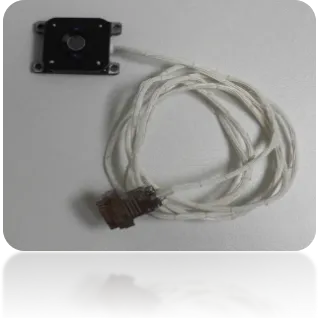
The Digital Sun Sensor is a state-of-the-art, high-precision optical instrument engineered specifically for spacecraft attitude determination. By accurately measuring the angle of the Sun relative to the vehicle's frame, this sensor provides critical orientation data that allows the onboard attitude control system to maintain stability and pointing accuracy, ensuring the success of complex orbital missions.
Designed for reliability in the most demanding environments, the sensor utilizes an advanced array of photodiodes or charge-coupled devices (CCDs) to convert solar light into precise digital signals. Whether deployed in Low Earth Orbit (LEO) or geostationary satellites, its compact footprint and low power consumption make it an ideal choice for optimizing solar panel orientation and enhancing the precision of scientific observations.
Detailed Parameters
| Product Code | CG-DJ-DS-0.5° | Precision | 0.5° |
|---|---|---|---|
| Envelope Size | 48mm × 36mm × 16.9mm | Theoretical FOV | ±60° |
| Weight | 50g | Communication | RS422 |
| Power Consumption | 0.15W | Working Voltage | 5.2V |
| Working Temperature | -30℃ ~ +60℃ | Supply Cycle | 3 months |
Key Advantages
Space-Grade Durability
Engineered to withstand extreme vacuum and temperature fluctuations found in harsh space environments.
Real-Time Feedback
Provides instantaneous solar position data for immediate attitude correction and stability.
High Precision
Achieves an accuracy of 0.5°, critical for scientific instruments and precise pointing missions.
Digital Integration
RS422 communication interface ensures seamless integration with spacecraft control systems.
Compact Design
Ultra-lightweight 50g build minimizes payload mass without compromising performance.
Energy Efficient
Low 0.15W power consumption preserves precious satellite battery life during long missions.
Product Gallery
Management Platforms
Orbit Integration
Seamless compatibility with LEO and GEO satellite bus architectures.
Attitude Control
Direct feedback loop for autonomous spacecraft stabilization systems.
Thermal Management
Optimized to operate within -30℃ to +60℃ thermal ranges.
Power Optimization
Integrated with the Power Sub System to minimize operational overhead.
Solar Alignment
Automated orientation for maximum efficiency of solar arrays.
Data Telemetry
High-speed RS422 data streaming for real-time ground monitoring.
Investment Return Comparison
| Feature | Standard Sun Sensors | Our Digital Sun Sensor |
|---|---|---|
| Pointing Accuracy | 1.0° - 2.0° | 0.5° High Precision |
| Mass Impact | Medium (150g+) | Ultra-Low (50g) |
| Power Draw | 0.5W - 1.2W | Extreme Low (0.15W) |
| Interface | Analog/Simple Digital | Industrial RS422 |
| Reliability | Standard Grade | Space-Level Hardened |
Frequently Asked Questions
Q: What is the primary application of a Digital Sun Sensor in satellite manufacturing?
It is primarily used for attitude determination, allowing the spacecraft to identify its orientation relative to the Sun, which is essential for solar panel alignment and maintaining stability in orbit.
Q: How does the RS422 interface benefit spacecraft communication?
RS422 provides differential signaling, which offers high noise immunity and allows for longer cable runs, making it ideal for the electromagnetic environment of a satellite.
Q: Can this sensor be used in Low Earth Orbit (LEO) missions?
Yes, it is specifically designed for use in both LEO and geostationary satellites, providing the necessary precision and durability for these orbits.
Q: What ensures the sensor's accuracy in harsh space environments?
The use of a specialized array of photodiodes or CCDs combined with a precision-engineered field of view ensures stable and accurate measurements despite external conditions.
Q: What is the typical lead time for procurement?
The standard supply cycle for our Digital Sun Sensors is approximately 3 months from order confirmation to delivery.
Q: How does the sensor handle temperature extremes in space?
The sensor is qualified for a working temperature range of -30℃ to +60℃, ensuring operational consistency during both eclipse and direct sun exposure phases.
Ready to Elevate Your Satellite's Precision?
Contact UsMore from this supplier
Astralink Science and Technology Co., Ltd.