Image not available

Other industries
Magnetic Torque System for LEO Satellites | China Suppliers and Factory
Looking for high-precision Magnetic Torque systems for LEO satellites? As leading China suppliers and a professional factory, we provide fuel-free attitude control solutions with ultra-low power consumption and high reliability.
SupplierAstralink Science and Technology Co., Ltd.www.space-navi.com
Source categories
About this product
Product information from the supplier.
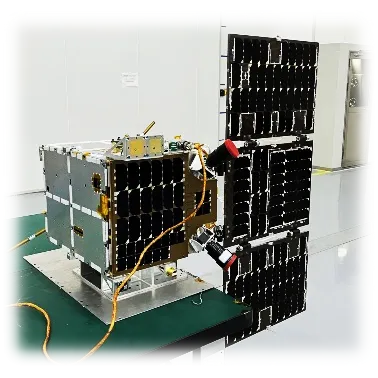
The Magnetic Torque system represents a pinnacle of attitude control technology for advanced space applications, specifically engineered for satellites and spacecraft operating in Low Earth Orbit (LEO). By strategically interacting with the Earth's natural magnetic field via high-precision magnetorquers, this system provides a sophisticated method for orienting and stabilizing spacecraft without the reliance on traditional consumables.
Designed for maximum reliability and efficiency, our Magnetic Torque solutions eliminate the need for chemical propellants or complex mechanical moving parts. This makes them an ideal choice for small satellites and mission-critical aerospace platforms that demand precision orientation, reduced mass, and high power efficiency, ensuring long-term operational stability in the harsh environment of space.
Detailed Parameters
| Product Codes | CG-DJ-CJ-1, CG-DJ-CJ-5, CG-DJ-CJ-15, CG-DJ-CJ-100 | Weight Range | 0.07kg to 4kg |
|---|---|---|---|
| Rated Output Moment | 1Am2 / 5Am2 / 15Am2 / 100Am2 | Residual Moment | 0.01Am2 to 0.1Am2 |
| Time Constant | 50ms to 160ms (Magnetization/Demagnetization) | Power Consumption | 0.3W to 2.7W |
| Envelope Size (max) | 630×80×74 mm | Envelope Size (min) | 138×32×17 mm |
| Supply Cycle | 4 to 5 Months | Application Orbit | Low Earth Orbit (LEO) |
Key Advantages
Fuel-Free Operation
Utilizes Earth's magnetic field to generate torque, eliminating the need for chemical propellants and extending mission life.
Rapid Response
Fast magnetization and demagnetization time constants as low as 50ms for agile attitude adjustments.
Ultra-Low Power
Highly energy-efficient design with power consumption ranging from only 0.3W to 2.7W.
Mechanical Simplicity
No moving parts involved, significantly reducing the risk of mechanical failure in vacuum environments.
Lightweight Design
Compact footprints starting from 0.07kg, minimizing the launch mass of small satellite constellations.
System Redundancy
Perfectly complements reaction wheels and gyroscopes to provide fail-safe, fine-tuned orientation control.
Product Gallery
Management Platforms
Precision Integration
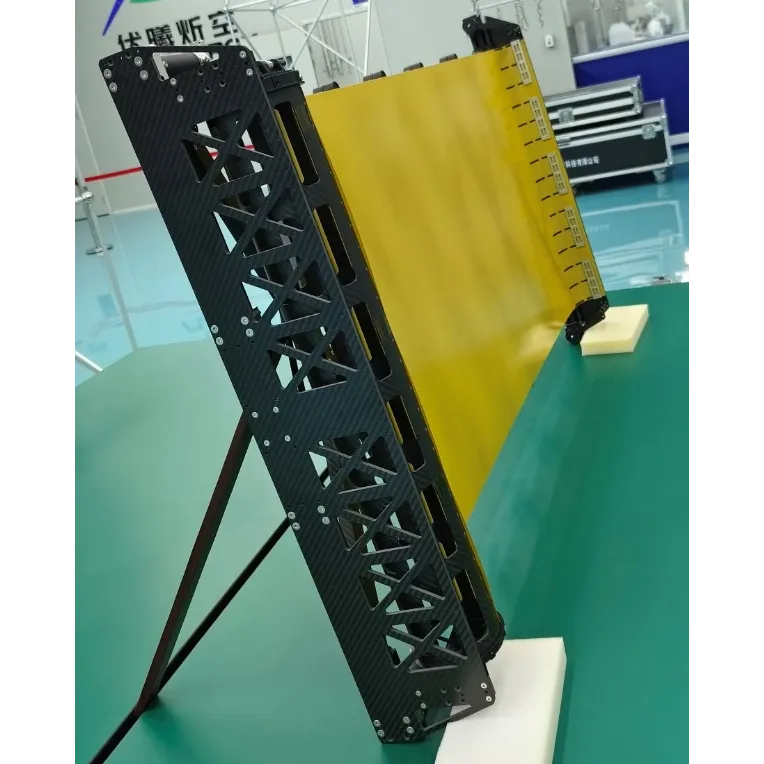
Seamlessly fits into satellite structures for optimal magnetic interaction.
Attitude Control
Advanced torque generation for precise spacecraft orientation management.
LEO Optimization
Specifically tuned for the magnetic field strength of Low Earth Orbit.
Thermal Stability
Engineered to maintain performance across extreme space temperature gradients.
Mass Efficiency
Optimized weight-to-torque ratios for diverse payload requirements.
Hybrid Compatibility
Works in tandem with CMGs and reaction wheels for total redundancy.
Investment Return Comparison
| Metric | Traditional Thrusters | Magnetic Torque System |
|---|---|---|
| Fuel Consumption | High (Consumable) | Zero (Field-based) |
| Operational Life | Limited by Fuel | Virtually Unlimited |
| Mechanical Risk | High (Valves/Pumps) | Ultra-Low (Solid State) |
| System Weight | Heavy (Tanks/Fuel) | Ultra-Lightweight |
| Maintenance | Complex/Impossible | Maintenance-Free |
Frequently Asked Questions
Q: How does the Magnetic Torque system differ from reaction wheels?
While reaction wheels use internal momentum for fast adjustments, Magnetic Torque systems interact with the Earth's magnetic field. They are often used together to "desaturate" reaction wheels without using fuel.
Q: Is the Magnetic Torque system effective in High Earth Orbit (HEO)?
It is most effective in Low Earth Orbit (LEO) where the Earth's magnetic field is strongest. Effectiveness decreases as the distance from the Earth increases.
Q: What are the typical lead times for delivery?
Depending on the model (CG-DJ-CJ series), the supply cycle generally ranges between 4 to 5 months.
Q: Can these systems be customized for specific satellite sizes?
Yes, we offer a range of models from the lightweight CG-DJ-CJ-1 (0.07kg) to the high-output CG-DJ-CJ-100 (4kg) to suit various spacecraft scales.
Q: What is the role of the "Time Constant" in magnetization?
The time constant indicates how quickly the coil can reach its rated magnetic moment or return to its residual state, affecting the responsiveness of the attitude control.
Q: How does power consumption impact satellite battery life?
With power consumption as low as 0.3W to 2.7W, our systems are designed to minimize the drain on the spacecraft's power subsystem, maximizing mission longevity.
Ready to Enhance Your Spacecraft Attitude Control?
Contact UsMore from this supplier
Astralink Science and Technology Co., Ltd.