
Image not available
Household goods
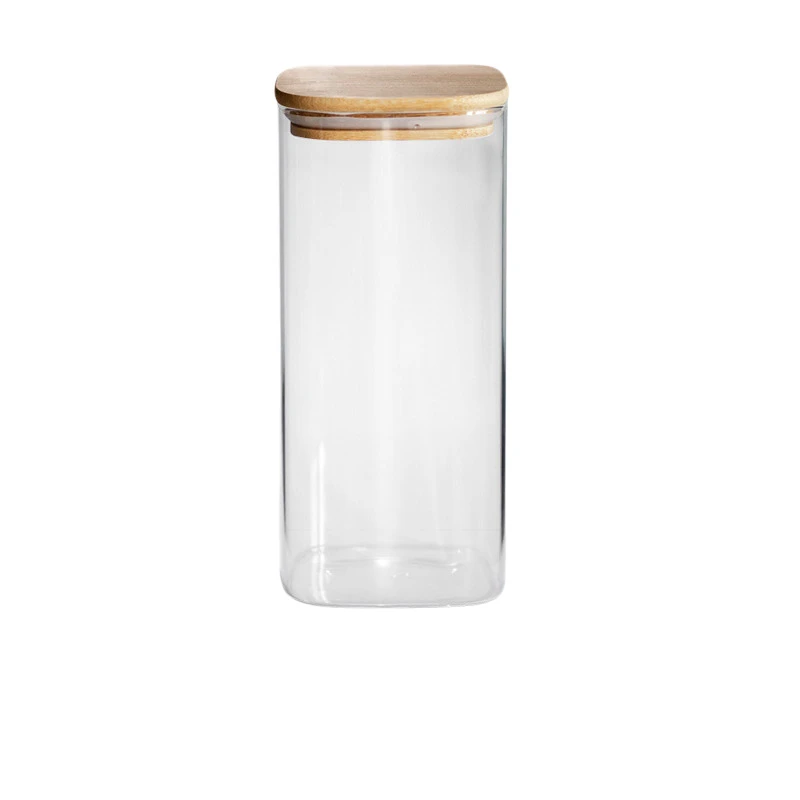
Square Glass Food Storage Jar with Bamboo Lid
Product Brief Introduction: ◆Glass: 100% high borosilicate glass. ◆ Lid: 100% bamboo material with silicone gasket, enable the jar airtight & Leakproof. ◆ Available For: Microwave oven, freezer, dishwasher available. ◆ Usage Temperature: -20℃/68℉ ~ 150 ℃/302℉, 120℃/248℉ thermal shock. ◆ Unique Characteristics: Lower expansion rate/Higher temperature resistances & Strength Higher hardness & Transmittance / Higher che…
SupplierHebei Yinto Import and Export Trading Co., Ltd.www.yintoglass.com
Source categories
About this product
Product information from the supplier.
Features of Heat-resistant High Borosilicate Glass:
--High borosilicate glass (also known as hard glass) is a special glass material with
lower expansion rate, higher chemical stability/temperature resistance/strength/hardness/smoothness and transmittance.
-- The material is a very good choice for storing food due to its superior EXCELLENT CHEMICAL STABILITY feature.
-- So the corrosion & acid resistance of high borosilicate glass is excellent.
-- Glass has no risk of self-explosion, 120℃ thermal shock. No shattering & cracking when alternating from freezen to hot.
--Therefore, it does not contain toxic substances, and the high temperature resistance and acid resistance of borosilicate make it difficult to precipitate harmful substances in daily use.
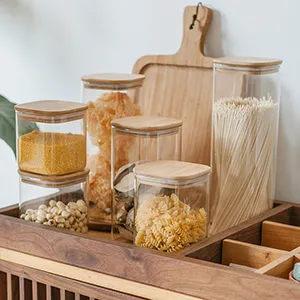
Product Specifications:
| Name | Square Glass Storage Jar with Bamboo Lid | |||||
| Shape&Capacity | Rectangle: 800ml/1000ml/1200ml/1600ml/2000ml/2400ml | |||||
| MOQ | 2000pcs | |||||
| Feature | Premium high borosilicate glass material, heat-resistant, high thermal shock | |||||
| Usable temperature rage | -20℃/-68℉ ~ 150℃/302℉ | |||||
| Packing | open stock / color box /color insert /white carton per piece | |||||
| Logo | Displayed as required | |||||
| Customizable part | Glass jar height & thickness & size | |||||
| Cerfiticate | FDA, LFGB, BPA FREE, LEAD FREE, | |||||
Wholesale Glass Containers for Retailers and Food Packaging Businesses
Choosing wholesale glass containers is an effective way for retailers, food brands, distributors, and packaging companies to secure reliable packaging while managing purchasing costs. Glass containers are widely used for sauces, jams, honey, spices, beverages, pickles, and other food products. Their transparent appearance allows customers to see the contents clearly, while their versatile designs support different product categories and brand positioning strategies.
For businesses purchasing packaging in large quantities, selecting the right glass containers involves more than comparing prices. Capacity, shape, opening diameter, wall thickness, and closure compatibility all influence product performance. Small glass jars may be suitable for specialty foods, samples, and gift sets, while larger containers can serve family-size products or commercial food storage requirements. Choosing appropriate specifications helps businesses improve filling efficiency, simplify storage, and create a consistent presentation across their product lines.
Another advantage of glass packaging is its compatibility with different branding approaches. Businesses can choose clear, amber, or other available glass finishes depending on the product and desired appearance. Custom labels, printed designs, and suitable closures can further strengthen brand recognition. For premium food products, well-designed glass packaging can communicate quality and help products stand out on crowded retail shelves.
When evaluating wholesale suppliers, buyers should consider product consistency, minimum order quantities, sample availability, and delivery arrangements. Protective packaging is particularly important because glass products can break during handling and transportation. Businesses should also confirm whether the containers meet the applicable food-contact requirements for their intended markets and uses.
Building a long-term relationship with a dependable supplier can make repeat purchasing easier and help maintain consistent packaging specifications. Whether serving supermarkets, specialty food stores, restaurants, or private-label brands, wholesale glass containers provide flexible packaging options for businesses seeking practical and attractive solutions.
Glass Container Factory Offering Customized Manufacturing Solutions
Working directly with a glass container factory can give importers, wholesalers, food manufacturers, and brand owners greater control over product specifications and purchasing arrangements. Direct communication with a manufacturer helps buyers discuss design requirements, confirm production details, evaluate samples, and coordinate orders more efficiently. For businesses with ongoing packaging needs, this approach can also support better planning and more consistent product availability.
A professional manufacturer may offer glass containers in different shapes, capacities, colors, and finishes. Standard designs are often suitable for businesses that need practical packaging without investing in new molds. Companies looking to develop distinctive packaging may explore customized shapes, embossed logos, or other branding options, depending on the factory's equipment and production capabilities. These solutions can help businesses create packaging that reflects their brand identity and product positioning.
Quality control is another important consideration when selecting a manufacturing partner. Buyers should ask about inspections covering dimensions, appearance, surface defects, and other relevant product specifications. Consistency between production batches matters because variations in container dimensions or openings may affect filling equipment, closure fit, labeling, and packaging operations. Requesting samples before confirming a large order can help buyers evaluate the product and identify potential issues early.
Food packaging requirements should also be discussed before production. The suitability of a container depends on the intended food, filling process, storage conditions, and applicable regulations. If containers will be used for hot filling, refrigeration, or other specialized applications, buyers should confirm that the selected glass and design are appropriate for those conditions rather than assuming every glass container is suitable.
International buyers should additionally evaluate production lead times, minimum order quantities, export experience, and shipping protection. Glass packaging needs careful handling, so carton design, internal dividers, palletization, and loading arrangements can influence the risk of damage during transit.
By choosing a capable glass container factory, businesses can access suitable standard products or explore customized manufacturing options while developing a more stable packaging supply. Clear specifications, effective communication, and consistent quality checks help establish a productive long-term partnership.
Bulk Glass Food Containers for Efficient Food Storage and Packaging
Purchasing bulk glass food containers can help food manufacturers, restaurants, catering companies, retailers, and private-label brands simplify procurement and maintain consistent packaging across their operations. These containers are suitable for a wide range of applications, including sauces, condiments, jams, honey, pickled vegetables, dry ingredients, and prepared foods. Different sizes and shapes allow businesses to select packaging according to product characteristics, storage needs, and customer preferences.
Container design plays a major role in everyday usability. Wide-mouth glass jars can make filling and removing solid or semi-solid foods more convenient, while containers with narrower openings may be appropriate for certain liquids and pourable products. The capacity should match the intended serving size or retail format. Buyers should also consider whether the container can be stacked, stored efficiently, labeled easily, and handled safely throughout the distribution process.
Closure selection is equally important. Depending on the container design, available options may include screw caps, metal lids, or other compatible closures. A suitable closure helps protect the contents from external contamination and supports the intended storage requirements. However, the actual sealing performance depends on the complete packaging system, including the container finish, closure specifications, filling process, and quality control procedures.
For food businesses, safety and product compatibility must remain priorities. Buyers should confirm that the containers are suitable for their intended food-contact applications and comply with relevant market requirements. Special attention is necessary when packaging hot foods, acidic products, or items requiring particular storage conditions. Glass containers should not be exposed to sudden temperature changes unless they are specifically designed for the intended conditions.
Ordering in bulk can simplify inventory management and reduce the administrative work associated with frequent small purchases. Nevertheless, businesses should compare the total cost rather than focusing exclusively on the unit price. Freight charges, protective packaging, storage space, breakage rates, and minimum order quantities can all influence the final purchasing decision. Forecasting demand and coordinating deliveries with production schedules can help avoid excessive inventory or unexpected shortages.
Before placing a large order, buyers should review samples, confirm dimensions and closure compatibility, and establish clear acceptance criteria with the supplier. These steps can reduce packaging inconsistencies and improve operational efficiency.
With appropriate product selection and dependable supply arrangements, bulk glass food containers can support consistent food packaging, organized storage, and professional product presentation. For businesses expanding their product ranges or serving multiple distribution channels, choosing the right container specifications can contribute to a more efficient and scalable packaging strategy.
More from this supplier
Hebei Yinto Import and Export Trading Co., Ltd.


