
Image not available
Household goods
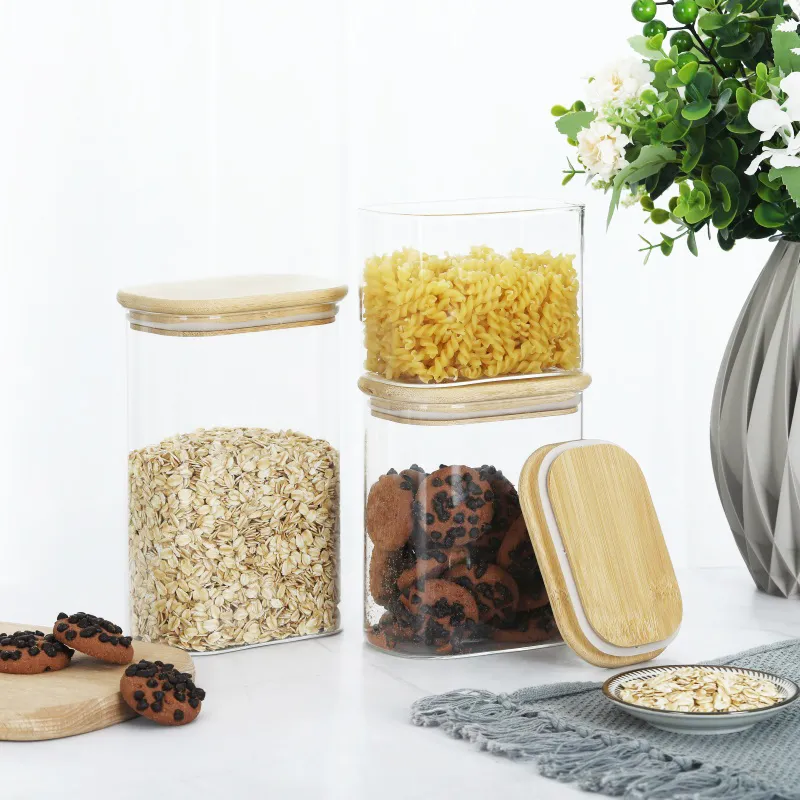
Rectangle Airtight Glass Jar, Natural Bamboo Lid Food Storage Container, Cabinet Organization, Food grade BPA FREE
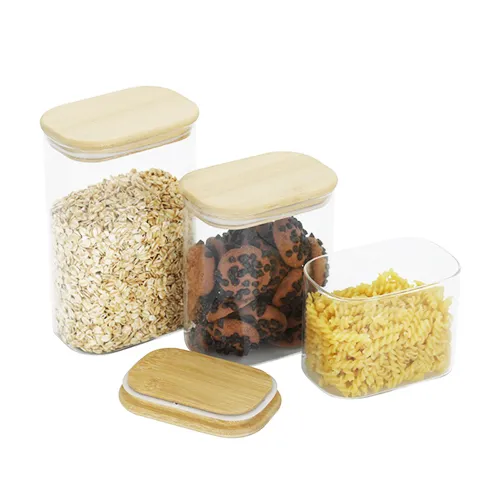
YINTO GLASSProduct Name: Rectangle Airtight Glass Jar with spoon Matetial: High Borosilicate Glass, Bamboo, SiliconeFeatures: Airtight, Dishwasher Safe(without lid)Storage Suggestion: Dry FoodSize/Volume: 700ml/1.0L/1.4L
SupplierHebei Yinto Import and Export Trading Co., Ltd.www.yintoglass.com
Source categories
About this product
Product information from the supplier.
About This Item
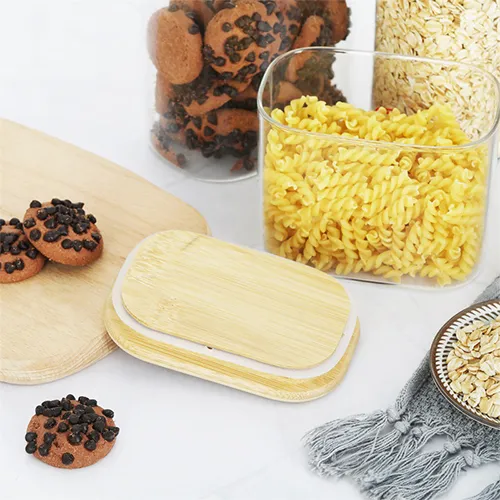
This product is a food storage jar made of high borosilicate glass with natural bamboo wood. The lid is equipped with a sealing ring to provide moisture-proof and leak-proof functions.
High borosilicate glass features higher transparency and smoothness, as well as corrosion resistance, high temperature resistance and friction resistance. Unlike soda-lime glass, it is a high-quality glass material. The lid is pressed from natural bamboo wood, adding an element of nature to daily life.
This product has a rectangular shape, offering an extra choice compared with square and round jars.
The glass body (excluding the lid) is safe for use in dishwashers, microwaves and refrigerators. It complies with international FDA and LFGB standards, is BPA-free, safe and healthy, and can be used with confidence.
Product Specifications:
| Name | Rectagle Glass Storage Jar with Pressure Bamboo Lid | |||||
| Shape&Capacity | Rectangle: 700ml/1000ml/1400ml | |||||
| MOQ | 2000pcs | |||||
| Feature | Premium high borosilicate glass material, heat-resistant, high thermal shock | |||||
| Usable temperature rage | -20℃/-68℉ ~ 150℃/302℉ | |||||
| Packing | open stock / color box /color insert /white carton per piece | |||||
| Logo | Displayed as required | |||||
| Customizable part | Glass jar height | |||||
| Cerfiticate | FDA, LFGB, BPA FREE, LEAD FREE, | |||||
Glass Food Container with Silicone Sleeve for Safe and Convenient Food Storage
A glass food container with silicone sleeve combines the practical benefits of glass with the added grip and protective features of a flexible silicone exterior. This design is suitable for consumers who want reusable food storage products that are functional, attractive, and convenient for everyday use. It can serve a variety of applications, including storing prepared meals, carrying snacks, organizing ingredients, and packing food for work or school.
Glass is widely used in food storage because its smooth, nonporous surface is generally easy to clean and does not readily retain food odors or stains. Its transparency also allows users to identify the contents without opening the container, making it easier to organize refrigerators, kitchen cabinets, and meal preparation areas. Depending on the design, glass containers can accommodate different food types, from fresh fruit and vegetables to leftovers and dry ingredients.
The silicone sleeve adds another layer of functionality. It can improve grip, make the container more comfortable to hold, and help protect the glass against minor impacts and surface scratches. Available in different colors, textures, and coverage styles, the sleeve also provides opportunities for product differentiation. Kitchenware brands can select coordinated colors or customized designs to create collections that match their target markets.
When choosing a glass food container with silicone sleeve, buyers should consider container capacity, lid compatibility, sleeve fit, and ease of cleaning. A removable sleeve may make it easier to clean the glass surface thoroughly, while a well-fitted design can improve handling during daily use. Buyers should also verify whether the container and its components are suitable for refrigeration, microwave use, or dishwasher cleaning, since these capabilities vary by product.
Although silicone sleeves can provide additional protection, they cannot make glass completely shatterproof. Appropriate packaging, careful handling, and clear product instructions remain important. For commercial buyers, evaluating glass thickness, silicone quality, dimensional consistency, and food-contact compliance can help ensure the product meets its intended requirements.
For retailers, importers, and private-label brands, this combination of materials offers opportunities to develop reusable kitchenware with practical features and appealing designs. By selecting suitable specifications and reliable manufacturing partners, businesses can provide glass food storage products that balance convenience, durability, and visual appeal.
Glass Food Container Exporter Supporting International Wholesale Buyers
Choosing a reliable glass food container exporter is an important step for importers, distributors, supermarket suppliers, and kitchenware brands sourcing products for international markets. Export-oriented suppliers help coordinate product selection, order requirements, packaging arrangements, and shipment preparation, making it easier for overseas buyers to manage their procurement processes.
Glass food containers are available in a wide range of capacities, shapes, and configurations. Common options include containers for meal preparation, food storage jars, containers with airtight lids, and products designed for specific kitchen applications. Depending on the supplier's product range, buyers may also find glass containers with silicone sleeves or other accessories. Reviewing the available specifications helps businesses select products that match local consumer preferences and distribution requirements.
Quality consistency is especially important when importing glass products. Differences in dimensions, lid fit, surface finish, or material quality can affect usability and customer satisfaction. Before placing a large order, buyers should request samples where possible and confirm the product specifications in writing. They should also ask about the supplier's inspection procedures, packaging standards, and methods for managing defective or damaged products.
Transportation requires additional planning because glass is fragile. Suitable cartons, internal dividers, protective materials, and secure pallet arrangements can help reduce the risk of breakage during handling and transit. Buyers should also clarify carton quantities, gross and net weights, shipping marks, and loading arrangements to support warehouse planning and freight calculations.
For international trade, documentation and regulatory requirements must be considered as well. Depending on the destination market and the product's intended use, importers may need relevant commercial documents and evidence of compliance with applicable food-contact requirements. Buyers should confirm which documents are available and determine whether additional testing or certification is required for their particular market. No single set of documents automatically guarantees compliance in every country.
Communication is another factor in successful export cooperation. Clear agreements covering minimum order quantities, production lead times, payment terms, shipping responsibilities, and inspection standards can help prevent misunderstandings. Regular updates during production and shipment preparation are particularly valuable for businesses managing seasonal promotions or scheduled product launches.
Working with an experienced glass food container exporter can help overseas buyers coordinate sourcing and logistics more efficiently. By evaluating product quality, export experience, communication, and packaging protection together, importers can establish more dependable supply arrangements and better serve their customers.
OEM Glass Food Containers for Customized Branding and Product Development
OEM glass food containers offer businesses an opportunity to develop products according to their own specifications and brand positioning. OEM manufacturing is particularly useful for kitchenware brands, retailers, wholesalers, and distributors that want to build a distinctive product range without operating their own glass manufacturing facilities. Depending on the manufacturer's capabilities, customization may involve container dimensions, shapes, colors, lids, silicone accessories, surface decoration, and retail packaging.
Product development should begin with a clear understanding of the target market. Some brands may prioritize compact containers for individual meal portions, while others may need larger options for family food storage or commercial kitchen use. Buyers should consider how customers will fill, carry, store, open, and clean the containers before finalizing the design. These practical details can influence both product usability and customer satisfaction.
Branding is another important part of OEM production. Depending on available manufacturing processes, customization options may include embossed logos, printed graphics, labels, and branded packaging. For products featuring silicone sleeves, buyers may also explore custom colors or selected textures. These details can help establish a consistent visual identity across different sizes and product categories.
Before production begins, buyers should confirm all essential specifications with the manufacturer. These may include glass dimensions, capacity, material requirements, lid design, sealing performance, sleeve fit, color references, and packaging details. Samples or pre-production approvals can help identify design issues before mass manufacturing. Written specifications are especially valuable for repeat orders because they provide a reference for checking consistency between batches.
Quality assurance should cover the complete product rather than the glass container alone. Lids must fit properly, silicone components should match the approved design, and decorative finishes should meet agreed standards. If the product is intended for food contact, buyers should confirm that the materials and finished product meet the applicable requirements in the destination market. Any claims about heat resistance, airtightness, or special storage performance should be supported by appropriate product specifications and testing.
Commercial considerations also influence OEM project planning. Minimum order quantities, tooling costs, sample charges, production lead times, and packaging expenses can affect the overall investment. Businesses should evaluate these factors alongside expected sales volume and retail pricing. Starting with a focused product range may help brands test market demand before expanding into additional sizes, colors, or accessories.
With clear communication and appropriate quality controls, OEM glass food containers can help businesses create differentiated kitchenware products and strengthen brand recognition. A capable manufacturing partner can support the process from specification confirmation to production and packaging, helping buyers develop products aligned with their commercial goals.
More from this supplier
Hebei Yinto Import and Export Trading Co., Ltd.


