Image not available
Industrial manufacturing
HighPerformance FRP Insulation Tanks China Factory and Suppliers
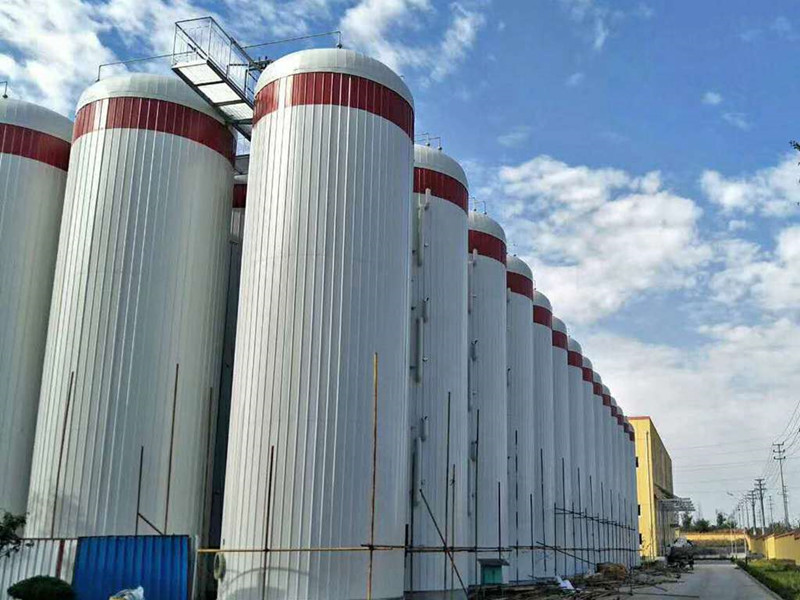
Leading China factory and suppliers of high-performance fiberglass insulation tanks. Engineered with PU foam and FRP for superior thermal stability. Custom sizes from DN500mm to DN25000mm for industrial thermal control.
SupplierNo. 1289, Yingbin South Street, Jizhou District, Hengshui, Hebei, Chinawww.jrain-frp.com
Source categories
About this product
Product information from the supplier.
Our high-performance Insulation Tanks are engineered to provide superior thermal stability and structural integrity, combining the lightweight strength of Fiberglass Reinforced Plastic (FRP) with advanced polyurethane (PU) foam insulation. Designed to prevent condensation and mitigate temperature fluctuations, these tanks are the ideal solution for industries requiring precise thermal control and extreme corrosion resistance.
By integrating a robust FRP outer shell with a customizable PU insulation layer, we deliver a product that outperforms traditional steel or cast iron vessels. Whether used for chemical storage, food fermentation, or industrial heating, our insulation tanks ensure maximum energy efficiency and long-term durability in the most demanding environments.
Detailed Parameters
| Insulation Material | Polyurethane (PU) Foam | Core K-Value (50mm) | 0.5W/m2K |
|---|---|---|---|
| Protection Layer | Fiberglass Reinforced Plastic (FRP) | Standard PU Thickness | 30mm - 50mm |
| Custom PU Thickness | Up to 100mm (0.3W/m2K) | Outer Cover Thickness | 3mm - 5mm |
| Structural Strength | Higher than Steel/Cast Iron | Environmental Resistance | 100% Weather Resistant |
| Compliance Standards | ASME RTP-1 / ASTM D3299 | Other Standards | ASTM D4097 / BS EN 13121 |
Key Advantages
Superior Corrosion Resistance
FRP construction ensures the tank is immune to oxidation and chemical erosion, unlike traditional metal tanks.
Low Maintenance Cost
Extended service life with minimal upkeep requirements due to the inherent durability of composite materials.
Optimized Thermal Keeping
High-grade PU foam prevents heat loss and protects against external temperature fluctuations effectively.
Lightweight Construction
Reduced overall weight compared to steel, simplifying logistics and installation processes.
Factory-Applied Insulation
Insulation is applied at the factory to eliminate additional on-site costs and installation errors.
Versatile Application
Suitable for food brewing, metallurgy, pulp and paper, and various chemical water applications.
Product Gallery


Management Platforms
Custom Design Stage
Tailored engineering specifications to meet your exact thermal and capacity requirements.
Precision Engineering
Strict adherence to ASME and ASTM standards for maximum safety and performance.
Quality Assurance
Rigorous testing of PU foam density and FRP shell strength before shipment.
Swift Delivery
Optimized manufacturing lead-times for both small-scale and large-scale industrial projects.
Logistics Support
Secure packaging and specialized transport for large-size field tanks.
Installation Guidance
Expert technical support accompanying every project from delivery to final commissioning.
Investment Return Comparison
| Feature | FRP Insulation Tank | Traditional Steel Tank |
|---|---|---|
| Corrosion Resistance | Excellent (Inherent) | Poor (Requires Coating) |
| Thermal Efficiency | High (PU Foam Core) | Moderate (External Wrap) |
| Installation Cost | Low (Factory Ready) | High (On-site Insulation) |
| Lifespan | Very Long | Limited by Rust/Corrosion |
| Maintenance Frequency | Minimal | Regular Repainting Needed |
Frequently Asked Questions
Q: What is the difference between 50mm and 100mm PU foam insulation?
The 50mm PU foam layer provides a K-value of 0.5W/m2K, which is sufficient for most industrial needs. Upgrading to 100mm reduces the K-value to 0.3W/m2K, offering significantly higher thermal resistance for extreme temperature environments.
Q: Are these insulation tanks suitable for hazardous chemicals?
Yes, because the inner and outer layers are made of FRP, these tanks offer exceptional corrosion resistance, making them ideal for chemical water, vapor, and other aggressive media.
Q: Which international standards do your tanks follow?
We strictly follow industry-leading standards including ASME RTP-1, ASTM D3299, ASTM D4097, and BS EN 13121 to ensure global quality and safety compliance.
Q: Can the insulation thickness be customized for my project?
Absolutely. While 30-50mm is the general standard, we can adjust the thickness based on your specific thermal requirements, such as increasing it to 100mm for specialized heat medium applications.
Q: How does FRP compare to steel in terms of strength for insulation tanks?
FRP possesses a higher strength-to-weight ratio than steel, cast iron, or standard plastics. When combined with PU insulation, it provides a lightweight yet incredibly robust structure.
Q: What industries typically use these fiberglass insulation tanks?
They are widely used in food fermentation and brewing, hot spring water treatment, city/factory heating systems, metallurgy, and the pulp and paper industry.
Ready to Optimize Your Thermal Storage?
Contact UsMore from this supplier
No. 1289, Yingbin South Street, Jizhou District, Hengshui, Hebei, China