
Image not available

Building materials & furniture
317L Stainless Steel Pipe
<div class="listTxt cME7BUOA automatic" id="cME7BUO"><div class="textLineP" data-companylabeltext="" data-defaultvalue="Introduction" data-source="description"><div class="" data-turn-id-container="ea74a5f0-89ad-4d3b-aaff-3706fe0774f1" data-is-intersecting="true"><section class="text-token-text-primary w-full focus:outline-none has-data-writing-block:pointer-events-none [&:has([data-writing-block])>*]:pointer-events…
SupplierShaanxi Shunchengtian Material Co., Ltd.www.chinasmls.com
Source categories
About this product
Product information from the supplier.
PRODUCT DETAILS
| Product Name | Stainless Steel Pipe |
| Material type | Stainless steel round/square tube/ pipe |
| Items | Square tubes, rectangular tubes, round tubes |
| Thickness | 0.5~75mm |
| Specifications | 1. Outer diameter (pipe): |
| 1) Round tube: 8mm to 680 mm | |
| 2) Square tube: 10x10mm to 300x300mm | |
| 3) Rectangular tube: 10x20mm to 120x180mm | |
| Thickness: 0.16mm to 4.0mm | |
| Surface | Polishing,annealing,pickling,bright |
| Technology | Cold/hot rolling |
| Steel Grade | 304,304L,309S,310S,316,316Ti,317,317L,321,347,347H,304N,316L, 316N,201,202 |
| Standard | ASTM A213,A312,ASTM A269,ASTM A778,ASTM A789,DIN 17456,DIN17457,DIN 17459,JIS G3459,JIS G3463,GOST9941,EN10216, BS3605,GB13296 |
| Tolerance | a) Outer Diameter: +/- 0.05mm |
| b) Thickness: +/- 0.01mm | |
| c) Length: +/- 5mm | |
| Test | Squash test, extended test, water pressure test, crystal rot test, heat |
| Packing | Standard export packing |
| Payment | T/T, L/C, Western Union |
| Delivery time | 10 working days upon receipt of the deposit |
| MOQ | 1 ton |
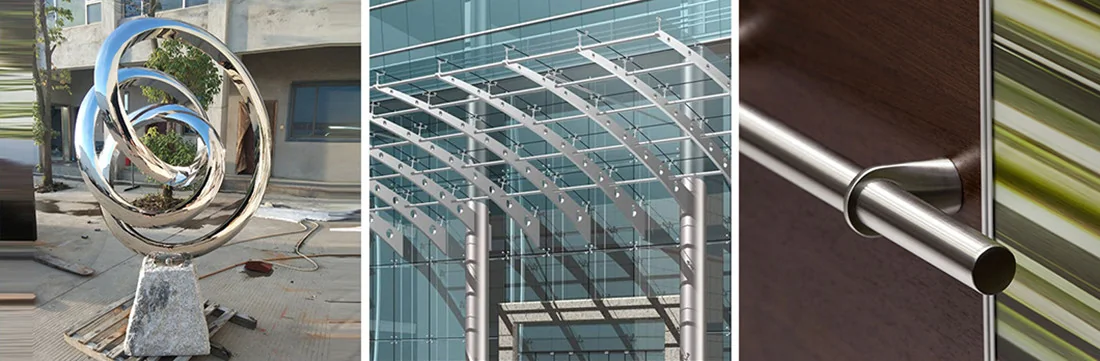
| Application | Pipe: Decoration, Construction, Upholstery, Water supplying… |
| handrail, railing, staircase, door, window, balcony, fence, bench, furniture etc, | |
| Machining | Custom, Kaiping, cutting, pattern |
| Used | Factory, decoration, food |
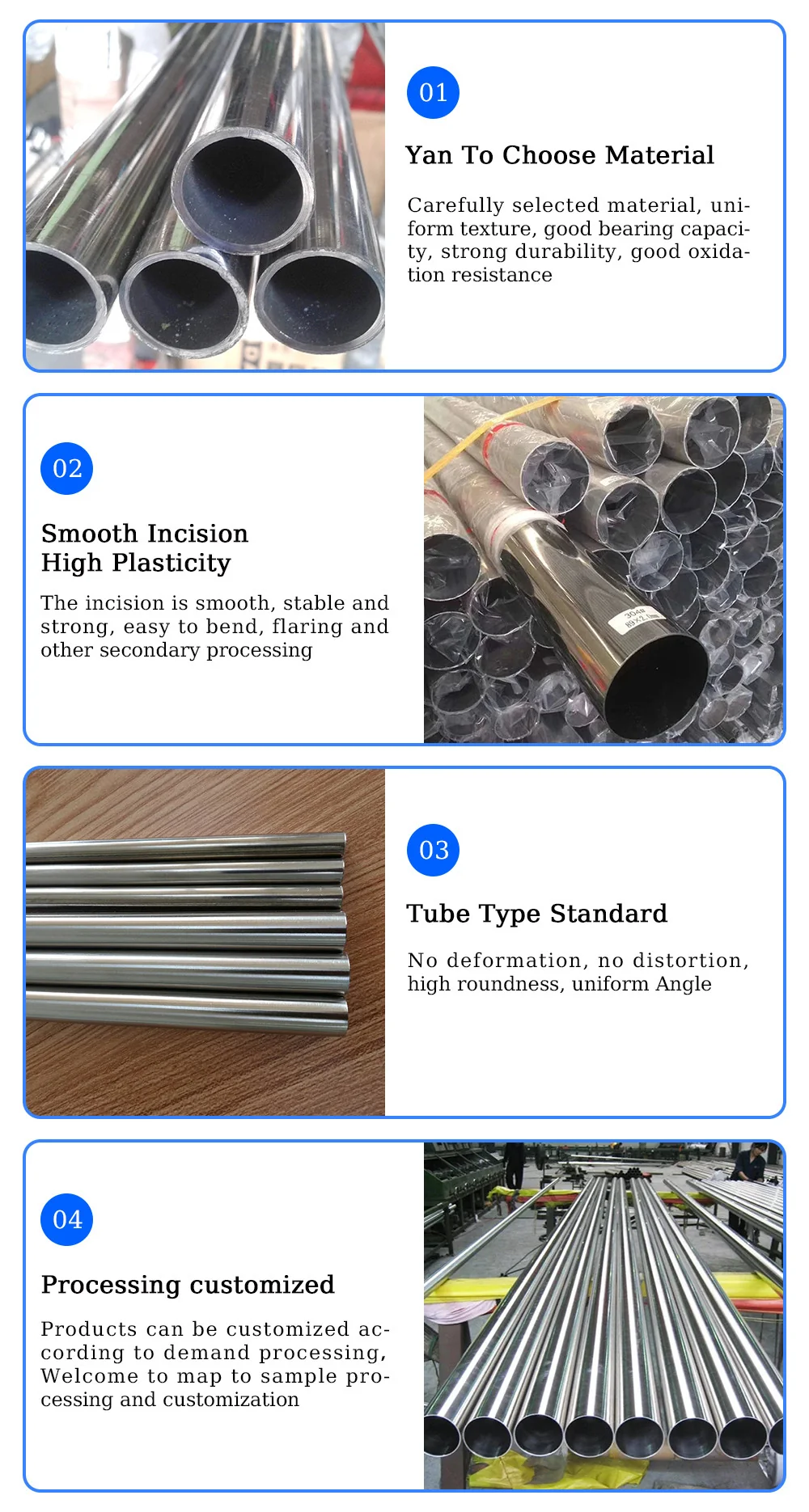
PRODUCT SHOW
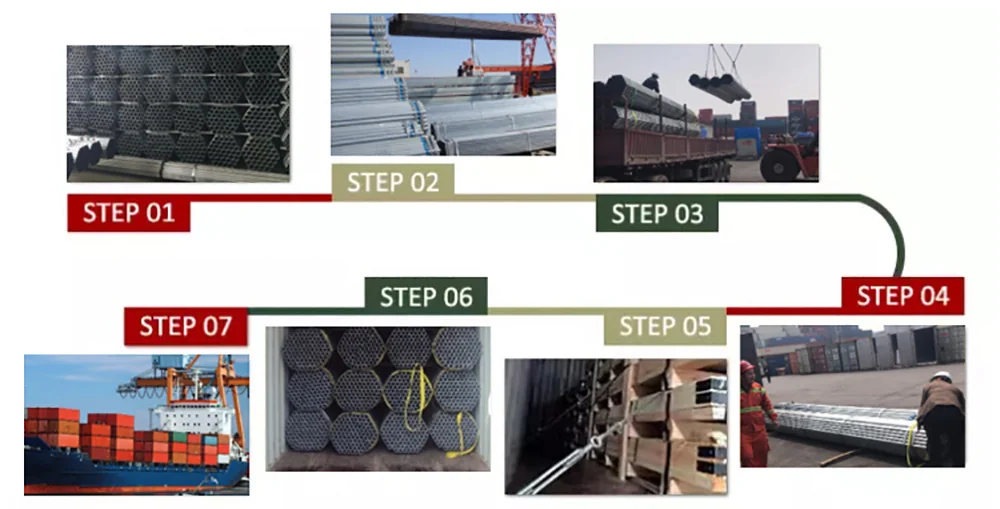
PACKING AND SHIPPING
APPLICATION
What Makes 317L Stainless Steel Pipe a Reliable Choice for Corrosive Environments?
317L stainless steel pipe is designed for applications where corrosion resistance is more important than simply selecting a standard stainless steel grade. As a low-carbon austenitic stainless steel, 317L combines chromium, nickel, and a higher molybdenum content to provide improved resistance to many aggressive chemical environments. Its molybdenum content is typically around 3–4%, compared with approximately 2–3% in 316L, which helps improve resistance to pitting, crevice corrosion, and certain chemical media.
This makes 317L particularly useful in chemical processing, petrochemical equipment, industrial fluid handling, pollution-control systems, and other applications where stainless steel components may be exposed to chlorides, sulfur-containing compounds, or acidic solutions. Compared with conventional 304 stainless steel, 317L offers a higher level of corrosion resistance for demanding service conditions.
The “L” designation also indicates a low-carbon version of the alloy, with carbon controlled to a maximum of approximately 0.03%. This characteristic helps reduce the risk of sensitization and intergranular corrosion associated with welding and thermal processing.
For buyers evaluating stainless steel pipe for long-term industrial service, the key advantage of 317L is therefore not simply its material grade, but its ability to provide a more corrosion-resistant piping solution when ordinary stainless steel may not provide sufficient performance.
How Does 317L Stainless Steel Tubing Compare with 316L Stainless Steel?
Choosing between 317L and 316L stainless steel pipe often depends on the actual operating environment rather than price alone. Both grades are low-carbon austenitic stainless steels with good corrosion resistance and weldability, but 317L contains a higher level of molybdenum, generally around 3–4%, compared with approximately 2–3% in 316L. This difference can provide 317L with improved resistance to pitting and certain aggressive chemical environments.
For general-purpose water systems, food equipment, architectural components, and many everyday industrial applications, 316L may already provide adequate performance. However, when the service environment involves stronger chemical exposure, sulfur-containing compounds, or more demanding chloride conditions, 317L can be considered when additional corrosion resistance is required.
The choice should also take into account temperature, chemical concentration, pressure, fabrication requirements, and expected service life. Corrosion resistance is not determined by alloy grade alone, and actual operating conditions should be evaluated before final material selection.
For industrial buyers searching for 317 SS tubing, the main value is the combination of austenitic stainless steel properties with enhanced molybdenum-based corrosion resistance. SCT MATERIAL can supply stainless steel tubing in multiple forms and specifications, including round, square, and rectangular sections, with options for polishing, annealing, pickling, and bright surfaces. The available product range also covers multiple international standards, helping buyers match material requirements with project specifications.
What Industries Commonly Use 317L Stainless Steel Pipe?
The selection of stainless steel pipe should always be connected to the environment in which the material will operate. 317L is particularly attractive for industries that need reliable corrosion resistance alongside the fabrication characteristics of an austenitic stainless steel.
Chemical processing is one of the most important application areas. Pipes and tubing may be used for transferring process fluids, chemicals, and other corrosive media where conventional stainless steel grades may require additional consideration. 317L has demonstrated improved resistance to several chemical environments, including certain sulfuric-acid-related conditions.
Petrochemical, pharmaceutical, food-processing, pollution-control, and industrial equipment manufacturers may also evaluate 317L when material durability and resistance to aggressive operating conditions are important. Its low-carbon composition makes it suitable for fabricated components where welding is required, although the complete fabrication and service conditions should always be reviewed by the project engineer.
For projects requiring customized dimensions, 317L stainless steel pipe can also be supplied in different configurations. SCT MATERIAL's product specifications include round, square, and rectangular tubes, with cold- and hot-rolled processing options and surface treatments such as polishing, annealing, pickling, and bright finishing.
This flexibility allows buyers to source material according to the requirements of chemical equipment, industrial structures, fluid-handling systems, machinery, and specialized fabrication projects rather than relying on a one-size-fits-all pipe specification.
What Sizes and Standards Are Available for 317L Stainless Steel Pipe?
Industrial stainless steel pipe purchasing usually involves much more than selecting the alloy grade. Buyers also need to confirm dimensions, wall thickness, manufacturing process, tolerances, surface condition, and applicable standards before placing an order.
SCT MATERIAL offers stainless steel pipe in round, square, and rectangular configurations. The listed product range includes round tube outer diameters from 8 mm to 680 mm, square tubes from 10 × 10 mm to 300 × 300 mm, and rectangular tubes from 10 × 20 mm to 120 × 180 mm. Listed thickness options vary by specification, with the product page showing thickness ranges from 0.16 mm to 4.0 mm for the specified tube dimensions.
For international projects, standards are equally important. The available standards include ASTM A213, ASTM A312, ASTM A269, ASTM A778, ASTM A789, DIN 17456, DIN 17457, DIN 17459, JIS G3459, JIS G3463, GOST 9941, EN 10216, BS 3605, and GB 13296.
Dimensional tolerances are also specified, including ±0.05 mm for outer diameter, ±0.01 mm for thickness, and ±5 mm for length according to the listed product information. This gives engineering and procurement teams a clearer basis for checking whether a pipe specification matches their project requirements.
How Much Does 317L Stainless Steel Pipe Cost?
The price of 317L stainless steel pipe depends on considerably more than the nominal material grade. When buyers compare ss 317l price, they should consider the dimensions, wall thickness, order quantity, surface finish, manufacturing process, applicable standard, and customization requirements.
Material costs are also affected by fluctuations in nickel, molybdenum, chromium, energy, and international stainless steel markets. Because of these variables, a fixed online price may not accurately represent the actual cost of a project order.
For example, a standard-size pipe available from existing inventory can have a different price structure from a customized tube requiring specific dimensions, surface treatment, testing, or production. Export packaging, destination, order volume, and delivery requirements can also affect the final quotation.
For this reason, industrial buyers should request a project-specific quotation instead of comparing suppliers only by a headline price. A useful RFQ should include the required grade, pipe or tube dimensions, wall thickness, quantity, applicable standard, surface finish, and destination port.
SCT MATERIAL supports customized stainless steel processing and lists options including cutting, leveling, and pattern processing. The company also states that customized or non-standard products generally require additional production time.
If you are comparing ss 317l price from different suppliers, evaluating material compliance, dimensional accuracy, testing, lead time, and supply reliability together can provide a much more meaningful comparison than price per kilogram alone.
Why Choose SCT MATERIAL for 317L Stainless Steel Pipe Supply?
For industrial buyers, choosing a stainless steel supplier is ultimately about more than finding the lowest quotation. Consistent specifications, international standards, quality inspection, production capability, inventory availability, and delivery reliability can all influence the total procurement risk.
SCT MATERIAL provides stainless steel pipe in multiple configurations and grades, including 317L, with round, square, and rectangular tube options. The product information lists cold- and hot-rolling technologies, multiple surface finishes, customized machining, and international standards covering ASTM, DIN, JIS, EN, GOST, BS, and GB specifications.
The company also states that it has more than 15 years of experience in the steel supply chain and maintains large indoor inventories. Third-party inspection is accepted, which can be valuable for international buyers who require independent verification before shipment.
For customized orders, buyers can provide the required steel grade, dimensions, quantity, and destination port when requesting a quotation. This makes it easier for the supplier to evaluate the exact specification and recommend an appropriate supply solution.
Whether the requirement is standard 317L stainless steel pipe, or a customized stainless steel tube for industrial equipment, SCT MATERIAL can work from project-specific requirements rather than offering a generic product specification.
For international procurement, this approach helps buyers balance material performance, dimensional requirements, inspection needs, delivery schedules, and overall purchasing cost.
Corrosion Resistance of 317L Stainless Steel Pipe
317L stainless steel pipe is a high-performance austenitic stainless steel piping material known for its excellent corrosion resistance in demanding industrial environments. It contains higher levels of chromium, nickel, and molybdenum than conventional 304 stainless steel, giving it enhanced resistance to aggressive chemicals, chlorides, and other corrosive media. The low-carbon composition of 317L also helps improve its performance in welded structures and reduce the risk of intergranular corrosion.
Excellent Resistance to Chemical Corrosion
One of the key advantages of 317L stainless steel pipe is its ability to withstand many harsh chemical environments. The higher molybdenum content improves resistance to pitting and crevice corrosion, particularly in environments containing chlorides. This makes 317L suitable for chemical processing equipment, petrochemical systems, pollution control equipment, and industrial fluid transportation.
Compared with 304 stainless steel, 317L generally provides better corrosion resistance in aggressive environments. It is also often selected when the corrosion conditions are more demanding than those normally handled by 316L stainless steel.
Performance in Chloride and Marine Environments
Chloride-containing solutions can cause localized corrosion in stainless steel, especially pitting and crevice corrosion. The molybdenum content of 317L helps strengthen its resistance to these forms of attack. Therefore, 317L stainless steel pipe can be considered for applications involving salt-containing fluids, chemical solutions, and certain marine or coastal environments.
However, actual performance depends on chloride concentration, temperature, acidity, flow conditions, and exposure time. Material selection should always be based on the specific operating environment.
Benefits for Industrial Applications
The corrosion resistance of 317L stainless steel pipe contributes to longer service life, reduced maintenance, and improved system reliability. Its combination of strength, weldability, and corrosion resistance makes it suitable for chemical processing, pulp and paper production, petrochemical facilities, pharmaceutical equipment, and pollution control systems.
Overall, 317L stainless steel pipe is an excellent option for demanding applications where standard stainless steel grades may not provide sufficient corrosion resistance. Proper grade selection, fabrication, and installation can help maximize its durability and long-term performance.
317L Stainless Steel Pipe vs Carbon Steel Pipe
When selecting piping materials for industrial applications, 317L stainless steel pipe and carbon steel pipe offer very different performance characteristics. The right choice depends on factors such as corrosion resistance, operating temperature, mechanical requirements, maintenance needs, and project budget. Understanding their differences can help engineers and buyers select the most suitable piping solution.
Corrosion Resistance
The biggest advantage of 317L stainless steel pipe is its excellent corrosion resistance. 317L contains chromium, nickel, and a relatively high amount of molybdenum, which improves its resistance to pitting, crevice corrosion, and many aggressive chemical environments. Its low-carbon composition also helps reduce the risk of intergranular corrosion after welding.
Carbon steel, by comparison, has limited natural corrosion resistance and can rust when exposed to moisture, oxygen, chemicals, or corrosive fluids. Protective coatings, painting, lining, or other corrosion-control methods are often required. For chemical processing, marine-related environments, and applications involving corrosive fluids, 317L can provide a longer-lasting solution with lower corrosion-related maintenance.
Strength and Temperature Performance
Carbon steel provides good mechanical strength and is widely used in structural and general industrial piping applications. It is also available in many grades and thicknesses, allowing manufacturers to meet different pressure requirements.
317L stainless steel pipe combines good mechanical properties with excellent corrosion resistance and can maintain reliable performance in demanding industrial environments. It is particularly valuable where both mechanical durability and resistance to aggressive media are required.
Cost and Maintenance
One important difference is initial cost. Carbon steel pipe is generally less expensive than 317L stainless steel pipe, making it attractive for large-scale projects with controlled environments. However, additional costs for surface protection, painting, inspection, and corrosion maintenance may increase its long-term operating expenses.
317L typically has a higher purchase price, but its strong corrosion resistance can reduce maintenance requirements and extend service life.
Applications and Selection
Carbon steel pipe is commonly used for water lines, structural applications, oil and gas transportation, and general industrial piping. 317L stainless steel pipe is more suitable for chemical processing, petrochemical equipment, pollution control systems, pulp and paper facilities, and other corrosive environments.
Overall, carbon steel is often the economical choice for non-corrosive applications, while 317L stainless steel is a better option when corrosion resistance, durability, and long-term reliability are priorities.
317L Stainless Steel Pipe Chemical Composition and Properties
317L stainless steel pipe is a low-carbon austenitic stainless steel pipe developed for applications requiring excellent corrosion resistance, good mechanical strength, and reliable performance in demanding industrial environments. Its chemical composition gives it advantages over conventional stainless steel grades, particularly when the pipe is exposed to aggressive chemicals, chlorides, and elevated operating temperatures.
Chemical Composition of 317L Stainless Steel
The main elements in 317L stainless steel pipe are iron, chromium, nickel, and molybdenum. Chromium provides the passive oxide layer that protects the steel from general corrosion, while nickel helps maintain the stable austenitic structure and contributes to toughness and corrosion resistance. The relatively high molybdenum content is one of the most important characteristics of 317L because it improves resistance to pitting and crevice corrosion, especially in chloride-containing environments.
The “L” designation means that 317L has a low carbon content. The reduced carbon level helps minimize chromium carbide precipitation during welding and high-temperature exposure, improving resistance to intergranular corrosion in welded components. Exact chemical limits may vary according to the applicable manufacturing standard and product specification, so buyers should verify the material certificate for each order.
Mechanical and Physical Properties
317L stainless steel pipe offers a combination of strength, toughness, ductility, and corrosion resistance. Its austenitic structure provides good formability and weldability, allowing the pipe to be fabricated into different shapes and configurations. It also maintains useful mechanical properties across a broad range of industrial operating conditions.
Its corrosion resistance is generally higher than that of 304 stainless steel and can provide advantages over 316L in some highly corrosive environments. However, actual performance depends on temperature, chemical concentration, chloride levels, pressure, and other service conditions.
Typical Applications
Because of these properties, 317L stainless steel pipe is commonly used in chemical processing, petrochemical equipment, pulp and paper production, pollution control systems, pharmaceutical facilities, and industrial fluid transportation.
Overall, the chemical composition of 317L provides a strong balance of corrosion resistance, weldability, durability, and mechanical performance. When selecting 317L stainless steel pipe, engineers should consider the operating environment, applicable standards, pipe dimensions, pressure requirements, and required service life to ensure reliable long-term performance.
317L Stainless Steel Pipe FAQs
What is 317L stainless steel pipe?
317L stainless steel pipe is a low-carbon, molybdenum-alloyed austenitic stainless steel pipe designed for demanding corrosive environments. Its higher molybdenum content provides improved resistance to pitting, crevice corrosion, and chemical attack compared with many conventional stainless steel grades.
What are the main advantages of 317L stainless steel pipe?
The main advantages include excellent corrosion resistance, good weldability, good mechanical strength, and reliable performance in chemical and chloride-containing environments. The low carbon content also helps reduce the risk of sensitization after welding.
Where is 317L stainless steel pipe commonly used?
317L stainless steel pipe is commonly used in chemical processing, petrochemical equipment, oil and gas systems, pulp and paper facilities, heat exchangers, pollution control equipment, and industrial fluid transportation. It is particularly suitable where stronger corrosion resistance is required.
Is 317L stainless steel pipe better than 316L?
317L generally provides higher corrosion resistance than 316L because it contains more molybdenum. It can be a suitable upgrade when chloride exposure or moderately aggressive chemical conditions push 316L toward its performance limits.
Is 317L stainless steel pipe suitable for welding?
Yes. Its low carbon content helps reduce chromium carbide precipitation during welding, providing good resistance to intergranular corrosion in welded assemblies. Standard welding practices should still be selected according to the applicable material specification and service conditions.
How do I choose the right 317L stainless steel pipe?
Consider the required pipe diameter, wall thickness, pressure, operating temperature, chemical medium, corrosion conditions, connection method, and applicable standards. For highly corrosive service, engineers should evaluate the actual chemical concentration and temperature before confirming the grade and dimensions.
More from this supplier
Shaanxi Shunchengtian Material Co., Ltd.


