
Image not available
Household goods
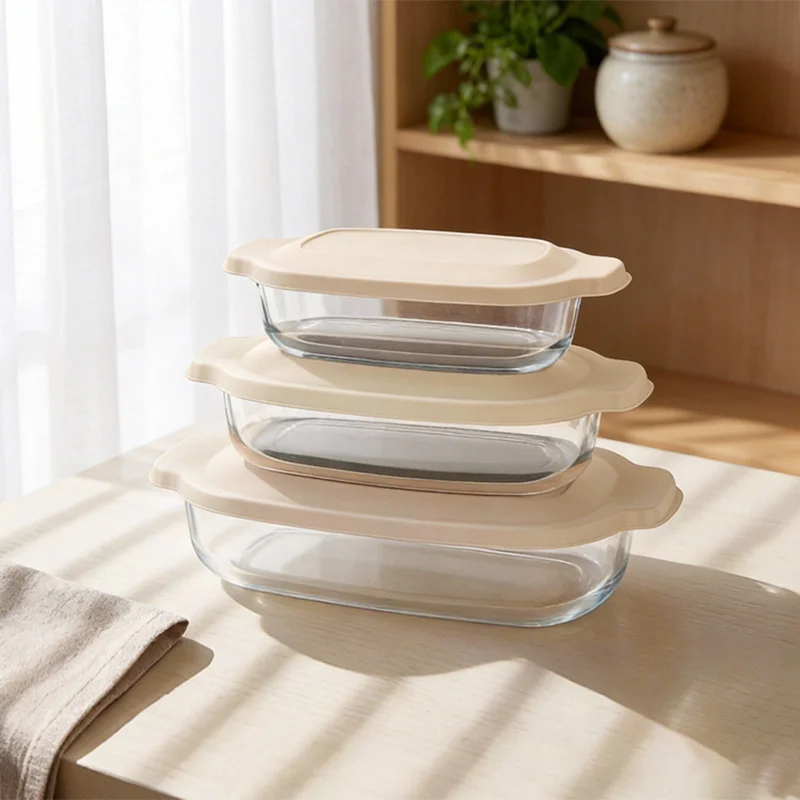
IKOO Borosilicate Glass Bakeware with PP Lid 1000ml to 3600ml
<p></p><table class="tables data" width="100%"><tbody><tr class="firstRow"><td class="p_name"><span style="font-size: 16px;">Brand Name:</span></td><td><span style="font-size: 16px;">IKOO GLASS</span></td></tr><!-- 最小起单量 --><tr><td><span style="font-size: 16px;">MOQ:</span></td><td><span style="font-size: 16px;">3000 PCS</span></td></tr><!-- 付款方式--><tr><
SupplierIKOO GLASSwww.ikoo-glass.com
Source categories
About this product
Product information from the supplier.


| Item | Simple PP Lid Food Glass Bakeware for Oven |
| Capacity | 2L,2.7L,3.8L |
| Function | Heat Resistant |
| Shape | Rectangle, square, round |
| Usage | Home Kitchen |
| Certificated | BSCI, ISO, FDA, LFGB, DGCCRF |
6-PIECE BAKEWARE SET: 6-piece set of 3 oven-safe glass baking dishes and 3 lids for making casseroles, desserts, stews, and more.
FOOD-SAFE BOROSILICATE GLASS: Made with BPA-free borosilicate glass; microwave and freezer-safe.
BAKE AND SERVE SET: Includes non-slip, stackable storage lids for easy travel and serving.
DISHWASHER-SAFE:Dishwasher-safe for quick and convenient cleaning after use; place lids on top rack.


Glass Bakeware for Retail, E-Commerce, and Foodservice Channels
For kitchenware importers and retail category managers, Glass bakeware has a useful advantage: one product family can cover baking, serving, short-term storage, and reheating. That makes it easier to explain on the shelf and gives buyers more ways to position the range across home cooking, meal prep, gifting, and seasonal baking promotions. The IKOO set uses high borosilicate glass with PP lids and is offered in several shapes and larger capacities, giving buyers a practical platform for both individual pieces and coordinated sets.
Product architecture is important when planning a bakeware line. A retailer may need a square dish for brownies and side dishes, a rectangular format for casseroles, and a round option for desserts or serving. IKOO lists rectangular, square, and round shapes, with capacities including 2L, 2.7L, and 3.8L. For buyers, this means the range can be configured around common cooking occasions rather than forcing every customer into one shape.
The oven-to-table concept is also commercially attractive. Clear glass lets consumers monitor cooking without opening the oven repeatedly and gives the finished dish a simple presentation that can move directly to the table. When lids are included, the same item can continue into refrigerator storage after serving. This reduces the number of separate products consumers need and creates an easy-to-communicate value story for homeware stores and e-commerce listings.
Wholesale buyers should still assess more than the headline material. Rim finishing, handle ergonomics, lid fit, base flatness, stackability, and glass clarity all influence user experience. In a multi-piece set, dimension consistency matters because lids and dishes must match reliably across production batches.
OEM/ODM Flexibility from a Professional Glass Bakeware Set Supplier
A glass bakeware set supplier can add value when it helps the buyer design a sellable program rather than simply quoting one dish. OEM/ODM projects may involve capacity selection, shape combinations, lid colors, printed packaging, gift-box layouts, barcode systems, manuals, or market-specific labeling. These details are especially important when the same base product will be sold through supermarkets, department stores, online marketplaces, and private-label kitchenware brands.
Set composition should match the target channel. A six-piece configuration made from three dishes and three lids can work well for gifting and complete-kitchen promotions, while single pieces may suit replacement purchases or lower entry prices. Buyers can also use capacity steps to create clear pricing tiers. Before production, the sales team should decide whether the main objective is a premium set, a promotional multipack, or a flexible family of open-stock SKUs.
Packaging is another major part of bulk glass bakeware set sourcing. A heavy glass set needs stronger protection than plastic kitchenware, and the pack structure has to survive warehouse stacking and parcel delivery without becoming unnecessarily expensive. Procurement teams should review internal protection, carton compression, product movement inside the box, handle clearance, and the way lids are secured. E-commerce programs may require additional drop-test considerations, while retail stores may prefer packaging with better product visibility.
Repeatability is essential for long-term accounts. A dependable supplier should document the approved glass dimensions, lid specifications, color references, artwork, carton layout, and inspection criteria. When those details are controlled from the first order, the buyer can reorder with fewer surprises and can add new sizes later without rebuilding the project from zero. This is particularly useful for distributors managing multiple retail customers or brands that plan annual baking promotions.
Glass Bakeware with Lids: Details That Shape a Successful Bulk Order
Before approving glass bakeware with lids, buyers should confirm where the glass body and lid are intended to be used. The IKOO borosilicate dishes are promoted for microwave, freezer, and dishwasher use, and the glass body is designed for oven use; lids should follow the specific usage instructions provided for the purchased configuration. Clear product labeling is important because consumer misuse can create avoidable complaints even when the underlying glass performs correctly.
Thermal performance should be checked alongside everyday handling. Buyers can request samples to evaluate how the dish feels when lifted, whether the handles provide enough grip with oven mitts, whether the lid seats evenly, and whether the dimensions suit common ovens and refrigerators in the target market. A product that performs well in a factory test should also make sense in the consumer's actual kitchen.
For private label glass bakeware, visual differentiation can come from packaging, logo placement, lid color, assortment design, or special set combinations rather than from excessive cosmetic changes to the glass itself. This often keeps the core product stable while giving the retailer enough identity to separate its range from generic listings. A clear specification sheet should define which elements are customized and which remain standard.
Finally, the purchasing team should connect product cost with total landed performance. A lower unit quote may be less attractive if packaging increases breakage, lids create returns, or the supplier cannot keep repeat orders consistent. By evaluating samples, certifications, packing, MOQ, lead times, and quality checkpoints together, buyers can make a better decision for long-term sourcing.
More from this supplier
IKOO GLASS


