
Image not available

Chemicals
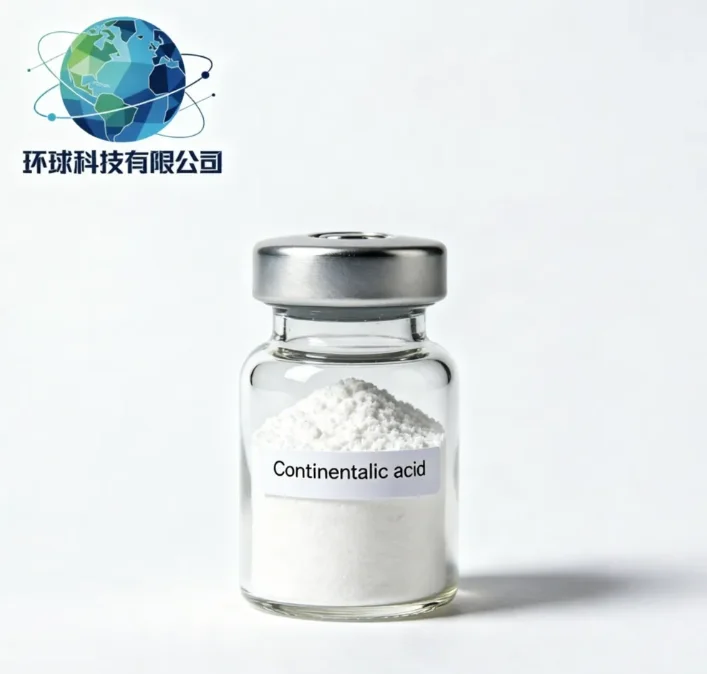
Continentalic Acid CAS 19889237 China Suppliers Factory High Purity
High-purity Continentalic acid CAS 19889-23-7 from a leading China factory. Our expert suppliers provide GMP-grade diterpenic acid for anti-inflammatory and anticancer research, ensuring batch consistency and rigorous QC for pharmacological studies.
SupplierGlobal Technology Co., Ltd.www.hqtechtirz.com
Source categories
About this product
Product information from the supplier.
Continentalic acid (CAS NO.19889-23-7) is a high-purity diterpenic acid meticulously synthesized for advanced preclinical research. Renowned for its potent biological activity, this compound serves as a critical tool in studying anti-inflammatory, anti-bacterial, and anti-cancer mechanisms, particularly through the suppression of the NF-κB signaling pathway and the induction of apoptosis in malignant cells.
Engineered for precision and stability, our Continentalic acid is optimized for researchers exploring therapeutic interventions for chronic inflammation, metabolic disorders, and drug-resistant bacterial strains like MRSA. With a purity level of ≥98% and strict adherence to GMP-compliant production standards, it ensures reproducible results in complex laboratory models and pharmacological evaluations.
Detailed Parameters
| Product Name | Continentalic acid | CAS NO. | 19889-23-7 |
|---|---|---|---|
| Molecular Formula | C20H30O2 | Molecular Weight | 302.46 g/mol |
| Purity (RP-HPLC) | ≥98% | Appearance | White to off-white crystalline powder |
| Solubility | Soluble in DMSO, Chloroform, DCM, Ethyl Acetate | Endotoxin | ≤10 EU/mg |
| Storage Conditions | Store at -20°C, protected from light/moisture | MOQ | 1g |
Key Advantages
NF-κB Suppression
Potently inhibits the phosphorylation and degradation of IκBα to block inflammatory mediators.
Anti-Cancer Potency
Triggers programmed cell death by activating caspase cascades in HepG2 and MCF-7 cell lines.
Broad Antibacterial
Demonstrates strong inhibitory concentrations (MIC 8-16 µg/mL) against MRSA and MSSA.
Metabolic Regulation
Proven efficacy in reducing blood glucose and cholesterol levels in diabetic rat models.
Chondrocyte Protection
Effective in attenuating cartilage degradation, ideal for osteoarthritis research.
GMP Quality Standard
Produced under rigorous quality control with full COA, HPLC, and MS documentation.
Product Gallery
Management Platforms
GMP Compliance
All production partners employ GMP-compliant systems for synthesis and purification.
Rigorous QC
Standardized quality control from raw material procurement to final packaging.
Batch Traceability
Comprehensive traceability and stability data provided for every single batch.
Validation Reports
Third-party testing and HPLC purity reports available upon request.
Global Logistics
Professional air freight via DHL, FedEx, and UPS for fast, secure delivery.
Scale Flexibility
Capable of supporting diverse needs from gram-level research to ton-level industrial supply.
Investment Return Comparison
| Analysis Metric | Standard Reagent | GlobalTech Grade |
|---|---|---|
| Purity Level | ≥95% | ≥98% High Purity |
| Documentation | Basic COA | COA, HPLC, MS, 3rd Party |
| Batch Stability | Variable | Strictly Controlled |
| Delivery Speed | Standard Freight | Priority Global Air Freight |
| Research Validity | General Use | Preclinical/Clinical Grade |
Frequently Asked Questions
Q: What are the primary research applications for Continentalic acid?
It is primarily used in preclinical research for chronic inflammatory conditions, carcinogenic models (such as B-cell lymphomas), and studies on drug-resistant bacterial strains like MRSA.
Q: How does Continentalic acid inhibit inflammation at a molecular level?
It suppresses the NF-κB signaling pathway by inhibiting the phosphorylation and degradation of IκBα, thereby preventing inflammatory mediators from entering the nucleus.
Q: What is the solubility profile of this compound?
Continentalic acid is soluble in DMSO, Chloroform, Dichloromethane, and Ethyl Acetate, while being slightly soluble in Methanol.
Q: Is the product suitable for in vivo animal studies?
Yes, it has been successfully utilized in animal models to study renal function improvement and blood glucose regulation in diabetic rats.
Q: What quality certifications accompany the shipment?
Every batch includes a Certificate of Analysis (COA), RP-HPLC purity reports, and Mass Spectrometry (MS) chromatograms to ensure full traceability.
Q: How should Continentalic acid be stored to maintain stability?
It should be stored at -20°C in a tightly sealed container, protected from both light and moisture to prevent degradation.
Secure High-Purity Continentalic Acid for Your Research
Contact UsMore from this supplier
Global Technology Co., Ltd.


