
Image not available
Chemicals
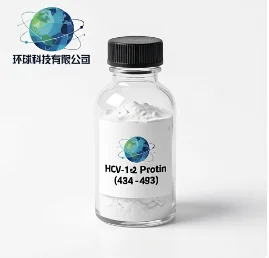
HCV-1 e2 Protein (484 – 499)
<p>HCV-1 E2 Protein (484-499) is a synthetic 16-amino acid peptide antigen corresponding to residues 484-499 of the Hepatitis C Virus genotype 1 (HCV-1) envelope glycoprotein E2. This sequence resides within a critical region of E2 implicated in viral entry and host cell receptor interaction. It is specifically known for containing part of the hypervariable region 1 (HVR1), a highly immunogenic and variable domain i…
SupplierGlobal Technology Co., Ltd.www.hqtechtirz.com
Source categories
About this product
Product information from the supplier.
TECHNICAL SPECIFICATIONS
| Item | Specification |
|---|---|
| Product Name | HCV-1 e2 Protein (484–499) |
| CAS NO. | / |
| Appearance | White to off-white lyophilized powder |
| Molecular Formula | C88H122N20O19S2 |
| Molecular Weight | 1828.19g/mol |
| Purity (RP-HPLC) | ≥ 95.0% |
| Solubility | Soluble in water, dilute PBS, or DMSO (typically ≥1 mg/mL) |
| Endotoxin | ≤1.0 EU/mg |
| Biological Activity | Immunogenic peptide fragment of HCV E2 envelope protein, used to study viral entry mechanisms, host immune responses, and the development of HCV vaccines or neutralizing antibody assays. |
| Storage Conditions | Store at -20°C to -80°C in a dry environment; avoid repeated freeze-thaw cycles. |
| Stock Location | Stock in USA |
| MOQ | 1g |
1.MECHANISM OF ACTION
This peptide functions as a specific antigenic target for humoral and cellular immune responses. As part of the E2 glycoprotein, which forms the viral envelope spike with E1, this region is exposed on the surface of the virion and infected cells. Its primary role in vivois to interact with host entry factors. In research, the synthetic peptide acts as a defined antigen:
- B-Cell Epitope: It contains linear epitopes that can be recognized by neutralizing and non-neutralizing antibodies. Anti-HCV antibodies in patient serum can bind to this peptide in immunoassays.
- T-Cell Epitope: The sequence may contain motifs that can be processed and presented by Major Histocompatibility Complex (MHC) class I or II molecules, potentially stimulating CD8+ or CD4+ T-cell responses.
- Receptor Interaction Studies: While a short peptide, it may mimic part of the receptor-binding domain and can be used in competition assays to study the interaction between E2 and entry receptors like CD81 or scavenger receptor class B type I (SR-BI).
- Antibody Detection & Mapping: Used as a coating antigen in Enzyme-Linked Immunosorbent Assay (ELISA) or peptide microarrays to detect and characterize anti-E2 antibodies in patient sera, including mapping the specificity of neutralizing antibodies.
- Vaccine Research: Evaluating the immunogenicity of this specific E2 region in preclinical vaccine studies. It can be used to assess if antibodies or T-cells induced by a vaccine candidate target this conserved or variable region.
- Immune Escape Studies: Investigating how sequence variations (mutations) within this HVR1 region affect antibody binding, contributing to the understanding of viral persistence and immune evasion in chronic HCV infection.
- Receptor Binding Inhibition Assays: As a potential competitive inhibitor, it can be used in in vitroassays to block the interaction between full-length E2 protein and its cellular receptors (e.g., CD81), helping to map critical receptor-binding sites.
2.PRODUCT INDICATIONS
- Research & Diagnostic Tool Efficacy: Its efficacy lies in its ability to reliably detect specific antibody responses and map antigenic sites on the HCV envelope, providing valuable serological and immunological data.
- Neutralizing Antibody Target: The E2 glycoprotein, and specifically regions including amino acids 484-499, is a major target for broadly neutralizing antibodies (bNAbs). Research using such peptides helps identify conserved, vulnerable sites for antibody-mediated neutralization.
- Vaccine Development Context: A major goal of HCV vaccine research is to induce potent bNAbs against E2. Defining the exact epitopes, like those within (484-499), that are targeted by such antibodies is critical for rational vaccine design (e.g., using engineered E2 core antigens or peptide immunogens).
3.CLINICAL EFFICACY OF PRODUCT
4.DELIVERY & SHIPPING
We specialize in global logistics for various cosmetic peptides. Your order will be handled with the utmost care, ensuring safe, reliable, and intact delivery.
Professional and Secure Packaging
Each bottle of peptide is protected with a special packaging solution to ensure stability and integrity during transportation.
We can also customize packaging according to customer needs.
Shipping Methods
Main Method: International Air Freight
We primarily use DHL, FedEx, UPS, and TNT because of their global reliability, speed, and advanced tracking systems. Air freight ensures the fastest transit time and minimizes the impact of environmental factors on the product.

More from this supplier
Global Technology Co., Ltd.


