
Image not available
Chemicals
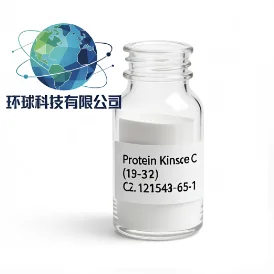
Protein Kinase C (19-31) CAS NO.121545-65-1
<p>Protein Kinase C (19-31) is a synthetic 13-amino acid peptide inhibitor, also known as PKC(19-31) or the PKC pseudosubstrate inhibitor. With the sequence <strong>RFARKGALRQKNV</strong>, it corresponds to the pseudosubstrate regulatory domain of conventional Protein Kinase C (cPKC) isoforms (α, β, γ). This peptide mimics the substrate recognition sequence of PKC but contains an alanine (A) residue instead of a pho…
SupplierGlobal Technology Co., Ltd.www.hqtechtirz.com
Source categories
About this product
Product information from the supplier.
TECHNICAL SPECIFICATIONS
| Item | Specification |
|---|---|
| Product Name | Protein Kinase C (19-31) |
| CAS NO. | 121545-65-1 |
| Appearance | White to off-white lyophilized powder |
| Molecular Formula | C67H118N26O16 |
| Molecular Weight | 1543.84g/mol |
| Purity (RP-HPLC) | ≥ 95.0% |
| Solubility | Soluble in water, 0.1% TFA, or DMSO (up to 20 mg/mL) |
| Endotoxin | ≤1.0 EU/mg |
| Biological Activity | Acts as a specific substrate for Protein Kinase C; can be used to measure PKC activity in kinase assays and to validate antibody specificity |
| Storage Conditions | Store at -20°C; stable for 24 months when desiccated. Avoid repeated freeze-thaw cycles. |
| Stock Location | Stock in USA |
| MOQ | 1g |
1.MECHANISM OF ACTION
PKC(19-31) functions as a competitive, substrate-specific inhibitor of conventional Protein Kinase C (cPKC) isoforms (α, βI, βII, γ). Its mechanism is based on molecular mimicry. Inactive cPKC is autoinhibited by its own pseudosubstrate domain, which occupies the catalytic cleft. Upon activation by diacylglycerol (DAG) and calcium, this inhibitory interaction is released.
- PKC(19-31) functions as a competitive, substrate-specific inhibitor of conventional Protein Kinase C (cPKC) isoforms (α, βI, βII, γ). Its mechanism is based on molecular mimicry. Inactive cPKC is autoinhibited by its own pseudosubstrate domain, which occupies the catalytic cleft. Upon activation by diacylglycerol (DAG) and calcium, this inhibitory interaction is released.
2.PRODUCT INDICATIONS
- Research Tool Efficacy: It is highly effective and widely cited for its ability to potently and selectively inhibit cPKC activity in a wide range of cellular and biochemical experiments, providing clear mechanistic insights.
- Therapeutic Target Validation: Research using this and similar inhibitors has been instrumental in establishing the pathological roles of specific PKC isoforms in diseases such as cancer, diabetic complications, cardiovascular diseases, and central nervous system disorders.
- Drug Development Context: The pseudosubstrate region of PKC served as the conceptual blueprint for developing ATP-competitive small-molecule PKC inhibitors. While early pan-PKC inhibitors had toxicity issues, isoform-selective inhibitors (e.g., ruboxistaurin for diabetic retinopathy) have been developed and tested in clinical trials based on the foundational knowledge gained using tools like PKC(19-31).
- Clinical Status: No peptide-based PKC inhibitor like PKC(19-31) is used clinically due to stability and delivery challenges. However, the pathway it helps to elucidate is targeted by several investigational drugs. Its value is entirely in preclinical target validation and mechanism elucidation.
3.CLINICAL EFFICACY OF PRODUCT
4.DELIVERY & SHIPPING
We specialize in global logistics for various cosmetic peptides. Your order will be handled with the utmost care, ensuring safe, reliable, and intact delivery.
Professional and Secure Packaging
Each bottle of peptide is protected with a special packaging solution to ensure stability and integrity during transportation.
We can also customize packaging according to customer needs.
Shipping Methods
Main Method: International Air Freight
We primarily use DHL, FedEx, UPS, and TNT because of their global reliability, speed, and advanced tracking systems. Air freight ensures the fastest transit time and minimizes the impact of environmental factors on the product.

More from this supplier
Global Technology Co., Ltd.


