
Image not available
Chemicals
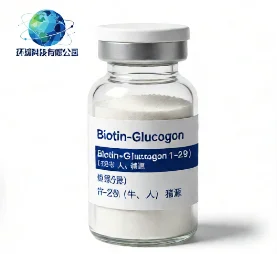
Biotin – Glucagon (1 – 29), bovine, human, porcine
<p>Biotin-Glucagon (1-29) is a chemically modified, bioactive peptide where a biotin molecule is covalently conjugated to the N-terminus or a specific lysine residue of the 29-amino acid glucagon peptide. This conjugate preserves the full biological activity of native glucagon while introducing a high-affinity biotin tag. The sequence is identical across bovine, human, and porcine species in the 1-29 region, represe…
SupplierGlobal Technology Co., Ltd.www.hqtechtirz.com
Source categories
About this product
Product information from the supplier.
TECHNICAL SPECIFICATIONS
| Item | Specification |
|---|---|
| Product Name | Biotin-Glucagon (1-29), bovine, human, porcine |
| CAS NO. | / |
| Appearance | White to off-white lyophilized powder |
| Molecular Formula | C163H239N45O51S2 |
| Molecular Weight | 3709.12g/mol |
| Purity (RP-HPLC) | ≥ 95.0% |
| Solubility | Soluble in water (≥ 5 mg/mL), dilute acetic acid, or DMSO; also soluble in phosphate-buffered saline (PBS) |
| Endotoxin | ≤1.0 EU/mg |
| Biological Activity | Binds to glucagon receptors with high affinity; EC₅₀ typically ≤ 0.5 nM in cAMP accumulation assays using hepatocyte or CHO cell models |
| Storage Conditions | Store at -20°C to -80°C in a dry, dark environment; avoid repeated freeze-thaw cycles. |
| Stock Location | Stock in USA |
| MOQ | 1g |
1.MECHANISM OF ACTION
This conjugate functions identically to native glucagon by binding and activating the Glucagon Receptor (GCGR), a Class B G-protein coupled receptor primarily expressed in hepatocytes. Upon binding, the conjugate activates the Gs protein, stimulating adenylate cyclase and dramatically increasing intracellular cyclic AMP (cAMP) levels. This triggers protein kinase A (PKA) activation, leading to the phosphorylation of key enzymes that drive hepatic glycogenolysis and gluconeogenesis, resulting in elevated blood glucose. The covalently attached biotin moiety does not interfere with receptor binding or this signaling cascade.
- Receptor Localization & Trafficking: Visualizing GCGR distribution and internalization in cells or tissues using streptavidin-conjugated fluorophores for microscopy (IHC, IF, live-cell imaging).
- Affinity Capture & Proteomics: Isolating glucagon-bound receptors or associated protein complexes from cell lysates using streptavidin-coated beads for mass spectrometry or Western blot analysis.
- Biosensor & Assay Development: Immobilizing the peptide on streptavidin-coated surfaces (SPR chips, ELISA plates, biosensors) for real-time binding kinetics studies, drug screening, or diagnostic assay development.
- In SituBinding Studies: Mapping active receptor sites in tissue sections (e.g., liver, pancreas) using biotin-streptavidin detection methods.
- Quantitative Receptor Analysis: Using the biotin tag for highly sensitive detection in quantitative flow cytometry or other analytical platforms to measure receptor expression levels.
- High-Throughput Screening (HTS): Serving as a tagged ligand in screening campaigns for GCGR agonists, antagonists, or allosteric modulators.
2.PRODUCT INDICATIONS
- Research Utility: It is highly effective in the applications listed above, providing crucial mechanistic insights into glucagon receptor biology that cannot be obtained with the native peptide alone.
- Diagnostic Development: The biotin-streptavidin system is foundational to in vitrodiagnostics (IVD). This conjugate can be used to develop research-use-only (RUO) or prototype immunoassays for detecting glucagon receptors or autoantibodies in patient samples.
- Drug Discovery Support: Research using this tool aids in characterizing novel GCGR-targeting therapeutics (e.g., agonists for hypoglycemia, antagonists for diabetes/NASH) by enabling detailed studies of drug-receptor interactions.
- No Therapeutic Use: This conjugate is not administered to humans. Clinical efficacy data pertains to the glucagon/GCGR system itself, which is targeted by approved drugs like dasiglucagon (a stable glucagon analog for severe hypoglycemia) and investigational GCGR modulators.
3.CLINICAL EFFICACY OF PRODUCT
4.DELIVERY & SHIPPING
We specialize in global logistics for various cosmetic peptides. Your order will be handled with the utmost care, ensuring safe, reliable, and intact delivery.
Professional and Secure Packaging
Each bottle of peptide is protected with a special packaging solution to ensure stability and integrity during transportation.
We can also customize packaging according to customer needs.
Shipping Methods
Main Method: International Air Freight
We primarily use DHL, FedEx, UPS, and TNT because of their global reliability, speed, and advanced tracking systems. Air freight ensures the fastest transit time and minimizes the impact of environmental factors on the product.

More from this supplier
Global Technology Co., Ltd.


