
Image not available
Chemicals
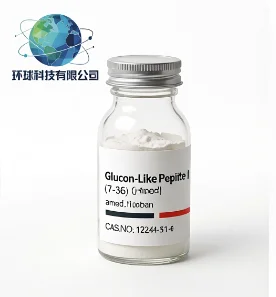
Glucagon-Like Peptide I (7-36), amide, human CAS NO.107444-51-9
<p>Glucagon-Like Peptide I (7-36), amide, human (CAS 107444-51-9) is the definitive, bioactive 30-amino acid incretin hormone, representing the primary circulating form of endogenous human GLP-1. This synthetic peptide fragment (sequence: HAEGTFTSDVSSYLEGQAAKEFIAWLVKGR-NH₂) is C-terminally amidated, mirroring its natural post-translational modification, which is crucial for receptor binding and stability. As the maj…
SupplierGlobal Technology Co., Ltd.www.hqtechtirz.com
Source categories
About this product
Product information from the supplier.
TECHNICAL SPECIFICATIONS
| Item | Specification |
|---|---|
| Product Name | Glucagon-Like Peptide I (7-36), amide, human (GLP-1 (7-36) amide) |
| CAS NO. | 107444-51-9 |
| Appearance | White to off-white lyophilized powder |
| Molecular Formula | C149H226N40O45 |
| Molecular Weight | 3297.7g/mol |
| Purity (RP-HPLC) | ≥95% |
| Solubility | Soluble in water (≥1 mg/mL); soluble in DMSO; solubility can be enhanced by heating to 37°C and ultrasonic oscillation |
| Endotoxin | ≤1.0 EU/mg |
| Biological Activity | Potent glucose-dependent insulinotropic peptide; stimulates insulin gene transcription and secretion in pancreatic β-cells |
| Storage Conditions | Store desiccated at ≤-20°C, avoid repeated freeze-thaw cycles. |
| Stock Location | Stock in USA |
| MOQ | 1g |
1.MECHANISM OF ACTION
GLP-1 (7-36) amide exerts its glucoregulatory and metabolic effects via high-affinity binding to the GLP-1 Receptor (GLP-1R), a Class B G-protein coupled receptor (GPCR). Receptor activation primarily engages the Gs-protein, stimulating adenylate cyclase and elevating intracellular cyclic AMP (cAMP) levels. This cascade activates both Protein Kinase A (PKA) and cAMP-regulated guanine nucleotide exchange factor (Epac2).
- Molecular Pharmacology: Serves as the native ligand for GLP-1R binding assays (radioligand/fluorescence), receptor activation studies, and intracellular signaling analysis (cAMP, calcium).
- In VitroBeta-Cell Physiology: Defines baseline insulinotropic activity in pancreatic beta-cell lines (e.g., INS-1, MIN6) and primary human/rodent islets to evaluate beta-cell function and survival.
- Metabolic Disease Modeling: Establishes standard GLP-1 responses in cellular models of insulin resistance, glucotoxicity, and lipotoxicity.
- Comparative Drug Screening: Acts as the primary reference compound for evaluating the potency and efficacy of synthetic GLP-1R agonists (e.g., liraglutide, semaglutide) and multi-agonists in development.
2.PRODUCT INDICATIONS
- Pivotal Physiological Role: It is the most potent known physiological stimulator of glucose-dependent insulin secretion ("the incretin effect"), responsible for up to 70% of postprandial insulin release. Its efficacy in humans is undisputed.
- Therapeutic Prototype with Limitation: Its clinical application as a native peptide is precluded by rapid enzymatic degradation by Dipeptidyl Peptidase-4 (DPP-IV), resulting in a half-life of<2 minutes.="">
- Foundation for Blockbuster Therapeutics: This limitation directly fueled the development of DPP-IV-resistant GLP-1R agonists, which constitute a cornerstone of modern metabolic therapy:
- Short-acting (exenatide, lixisenatide): Control postprandial glucose.
- Long-acting (liraglutide, dulaglutide, semaglutide): Provide superior glycemic control, weight loss, and cardiovascular/renal benefits.
- Oral semaglutide: A landmark achievement in peptide delivery.
3.CLINICAL EFFICACY OF PRODUCT
4.DELIVERY & SHIPPING
We specialize in global logistics for various cosmetic peptides. Your order will be handled with the utmost care, ensuring safe, reliable, and intact delivery.
Professional and Secure Packaging
Each bottle of peptide is protected with a special packaging solution to ensure stability and integrity during transportation.
We can also customize packaging according to customer needs.
Shipping Methods
Main Method: International Air Freight
We primarily use DHL, FedEx, UPS, and TNT because of their global reliability, speed, and advanced tracking systems. Air freight ensures the fastest transit time and minimizes the impact of environmental factors on the product.

More from this supplier
Global Technology Co., Ltd.


