
Image not available
Chemicals
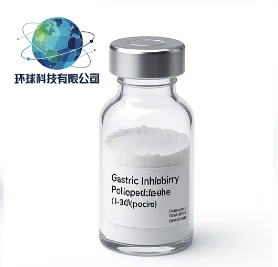
Gastric Inhibitory Polypeptide (1-30) (porcine)
<p>Gastric Inhibitory Polypeptide (1-30) (Porcine) is a defined 30-amino acid N-terminal fragment of the full-length porcine GIP hormone. This synthetic peptide represents the bioactive core region of porcine GIP, encompassing the sequence responsible for its primary receptor binding and insulinotropic activity. While the full-length hormone consists of 42 amino acids, the (1-30) fragment retains significant biologi…
SupplierGlobal Technology Co., Ltd.www.hqtechtirz.com
Source categories
About this product
Product information from the supplier.
TECHNICAL SPECIFICATIONS
| Item | Specification |
|---|---|
| Product Name | Gastric Inhibitory Polypeptide (1-30) (porcine) |
| CAS NO. | / |
| Appearance | White to off-white lyophilized powder |
| Molecular Formula | C162H244N40O48S |
| Molecular Weight | 3552.1g/mol |
| Purity (RP-HPLC) | ≥95% |
| Solubility | Soluble in water (≥5 mg/mL) and dilute aqueous buffers (pH 6.5–8.0) |
| Endotoxin | ≤1.0 EU/mg |
| Biological Activity | Retains core insulinotropic activity, stimulating glucose-dependent insulin secretion. |
| Storage Conditions | Store at ≤-20°C in a desiccated, inert atmosphere; avoid repeated freeze-thaw cycles. |
| Stock Location | Stock in USA |
| MOQ | 1g |
1.MECHANISM OF ACTION
This peptide fragment acts as a ligand for the GIP Receptor (GIPR), though its binding affinity and functional potency may be modified compared to the full-length GIP(1-42). It binds to the GIPR, a Gs-protein coupled receptor, primarily on pancreatic beta cells. This binding initiates the canonical incretin signaling pathway: activation of adenylate cyclase, elevation of intracellular cyclic AMP (cAMP), and subsequent activation of protein kinase A (PKA) and exchange protein activated by cAMP (Epac2).
- Structure-Activity Relationship (SAR) Studies: Determining the minimal sequence required for GIPR binding and activation, and comparing the activity of the (1-30) fragment to full-length GIP(1-42) and other truncated analogs.
- Receptor Binding Domain Mapping: Used in competitive binding assays to map the critical regions of GIP that interact with its receptor.
- In VitroFunctional Assays: Assessing the insulinotropic activity and cAMP production stimulated by this fragment in pancreatic beta-cell lines (e.g., INS-1, MIN6) or isolated islets.
- Metabolic Research Tools: Investigating the specific effects of GIP's N-terminal signaling domain on glucose homeostasis and insulin secretion in cellular models.
2.PRODUCT INDICATIONS
- Drug Design Insights: Research on this and similar fragments has been crucial in understanding which parts of the GIP molecule are essential for receptor activation. This knowledge directly informs the design of stable, long-acting GIP receptor agonists used in modern therapeutics.
- Therapeutic Context: The clinical success of tirzepatide, a dual GIP/GLP-1 receptor agonist, underscores the therapeutic value of targeting the GIP receptor. The development of such drugs relied on understanding the active core of GIP, for which fragments like GIP(1-30) provided key insights.
3.CLINICAL EFFICACY OF PRODUCT
Research Validation: Studies demonstrate that GIP(1-30) retains a substantial portion of the insulin-releasing activity of full-length GIP, confirming that the N-terminal region harbors the core pharmacophore. However, it typically has reduced potency and shorter duration of action in vivodue to faster degradation.
4.DELIVERY & SHIPPING
We specialize in global logistics for various cosmetic peptides. Your order will be handled with the utmost care, ensuring safe, reliable, and intact delivery.
Professional and Secure Packaging
Each bottle of peptide is protected with a special packaging solution to ensure stability and integrity during transportation.
We can also customize packaging according to customer needs.
Shipping Methods
Main Method: International Air Freight
We primarily use DHL, FedEx, UPS, and TNT because of their global reliability, speed, and advanced tracking systems. Air freight ensures the fastest transit time and minimizes the impact of environmental factors on the product.

More from this supplier
Global Technology Co., Ltd.


