
Image not available
Chemicals
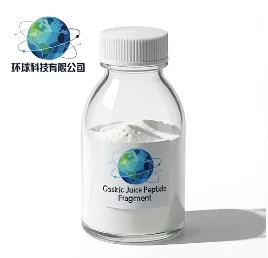
Gastric Juice Peptide Fragmentc
<p>Gastric Juice Peptide Fragment is a bioactive peptide fraction isolated from or synthesized to mimic natural peptide components found in gastric secretions. These fragments represent specific proteolytic cleavage products of larger proteins (such as pepsinogen, gastrin precursors, or other gastric mucosal proteins) that exert localized biological activity within the gastrointestinal tract.</p>
SupplierGlobal Technology Co., Ltd.www.hqtechtirz.com
Source categories
About this product
Product information from the supplier.
TECHNICAL SPECIFICATIONS
| Item | Specification |
|---|---|
| Product Name | Gastric Juice Peptide Fragmentc (BPC-157) |
| CAS NO. | / |
| Appearance | White lyophilized powder |
| Molecular Formula | C62H98N16O22 |
| Molecular Weight | 1419.56g/mol |
| Purity (RP-HPLC) | ≥95% |
| Solubility | Soluble in water (≥10 mg/mL) and aqueous buffers; stable over pH 4–8 |
| Endotoxin | ≤1.0 EU/mg |
| Biological Activity | Exhibits protective effects on the stomach and duodenum; promotes healing of tendons, ligaments, and muscle tissue |
| Storage Conditions | Store desiccated at ≤-20°C (or ≤-18°C) for long-term stability. |
| Stock Location | Stock in USA |
| MOQ | 1g |
1.MECHANISM OF ACTION
- Receptor-Mediated Signaling: Binding to specific G-protein coupled receptors (GPCRs) or tyrosine kinase receptors on gastric epithelial cells, enteroendocrine cells, or immune cells, modulating intracellular calcium, cAMP, or MAPK pathways.
- Enzymatic Activity: Some fragments may retain partial enzymatic activity or act as enzyme modulators (e.g., related to pepsin or other proteases), influencing protein digestion or activating other zymogens.
- Cytoprotective & Trophic Effects: Promoting mucosal defense by stimulating mucus secretion, bicarbonate production, or cellular proliferation via growth factor-like activity.
- Feedback Regulation: Acting as local signals to modulate the secretion of gastric acid, pepsin, or protective factors, contributing to the complex autocrine/paracrine regulation of gastric homeostasis.
- Gastric Mucosal Research: Investigating peptide-mediated cytoprotection, repair mechanisms, and mucosal defense systems in models of gastric injury or stress.
- Digestive Physiology Studies: Studying the role of specific peptide fragments in the regulation of gastric secretion, enzymatic activity, and luminal biology.
- Proteolytic Pathway Analysis: Researching the biological significance of specific protein cleavage products generated during digestion or within the gastric juice milieu.
- Research & Biological Significance: Their efficacy is defined in a research context by their ability to elicit specific biological responses in in vitroor animal models, suggesting a role in gastric physiology and pathophysiology.
- Diagnostic Potential: Research into specific peptide fingerprints in gastric juice is exploring their potential as non-invasive diagnostic or prognostic biomarkers for conditions like Helicobacter pyloriinfection, atrophic gastritis, or gastric cancer. This is an active area of translational investigation.
- Therapeutic Concept: Understanding the activity of protective fragments could, in theory, lead to the development of synthetic analogs as novel cytoprotective or healing agents for peptic ulcers or gastritis. However, no such therapies are currently marketed.
2.PRODUCT INDICATIONS
3.CLINICAL EFFICACY OF PRODUCT
4.DELIVERY & SHIPPING
We specialize in global logistics for various cosmetic peptides. Your order will be handled with the utmost care, ensuring safe, reliable, and intact delivery.
Professional and Secure Packaging
Each bottle of peptide is protected with a special packaging solution to ensure stability and integrity during transportation.
We can also customize packaging according to customer needs.
Shipping Methods
Main Method: International Air Freight
We primarily use DHL, FedEx, UPS, and TNT because of their global reliability, speed, and advanced tracking systems. Air freight ensures the fastest transit time and minimizes the impact of environmental factors on the product.

More from this supplier
Global Technology Co., Ltd.


