
Image not available
Chemicals
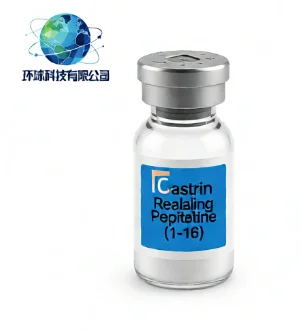
Gastrin Releasing Peptide (1-16), human
<p>Gastrin Releasing Peptide (1-16), Human, often abbreviated as GRP(1-16), is a bioactive N-terminal fragment of the full-length 27-amino acid human Gastrin Releasing Peptide. This 16-amino acid peptide retains the core receptor-binding region and exhibits significant biological activity. It is widely recognized for its role as a neurotransmitter and mitogen, primarily functioning through the Gastrin Releasing Pept…
SupplierGlobal Technology Co., Ltd.www.hqtechtirz.com
Source categories
About this product
Product information from the supplier.
TECHNICAL SPECIFICATIONS
| Item | Specification |
|---|---|
| Product Name | Gastrin Releasing Peptide (1-16) |
| CAS NO. | / |
| Appearance | White to off-white lyophilized powder |
| Molecular Formula | C74H121N17O20S |
| Molecular Weight | 1600.9g/mol |
| Purity (RP-HPLC) | ≥98.0% |
| Solubility | Soluble in water (≥10 mg/mL), dilute acetic acid, and DMSO |
| Endotoxin | ≤5.0 EU/mg |
| Biological Activity | Potent agonist of the gastrin-releasing peptide receptor (GRPR) |
| Storage Conditions | Store at -20°C to -80°C in a sealed container, protected from moisture and light. |
| Stock Location | Stock in USA |
| MOQ | 1g |
1.MECHANISM OF ACTION
GRP(1-16) exerts its effects by acting as a potent agonist for the Gastrin Releasing Peptide Receptor (GRPR, or BB2 receptor). This receptor is a G-protein coupled receptor (GPCR) primarily coupled to the Gq/11 protein. Upon binding, the peptide activates phospholipase C (PLC), leading to the hydrolysis of phosphatidylinositol 4,5-bisphosphate (PIP₂) into inositol trisphosphate (IP₃) and diacylglycerol (DAG). IP₃ triggers the release of calcium from intracellular stores, while DAG activates protein kinase C (PKC).
- Receptor Signaling Studies: Investigating structure-activity relationships (SAR) of GRP, defining the minimal active sequence required for GRPR activation and downstream signaling.
- Neurobiology Research: Studying the role of GRP fragments as neurotransmitters or neuromodulators in the central and peripheral nervous systems.
- In VitroPharmacology: Serving as a reference agonist in GRPR binding assays (competitive displacement studies) and functional assays (calcium flux, IP₃ accumulation) to screen for antagonists or allosteric modulators.
- Cancer Cell Biology: Exploring the mitogenic and proliferative effects of GRP fragments on GRPR-expressing cancer cell lines (e.g., small cell lung cancer, prostate cancer).
- Peptide Analog Development: Used as a scaffold or benchmark in the design and testing of modified GRP analogs with improved stability or selectivity.
2.PRODUCT INDICATIONS
- Research Validation: Preclinical studies confirm that this fragment retains significant biological activity in stimulating gastrin release and activating GRPR-mediated signaling pathways in vitro, though it may be less potent or stable in vivothan the full-length peptide.
- Diagnostic/Therapeutic Prototype: While not a drug itself, research on this fragment contributes to understanding the GRP/GRPR system's role in disease. This knowledge underpins the development of GRPR-targeted diagnostics (e.g., radiolabeled ligands for PET imaging of tumors) and therapeutics (e.g., GRPR antagonists).
- Clinical Translation Gap: No clinical trials have been conducted using GRP(1-16) as a therapeutic agent. Its clinical relevance is entirely indirect, serving as a tool to validate a drug target (GRPR) that is being actively investigated in oncology clinical trials.
- Utility: Its primary value is in generating robust preclinical data to guide the development of future clinical candidates that modulate the GRP/GRPR axis.
3.CLINICAL EFFICACY OF PRODUCT
4.DELIVERY & SHIPPING
We specialize in global logistics for various cosmetic peptides. Your order will be handled with the utmost care, ensuring safe, reliable, and intact delivery.
Professional and Secure Packaging
Each bottle of peptide is protected with a special packaging solution to ensure stability and integrity during transportation.
We can also customize packaging according to customer needs.
Shipping Methods
Main Method: International Air Freight
We primarily use DHL, FedEx, UPS, and TNT because of their global reliability, speed, and advanced tracking systems. Air freight ensures the fastest transit time and minimizes the impact of environmental factors on the product.

More from this supplier
Global Technology Co., Ltd.


