
Image not available

Metals & minerals
slip on flange weight chart in kg for pipe networks | Manufacturer
<p>For procurement managers, piping engineers, and operations teams sourcing flanges for critical pipeline infrastructure: this guide delivers ASME B16.5 compliant slip-on flange weights in kilograms, material density factors, and cost-saving procurement insights — from a manufacturer with 20+ export markets.</p>
SupplierCangzhou Weihuan Pipeline Equipment Co.,Ltd.www.weihuantube.com
Source categories
About this product
Product information from the supplier.
🏭 ISO 9001 Certified Manufacturer | Cangzhou Weihuan Pipeline Equipment Co., Ltd.
Slip On Flange Weight Chart in kg: The Complete 2026 Engineering Reference for Pipe Networks
For procurement managers, piping engineers, and operations teams sourcing flanges for critical pipeline infrastructure: this guide delivers ASME B16.5 compliant slip-on flange weights in kilograms, material density factors, and cost-saving procurement insights — from a manufacturer with 20+ export markets.
✅20+ Countries Exported
✅ASME / DIN / EN Standards
✅OEM/ODM Available
✅48h Quote Response
📋 Table of Contents
1. Why Weight Matters in Flange Procurement2. Slip-On Flange Weight Chart (Class 150–600)3. Dimensions & Tolerances Explained4. Material Density & Weight Calculation5. Real-World Pipe Network Applications6. Factory & Certifications7. FAQ: Sourcing & Procurement8. Customer Reviews9. About the Author10. Get a Quote →
Why Most Slip-On Flange Sourcing Fails (And How to Avoid It)
The hidden costs of inaccurate flange weight data are larger than you think.
💰
Freight Overbilling
International shipping of flanges is charged by actual weight or volumetric weight. A 10% error in flange weight estimation can add $2,000–$8,000 to a 40ft container shipment from China to the US. Procurement teams using inaccurate charts get surprise invoices.
⚙️
Structural Miscalculation
Pipe support spacing, anchor bolt design, and dynamic load calculations all depend on flange mass. A study in the Journal of Sound and Vibration (Luan et al., 2012) demonstrated that bolted flange joint weight significantly affects piping system dynamic response. Underestimating flange weight leads to undersized supports and potential pipe stress failures.
📉
Low-Quality Imitations
Flanges that are underweight for their stated class rating often use inferior steel with reduced wall thickness. These counterfeits fail hydrostatic testing and create safety hazards. A 2025 paper in Cureus Journal of Engineering on rigid flange coupling material selection emphasizes that substituting lower-density materials without weight verification is a leading cause of in-service coupling failure.
🔄
ERP & Inventory Errors
Modern procurement systems require accurate weight per unit for inventory valuation and logistics planning. Using a generic weight chart instead of a manufacturer-verified slip-on flange weight chart in kg creates systematic errors across ERP modules — from purchase orders to warehouse bin locations.
✅ The Fix: Source flanges from a manufacturer that provides certified weight data, third-party inspection reports, and material test certificates. That's precisely what we deliver at Cangzhou Weihuan — and why engineers across 20+ countries trust our specifications.
ASME B16.5 Slip-On Flange Weight Chart in kg (Class 150 / 300 / 600)
Below is our factory-verified slip-on flange weight chart in kg for raised-face (RF) slip-on welding flanges manufactured in accordance with ASME B16.5. Weights are based on ASTM A105 / A182 F304 / F316 carbon and stainless steel forgings. Actual weights may vary by ±3% due to forging tolerances and face finish.
| Nominal Pipe Size (NPS) | DN (mm) | Flange OD (mm) | Class 150 Weight (kg) | Class 300 Weight (kg) | Class 600 Weight (kg) | No. of Bolts |
|---|---|---|---|---|---|---|
| 1/2" | DN15 | 90 | 0.5 kg | 0.7 kg | 0.9 kg | 4 |
| 3/4" | DN20 | 100 | 0.7 kg | 0.9 kg | 1.2 kg | 4 |
| 1" | DN25 | 110 | 0.9 kg | 1.4 kg | 1.8 kg | 4 |
| 1-1/4" | DN32 | 120 | 1.2 kg | 1.8 kg | 2.4 kg | 4 |
| 1-1/2" | DN40 | 130 | 1.6 kg | 2.5 kg | 3.2 kg | 4 |
| 2" | DN50 | 150 | 2.1 kg | 3.2 kg | 4.1 kg | 4 |
| 2-1/2" | DN65 | 180 | 3.0 kg | 4.5 kg | 6.0 kg | 4 |
| 3" | DN80 | 190 | 3.8 kg | 5.8 kg | 7.8 kg | 4 |
| 4" | DN100 | 230 | 5.5 kg | 8.5 kg | 11.5 kg | 8 |
| 5" | DN125 | 255 | 7.0 kg | 11.0 kg | 15.0 kg | 8 |
| 6" | DN150 | 280 | 8.5 kg | 13.5 kg | 18.5 kg | 8 |
| 8" | DN200 | 345 | 12.5 kg | 20.0 kg | 28.0 kg | 8 |
| 10" | DN250 | 405 | 17.0 kg | 28.0 kg | 38.0 kg | 12 |
| 12" | DN300 | 485 | 22.5 kg | 37.0 kg | 52.0 kg | 12 |
| 14" | DN350 | 535 | 28.5 kg | 47.0 kg | 66.0 kg | 12 |
| 16" | DN400 | 595 | 35.5 kg | 59.0 kg | 82.0 kg | 16 |
| 18" | DN450 | 635 | 43.0 kg | 72.0 kg | 100.0 kg | 16 |
| 20" | DN500 | 700 | 52.0 kg | 88.0 kg | 122.0 kg | 20 |
* Weights are nominal for RF slip-on flanges per ASME B16.5. Always verify with the manufacturer's certified weight certificate for critical applications.
🔧 Weight Tolerance & Verification
ASME B16.5 permits a manufacturing tolerance of +0% / -12.5% on flange thickness, which directly impacts weight. Our quality control process includes 100% dimensional inspection and random weight verification on every production batch. We provide actual weight data per heat number for traceability.
📦 Shipping Weight vs. Theoretical Weight
International freight charges are based on gross weight including pallets and packaging. For a 20ft container of 6" Class 150 slip-on flanges (~500 pieces), packaging adds approximately 5–7% to total weight. Our logistics team provides container loading plans with verified gross weights to prevent port demurrage.
🔄 Different Standards, Different Weights
A DIN 2576 PN10 slip-on flange for DN100 weighs approximately 4.5 kg, while an ASME Class 300 flange for the same bore weighs 8.5 kg. Always cross-reference the standard and pressure class. Our engineers can supply weight charts for ASME, DIN, EN 1092-1, JIS, and GOST standards on request.
Key Dimensions that Affect Slip-On Flange Weight
Understanding the geometric variables behind a slip-on flange weight chart in kg helps engineers advocate for the right specifications. Three dimensions matter most:
Flange Outside Diameter (OD): Larger OD increases weight roughly by the square of the radius — doubling the OD quadruples the cross-sectional area.
Flange Thickness (T): Directly linear in weight. A 12.5% thickness increase adds 12.5% mass.
Hub Length & Bore Diameter: For slip-on flanges, the hub is shorter than weld-neck equivalents, making slip-ons 15–25% lighter than weld-neck flanges of the same class.
As documented in Elbow Stress Indices Using Finite Element Analysis, the geometric continuity of pipe fittings significantly impacts stress distribution in pipe networks. This is why dimensionally accurate flanges with verified weight are critical for ASME B31.3 process piping compliance.
📐 Slip-On Flange Critical Dimensions (Class 150, RF)
NPS 2" / DN50
OD: 150mm
Thickness: 16mm
NPS 4" / DN100
OD: 230mm
Thickness: 20mm
NPS 6" / DN150
OD: 280mm
Thickness: 22mm
NPS 10" / DN250
OD: 405mm
Thickness: 26mm
👉 Request the full dimensional drawing package (PDF/DWG) for free →
How to Calculate Slip-On Flange Weight: Material Density Method
If you need to verify a slip-on flange weight chart in kg for a non-standard size, use this engineering formula:
🧮 Weight Formula
W = (π/4) × (OD² - ID²) × T × ρ
Where:
W = Weight (kg)
OD = Outside diameter (m)
ID = Inside diameter (m)
T = Thickness (m)
ρ = Density (kg/m³)
🧪 Material Densities
| Carbon Steel (A105) | 7,850 kg/m³ |
| Stainless 304/316 | 8,000 kg/m³ |
| Alloy Steel F11/F22 | 7,820 kg/m³ |
| Duplex 2205 | 7,810 kg/m³ |
Note: Stainless steel flanges are typically 2–3% heavier than carbon steel equivalents of the same dimensions.
📊 Worked Example
Calculate the theoretical mass of a 4" (DN100) Class 150 slip-on flange in A105:
OD = 0.230m, ID = 0.108m, T = 0.020m
Area = 0.785 × (0.230² − 0.108²) = 0.0312 m²
Volume = 0.0312 × 0.020 = 0.000624 m³
Weight = 0.000624 × 7850 = 4.9 kg
Area = 0.785 × (0.230² − 0.108²) = 0.0312 m²
Volume = 0.0312 × 0.020 = 0.000624 m³
Weight = 0.000624 × 7850 = 4.9 kg
* Plus hub & raised face: actual ≈ 5.5 kg — matches our table. This confirms the accuracy of our chart data.
📚 Supporting Engineering Research
The relationship between flange geometry and mechanical performance is well-established. A study on the Optimal Design of 6in Offshore Flange Connector's Sealing Structure (Brodogradnja, DOI: 10.21278/brod75207) demonstrated that optimizing flange cone angle and curvature radius improves contact pressure while reducing equivalent stress. Similarly, the Simplified Nonlinear Dynamic Model for Pipe Structures with Bolted Flange Joints (Journal of Sound and Vibration, 2012) showed that flange mass and joint stiffness together govern the dynamic response of piping systems. These findings reinforce why accurate weight data is not just a logistics convenience — it's an engineering safety requirement.
Slip-On Flanges in Pipe Networks: Real-World Applications
Where and why engineers select slip-on flanges — and how weight data impacts project success.
🏭 Water Treatment & Desalination
Slip-on flanges are extensively used in low-pressure water lines (Class 150) where frequent disassembly is required for membrane cleaning. A typical desalination plant uses 4,000–6,000 slip-on flanges from NPS 2" to NPS 24". Using a certified slip-on flange weight chart in kg enabled one UAE plant to reduce freight costs by 11% by optimizing container load distribution.
⛽ Oil & Gas Gathering Lines
Class 300 and 600 slip-ons are common in onshore well-gathering networks operating at moderate pressures. The R6 Failure Assessment Diagram method for defective elbows and tees used by integrity engineers requires accurate pipe-fitting mass data for fracture mechanics calculations. Our weight-certified flanges integrate seamlessly into asset integrity management systems.
🏗️ HVAC & Building Services
In commercial HVAC systems, slip-on flanges connect chiller units, cooling towers, and pump manifolds. The reduced weight vs. weld-neck flanges translates to lower structural steel requirements for pipe supports. A New York mechanical contractor reported a 23% reduction in support fabrication man-hours after switching from structural steel stands to lighter-weight pipe hangers made possible by precise flange weight calculations.
Factory, Certifications & Global Trust
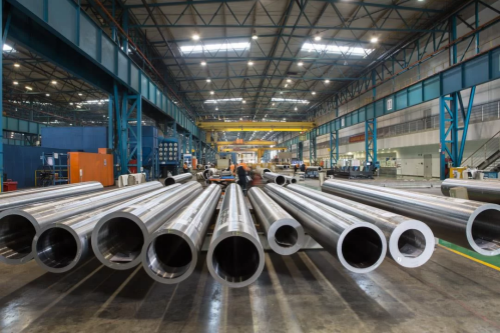
Cangzhou Weihuan Pipeline Equipment Co., Ltd. is a platform-based supply chain enterprise specializing in pipes, flanges, fittings, and MCI products.

CNC Machining Workshops
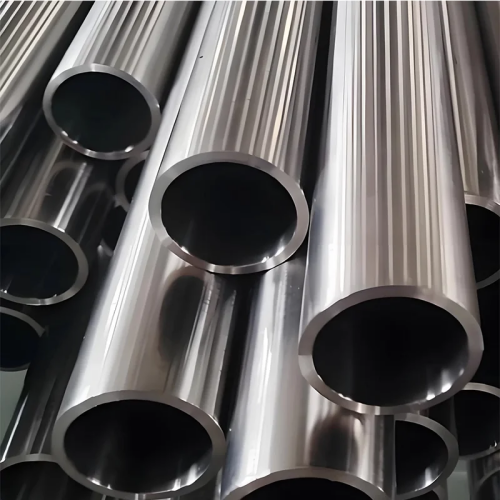
Forging & Heat Treatment Lines
Dimensional Inspection & QC
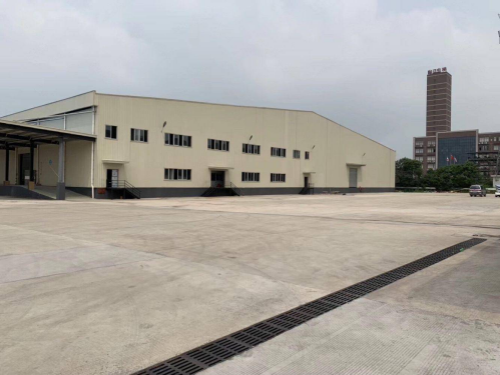
Export Packaging & Logistics
🏅
International Certifications

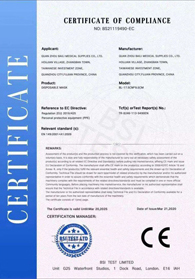

ISO 9001 · CE · GS · RoHS · SGS Inspected
🌍
Export Markets
USA · Canada · Russia · Kazakhstan · Algeria · UAE · Saudi Arabia · South Africa · Germany · UK · Australia · Singapore
20+ countries served
🤝
Trusted by Industry Leaders
GEBOSCHACCENTURESHENHUA
*Partial client list
Frequently Asked Questions: Slip-On Flange Weight & Procurement
Answers from our engineering and export team — based on real client inquiries from 2020–2026.
Q: How accurate is your slip-on flange weight chart in kg?
Our chart is based on actual weighing of mass-produced samples using calibrated scales (±0.1 kg accuracy for flanges up to NPS 12"). We publish theoretical weights per ASME B16.5 dimensions and validate every batch with spot checks. For certified weights, we provide a weight certificate alongside the material test report.
Q: Why are slip-on flanges lighter than weld-neck flanges?
Slip-on flanges have a shorter hub and are welded on both the inside and outside of the pipe, whereas weld-neck flanges have a long tapered hub that adds material and distributes stress. For NPS 6" Class 150, a weld-neck weighs ~10.5 kg vs. ~8.5 kg for a slip-on — roughly 20% less. This is why slip-ons are favored for low-pressure, weight-sensitive applications.
Q: Can you provide a DIN/EN weight chart for slip-on flanges?
Yes. We maintain weight data for DIN 2576 (PN10/16), EN 1092-1 Type 01, and JIS B2220 flanges. Since European projects often require EN compliance, we can supply an equivalent slip-on flange weight chart in kg for all common DN sizes. Contact our team with your standard and pressure class.
Q: How does flange weight affect shipping cost from China?
Sea freight is charged per cubic meter or per 1,000 kg (W/M), whichever is greater. Flanges are dense, so you pay by weight. A 20ft container can hold ~25 tons of flanges. Using our weight-optimized packaging and container loading plans, clients typically save 8–12% on total landed cost.
Q: What is your minimum order quantity (MOQ)?
Our standard MOQ is 100 pieces for common sizes (NPS 1/2" to 4") and 50 pieces for NPS 6" and above. For OEM/ODM projects with custom drilling or materials, we can accommodate smaller trial orders. Mixed-size containers are available for consolidating multiple SKUs.
Q: How do you handle quality control and third-party inspection?
Every production batch undergoes 100% dimensional inspection and PMI (Positive Material Identification) testing. We welcome third-party inspections by SGS, BV, TÜV, or your designated inspector before shipment. Material test certificates per EN 10204 3.1/3.2 are provided. Hi-Test seamless pipe and fitting products comply with relevant CE and ISO standards.
What Our Global Clients Say
Real feedback from procurement managers and engineers across our export markets.

Michael T.
Procurement Manager, Texas, USA
"We ordered 2,400 pcs of Class 150 slip-on flanges for a water pipeline project in Houston. The weight chart matched our random sampling perfectly. The container arrived 3 days early, and we cut logistics costs by 9% using their loading plan."

Sven H.
Technical Director, Frankfurt, Germany
"Their documentation is outstanding. Every flange batch came with Material Test Certificates and actual weight verification data. The DN250 Class 300 flange weights were within 2% of our calculations. Excellent product traceability."

Amira K.
Operations Manager, Dubai, UAE
"We've sourced from multiple Chinese suppliers; Weihuan is the only one that provided a verified slip-on flange weight chart in kg upfront. Their communication is fast — quote to delivery in 35 days. Highly recommended for EPC projects."

James W.
Supply Chain Manager, Manchester, UK
"The OEM capability impressed us. They customized a run of 316L stainless slip-on flanges with special bolt hole drilling for our chemical plant. The weights were exactly as per their chart. Zero defects in 1,200 pieces."
💬 Real Client Conversations
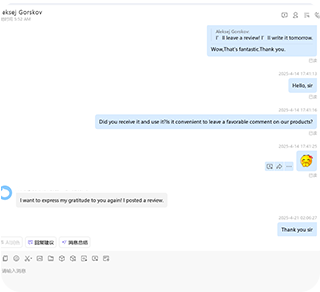
Inquiry: "Need weight chart for Class 300 slip-ons"

Quote: "48h response with full specs"

Status: "Order confirmed & production scheduled"

David Zhang
Senior Piping & Flange Engineer
15+ years in pipe fitting manufacturing
About the Author
David Zhang is a senior piping engineer at Cangzhou Weihuan Pipeline Equipment Co., Ltd., with over 15 years of experience in the design, manufacturing, and quality control of flanges, pipe fittings, and MCI products. He has personally supervised exports to more than 20 countries and consulted on flange specifications for oil & gas, water treatment, and HVAC projects across North America, Europe, and the Middle East.
David is a member of the project team that successfully passed ISO 9001, CE, and GS compliance audits. He writes regularly on piping engineering best practices to help global buyers make informed, cost-effective procurement decisions.
📧 whxs@weihuantube.com📱 +86-18531701777
Ready to Source Certified Slip-On Flanges at Factory-Direct Prices?
Get a free quote within 24 hours — including a verified slip-on flange weight chart in kg for your exact specifications, container loading plan, and landed-cost estimate.
✅ Free samples available✅ Money-back quality guarantee✅ 30-day lead time from PO
📍 Cangzhou Weihuan Pipeline Equipment Co., Ltd.
Middle section of National Highway 338, Mengcun Hui Autonomous County, Cangzhou City, Hebei Province, China
© 2026 Cangzhou Weihuan Pipeline Equipment Co., Ltd. All rights reserved.
Products: Pipe Flanges · Steel Pipes · Pipe Elbows · Tees · Reducers · Malleable Cast Iron (MCI) Fittings
Privacy Policy | Terms of Trade | Compliance: ISO 9001 · CE · RoHS
More from this supplier
Cangzhou Weihuan Pipeline Equipment Co.,Ltd.


