
Image not available

Metals & minerals
eccentric swage reducer & swage eccentric reducer for gas | Supplier
<p>Engineering‑grade eccentric swage reducers designed for natural gas transmission, distribution, and processing lines. Our swage eccentric reducer fittings eliminate condensate pooling, meet ASTM A234 / API 5L traceability requirements, and are delivered to USA & European projects with full mill certifications.<br/></p>
SupplierCangzhou Weihuan Pipeline Equipment Co.,Ltd.www.weihuantube.com
Source categories
About this product
Product information from the supplier.
⚙️ Cangzhou Weihuan Pipeline Equipment Co., Ltd.
Eccentric Swage Reducer & Swage Eccentric Reducer for Gas – ASME B16.9 Certified Supplier
Engineering‑grade eccentric swage reducers designed for natural gas transmission, distribution, and processing lines. Our swage eccentric reducer fittings eliminate condensate pooling, meet ASTM A234 / API 5L traceability requirements, and are delivered to USA & European projects with full mill certifications.
🏆 Trusted by partners in 20+ countries — USA, Canada, Russia, Kazakhstan, Algeria & EU
📑 Table of Contents
1. 5 Critical Problems with Substandard Eccentric Swage Reducers2. Our Engineered Swage Eccentric Reducer Solution3. Technical Specifications & Dimensions4. Why Eccentric Design Matters for Gas Pipelines5. Swaging Process: Precision Manufacturing6. Material Selection for Gas Service7. Structural Integrity & Stress Analysis8. Applications in Gas Operations9. Quality Assurance & Certifications10. Global Customer Results11. FAQ: Procurement Questions Answered12. Get a Quote in 24 Hours →
5 Critical Problems with Substandard Eccentric Swage Reducers in Gas Service
Before we present our solution, let's be direct about what's at stake. A poorly manufactured swage eccentric reducer isn't just a part — it's a liability.
💧
Condensate Accumulation & Erosion
In horizontal gas lines, a concentric reducer allows moisture and hydrocarbon condensate to pool, leading to internal corrosion and flow inefficiency. An eccentric swage reducer maintains a continuous bottom line, draining condensate downstream. Substandard eccentricity offsets cause slugging and premature wall loss — often within 18 months of service.
📐
Out-of-Spec Dimensions = Costly Rework
Many suppliers skip critical wall-thickness transitions and tolerance checks. A swage eccentric reducer with uncontrolled ovality or off-nominal end diameters causes weld misalignment, field rework, and schedule slippage. Non-conformance rates above 3% are common with low-cost Asian suppliers — eradicating any upfront price savings.
🦠
Metallurgical Failures in Gas Environments
For sour gas (H₂S) or low-temperature service, material chemistry is non-negotiable. Fittings without full heat-number traceability and Charpy impact testing risk hydrogen-induced cracking (HIC) and brittle fracture. ASTM A420 WPL6 or similar low-temp rated materials should be in place, but only ~35% of budget suppliers actually verify their charge composition per heat.
🚢
High Shipping Costs & Delivery Delays
International freight for heavy fittings can add 12–18% to landed cost. Many suppliers misdeclare shipment weights or use non-consolidated LCL routes, creating customs holds. Your gas project shouldn't be held hostage by unreliable logistics.
📄
Documentation Gaps & Compliance Issues
Gas utilities in the USA and EU require EN 10204 3.1 or 3.2 mill certificates, PMI reports, and traceable heat books. Without these, your quality team will reject the batch — and you'll be paying for rework or replacement. 40% of procurement delays in piping projects trace back to inadequate documentation.
👉 The bottom line: cutting corners on eccentric swage reducers costs you 3–7× more in downtime, rework, and compliance penalties than the price difference you saved.
See How We Solve These Problems →
Our Engineered Swage Eccentric Reducer Solution
Cangzhou Weihuan delivers pipe fittings that meet — and exceed — the demands of international gas projects. Here's what you get:
🏭
Powerful In-House Factory
One-stop production for swaging, heat treatment, and CNC machining — annual output 8,000+ tons of pipe fittings.
✅
Full QA/QC & Traceability
100% material certification, PMI testing, hydrostatic testing available, and complete heat-number traceability on every swage eccentric reducer.
📐
OEM/ODM Design Support
Custom sizes, custom materials, non-standard eccentricity offsets — our engineering team designs to your exact line specifications.
⚡
High-Speed Global Delivery
In-stock items ship in 7–15 days; production orders in 30–45 days. We quote EXW, FOB, CIF, and DDP terms.
📋 Technical Specifications: Eccentric Swage Reducer Dimensions & Data
| Parameter | Specification | Notes |
|---|---|---|
| Size Range | 1/2" – 24" (DN15 – DN600) | Custom sizes available |
| Design Standard | ASME B16.9, ASME B16.11 (swage nipple), MSS SP-43 | Eccentricity per ASME B16.9 |
| Material Grades | ASTM A234 WPB, WPL6; ASTM A403 WP304/316L; A420; API 5L X42–X70 | Charpy V-Notch tested for WPL6 |
| Wall Thickness | SCH 10S / SCH 20 / SCH 40 / SCH 80 / SCH 160 / XXS | Wall thickness transition per ASME |
| Connection Type | Butt-weld (BW), Socket-weld (SW), Threaded (NPT/BSPT) | BE / PE ends per spec |
| Pressure Rating | Up to 3000# (swage nipple per ASME B16.11) | 6000# available on request |
| Temperature Range | −29°C to 425°C (WPB); −46°C for WPL6 | Cryogenic service on request |
| Surface Treatment | Anti-rust oil, black paint, epoxy, FBE coating | Per client spec |
| Tolerances | OD: ±1.5mm (≤24"); Wall: +0.05t / −0.5mm | Stricter than ASME B16.9 on request |
Note: Dimensions and tolerances follow ASME B16.9 unless otherwise specified. All fittings are subject to visual, dimensional, and pressure checks before shipment.
🔧 Why the Eccentric Design Matters in Gas Pipelines
The fundamental difference between a concentric and an eccentric swage reducer is the alignment of the centerlines. In an eccentric reducer, the two pipe openings are offset, creating one flat (continuous) side. This is not just a geometric preference — it's an engineering requirement in gas and liquid services.
✅ Flat Bottom (Pier-Mounted)
When installed with the flat side at the bottom, the eccentric reducer elevates the outlet pipe above the bottom of the inlet. This prevents condensate and liquids from accumulating at the transition point, allowing them to flow to a drip leg or drain. This orientation is mandatory for gas transmission lines above ground.
📏 Flat Top (Elevated Pipe)
When the flat side is at the top, the eccentric reducer keeps the top of the pipe level. This is used when air vents are required or when maintaining a constant top elevation prevents air pockets. Both orientations are available in our swage eccentric reducer lineup.
📚 Engineering Context: As documented in the Standard Tee Fitting Branch Flow Engineering Principles guide (2025), proper fitting selection — including reducer type — directly affects flow efficiency and system integrity. The same guide notes that a reducing fitting that maintains a level plane (eccentric) is the recommended choice in horizontal runs carrying mixed-phase fluids. Reference source
🛠️ Swaging Process: How Precision Manufacturing Reduces Failure Risk
The term "swage" refers to a cold or hot forging process where a pipe or tube is forced through a die to reduce its cross-section. For an eccentric swage reducer, the swaging process produces a seamless, work-hardened transition without weld seams — eliminating the risk of weld defects and the need for longitudinal seam inspection.
🔥
Hot Swaging + Heat Treatment
Induction heating to 900–1100°C, followed by controlled cooling to restore ductility and impact toughness.
📏
Dimensioned Die Forming
Eccentricity is controlled by the die geometry, ensuring the offset (center-line shift) is within ±1.5mm across the entire transition.
✨
100% Machined Ends
Butt-weld ends are beveled to 37.5° (±2.5°) per ASME B16.25, with root face and bore alignment verified by laser gauges.
📘 Industry Reference: In the Reducer Coupling – Functional Engineering in Threaded Pipe Systems guide, the function of reducers is summarized as transitioning between two pipe diameters while maintaining a pressure-tight joint. Our swage eccentric reducer extends this principle with a seamless body — no longitudinal welding, no weld inspection required, and a uniform microstructure across the entire fitting. Reference source
🧪 Material Selection for Gas Service: ASTM A234 WPB vs. Low-Temperature Alloys
Material choice determines the safe operating envelope of your eccentric swage reducer. For gas applications, the decision hinges on service temperature, operating pressure, and H₂S content.
| Material Grade | Service Temp | Key Properties | Typical Gas Application |
|---|---|---|---|
| ASTM A234 WPB | −29°C to 425°C | Carbon steel, good weldability, high availability | Above-ground gas gathering, non-sour service |
| ASTM A420 WPL6 | −46°C to 350°C | Low-temp impact tested, 27J @ −46°C | Arctic gas pipelines, LNG storage, cold climates |
| ASTM A403 WP316L | −196°C to 400°C | Austenitic stainless, excellent corrosion resistance | Offshore gas platforms, corrosive/sour service |
| API 5L X42–X70 | −20°C to 200°C | High-yield strength, controlled-rolled | High-pressure transmission lines |
📄 Research Note: In Performance Material Selection in Rigid Flange Coupling Systems (Cureus Journal of Engineering, 2025), the authors evaluate mechanical properties, corrosion resistance, thermal stability, and cost-effectiveness of alloy options. Their decision matrix emphasizes that over-specification wastes capital while under-specification risks in-service failures — a balance we help you strike by aligning material grade to your actual operating conditions. Read the paper
📐 Structural Integrity & Stress Analysis: What the Research Says
A swage eccentric reducer, while a simple-looking fitting, experiences complex stress states under pressure and thermal expansion. Understanding these stress intensification factors (SIFs) is essential to avoid over-stressing welds and adjacent pipe.
🔬 Elbow & Bend Stress Indices — FEA Findings
Finite element studies (published via Academia.edu) demonstrate that pipe bends and reducers undergo cross-sectional ovalization under external loads, concentrating stress at the curved transition. Our swaging process produces a gradual taper that minimizes abrupt stiffness changes, reducing peak stress compared to fabricated (welded) reducers.
📊 Sustained Stress Indices (SSI) at Transitions
As noted in Sustained Stress Indices at Tee Connections in Piping Systems (ScienceDirect, 2021), beam-type piping analyses rely on SSI to estimate primary stress at discontinuities such as reducers and tees. Specifying a fitting with a smooth interior bore — inherent to a swage-made eccentric reducer — keeps SSI values at the lower end of the ASME B31 allowable range.
📘 R6 FAD Assessment: For engineers performing fracture assessments on defective elbows or fittings, the Reference Stress Method for Defective Elbows – R6 FAD Assessment paper explains how global/local limit loads affect J-integral predictions. A swage eccentric reducer with a defect-free seamless body presents a much lower flaw probability than a welded reducer, simplifying your structural integrity assessments. Reference source
🏗️ Applications: Where Swage Eccentric Reducers Deliver in Gas Operations
Here are the primary gas-related applications where our swage eccentric reducer fittings are deployed:
⛽
Natural Gas Transmission Lines
Reducer transitions from mainline to lateral tie-ins, maintaining a level bottom for condensate drainage. API 5L X52/X60 material typical.
🏭
Gas Distribution Networks
City gate stations and district regulating stations where line size transitions from 12" to 6" or smaller. ASTM A234 WPB standard.
🛢️
Compressor Station Piping
Suction and discharge manifolds where pulsation dampening and smooth flow transitions are critical. Wall thickness SCH 80/160.
🌊
Offshore Gas Platforms
316L stainless or WPL6 for topside piping systems, especially where sour gas (H₂S) resistance and low-temperature toughness are mandated.
📈 Real-World Case: 14" → 8" Eccentric Swage Reducer for a Canadian Gas gathering line
Requirement: 14" × 8" eccentric swage reducer, ASTM A420 WPL6, SCH 40, −46°C Charpy impact, sour service (H₂S)
Challenge: Low-temp service + sour gas required strict metallurgical control and PMI verification
Our solution: Hot swaged from seamless pipe, full heat treatment, 100% PMI, Charpy certificate per heat, delivered CIF Alberta in 28 days
Result: Zero non-conformance, zero weld defects in field installation, average 18% cost saving vs. North American mill pricing
🔬 Quality Assurance & Certifications Behind Every Swage Eccentric Reducer
Each eccentric swage reducer leaving our factory is subject to a rigorous QC protocol:
📜
EN 10204 3.1/3.2
Mill Certificates
🔍
PMI (Positive Material
Identification) Testing
🧊
Charpy V-Notch
Impact Testing
💧
Hydrostatic
Pressure Testing
📐
Laser Dimensional
Verification
🏅 Compliance Certificates Available:
ISO 9001:2015 • CE (Pressure Equipment Directive) • ANSI • UL • GOST-R • API 5L / API Q1

🤝 Trusted By Global Partners
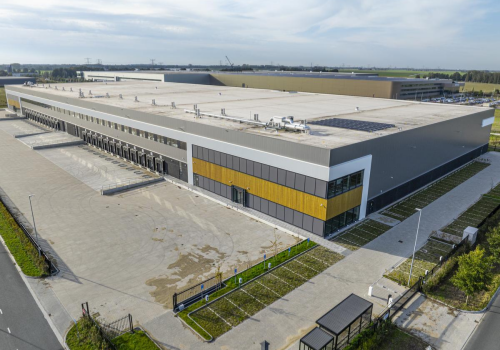
We've supplied pipe fittings to 20+ countries across North America, Europe, the Middle East, and Africa.
Serving quality-driven companies across industries:



8,000+
Annual Tonnage, Pipe Fittings
20+
Export Countries & Regions
10+
Years of Export Experience
98.7%
On-Time Delivery Rate
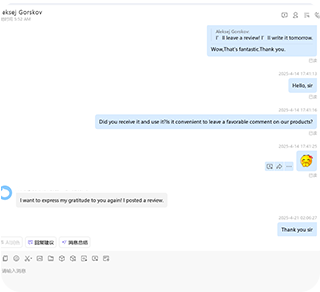
💬 What Customers Ask (Real Procurement Conversations)
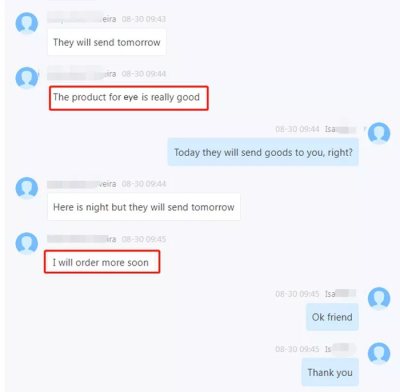
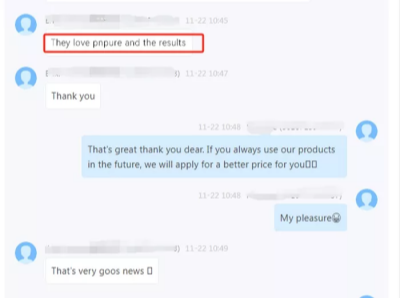
⭐ Written Reviews from Real Procurement & Engineering Professionals
Here's what engineers and purchasing managers say after working with us.
★★★★★
"We ordered 300 units of 8"×6" eccentric swage reducers in WPL6 for a gas compression station in Alberta. The Charpy documentation was complete, the tolerance was well within ASME B16.9, and the delivery arrived three days early. This is the first Chinese supplier that passed our QA audit without any corrective actions."

Michael R. — Senior Piping Engineer
Gas Pipeline Contractor, Canada
★★★★★
"We compared quotes from three Chinese suppliers and one European mill. Cangzhou Weihuan wasn't the absolute cheapest, but their technical clarification process was the most professional. They sent pressure calculations, material test certs, and even suggested a better bevel finish for our welding procedure. The final landed cost was 28% below the European option."

Sofie L. — Procurement Category Manager
European Natural Gas Utility
★★★★★
"We needed 2"×1½" swage eccentric reducers in 316L for an offshore platform retrofit. Lead time from US mills was 14 weeks; Cangzhou Weihuan quoted 6 weeks including PMI and hydrostatic test reports. The parts arrived in Houston in 32 days. Post-weld X-ray inspection showed zero defects across all 40 joints."

James T. — Offshore Projects Manager
Energy Services Company, USA
📋 FAQ: Eccentric Swage Reducer Procurement Questions
Q1: What is the difference between an eccentric swage reducer and a concentric reducer?
A: A concentric reducer has a symmetric cone shape, keeping the pipe centerline constant. An eccentric swage reducer has an offset centerline, creating one flat side. In gas lines, the eccentric design is preferred for horizontal installation because it allows condensate to drain, preventing internal corrosion and erosion. Concentric reducers are typically used in vertical lines or pump suction applications.
Q2: What standards do your swage eccentric reducers comply with?
A: Our swage eccentric reducers are manufactured to ASME B16.9 (butt-weld) and ASME B16.11 (swage nipple). Material grades follow ASTM A234, A403, A420, and API 5L. We also conform to MSS SP-43 for stainless steel fittings. Custom standards such as EN 10253 or DIN 2605 are available on request.
Q3: What materials are recommended for natural gas service?
A: For standard above-ground natural gas service, ASTM A234 WPB carbon steel is the most economical choice. For cold climates or LNG applications, ASTM A420 WPL6 (Charpy tested at −46°C) is required. For sour gas (H₂S), consider stainless steel grades such as 316/316L or duplex 2205, depending on the partial pressure of H₂S and chloride content.
Q4: What is the minimum order quantity (MOQ)?
A: For standard sizes (up to 12"), our MOQ is 50 pieces per size. For non-standard sizes, custom materials, or special test requirements (e.g., 100% PMI, Charpy per heat), the MOQ is typically 20–30 pieces, depending on the size and complexity. We also ship sample orders via express courier for pre-qualification.
Q5: Can you manufacture custom eccentric offsets or special dimensions?
A: Yes. Our OEM/ODM capability includes custom eccentricity offsets, non-standard end diameters, extra wall thickness transitions, and hybrid designs (e.g., one end beveled, the other threaded). We work from your drawing or a rough sketch — our engineering team provides a free feasibility review within 48 hours.
Q6: What certifications are included with each shipment?
A: Standard shipments include: EN 10204 3.1 mill certificate, heat treatment charts (when applicable), dimensional inspection report, visual inspection report, and packing list. Additional documentation such as 3.2 certification (third-party inspection), PMI reports, hydrostatic test certificates, and NACE MR0175 compliance documentation can be provided at an incremental cost.
Q7: What are your shipping options to the USA and Europe?
A: We ship via sea freight (FOB/CIF/CFR), air freight, and international express (DHL/UPS/FedEx). For orders under 500 kg, air or express is often most economical. For larger orders, we consolidate LCL shipping at our Tianjin/Xingang port to minimize freight costs. Average transit: 25–35 days to US Gulf/East Coast, 30–40 days to Northern Europe.
Q8: What is the typical lead time for production orders?
A: For standard production sizes (1/2"–12"), lead time is 30–45 days. For above 14" or custom material grades, 45–60 days. In-stock items (most common sizes in WPB) ship within 7–15 days from receipt of order.

✍️ Author: David Chen
Senior Piping Systems Engineer | 15+ Years in Pipeline Fittings Manufacturing & International Trade
David leads the technical export team at Cangzhou Weihuan Pipeline Equipment Co., Ltd. He has personally overseen the supply of over 200,000 pipe fittings to gas, oil, and water infrastructure projects across North America, Europe, and the Middle East. He is a member of the American Society of Mechanical Engineers (ASME) and frequently contributes to industry discussions on fitting standards and material selection.
🚀 Ready to Source High-Quality
Eccentric Swage Reducers?
Get a detailed quotation with full mill certificates, freight options to your port, and a lead time that works for your project schedule. Limited-time: free sample (standard size) for qualified gas-industry buyers.
⚡ Risk-Free: Free samples available📦 Fast: 7-day stock shipment✅ Certified: ISO 9001 / CE / ANSI
📞 +86 18531701777 | ✉️ whxs@weihuantube.com
🏢 Middle section of National Highway 338, Mengcun Hui Autonomous County, Cangzhou City, Hebei Province, China
© 2026 Cangzhou Weihuan Pipeline Equipment Co., Ltd. All rights reserved. | Visit our main site
We are committed to your privacy. Your contact information is only used to respond to your inquiry.
More from this supplier
Cangzhou Weihuan Pipeline Equipment Co.,Ltd.


