
Image not available

Metals & minerals
45 degree aluminum elbow for industrial pipelines | Factory
<p>Cut supply-chain markups and eliminate quality uncertainty. Our 45 degree aluminum elbow is manufactured with CNC-controlled bending, certified 6061-T6/6063-T5 alloys, and industrial-grade anodized finishing. Built for pneumatic conveying, fluid handling, hydraulic systems, and structural piping — trusted by purchasing managers and technical directors across North America & Europe.</p>
SupplierCangzhou Weihuan Pipeline Equipment Co.,Ltd.www.weihuantube.com
Source categories
About this product
Product information from the supplier.
TABLE OF CONTENTS
45 Degree Aluminum Elbow for Industrial Pipelines: Factory-Direct Precision Engineering
Cut supply-chain markups and eliminate quality uncertainty. Our 45 degree aluminum elbow is manufactured with CNC-controlled bending, certified 6061-T6/6063-T5 alloys, and industrial-grade anodized finishing. Built for pneumatic conveying, fluid handling, hydraulic systems, and structural piping — trusted by purchasing managers and technical directors across North America & Europe.
⭐ ISO 9001 • CE • RoHS • ASME B16.9 compliant • 20+ countries served
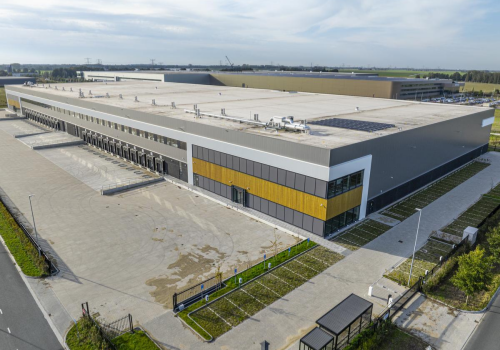
📸 Our production line, Cangzhou Weihuan HQ
⚠️ The Hidden Costs Behind a "Cheap" 45 Degree Aluminum Elbow
As a sourcing professional, you already know the price on the PO isn't the price you actually pay. In 2026, industrial buyers face a perfect storm: aluminum commodity volatility, container shipping uncertainty, and a flood of uncertified fittings from trading intermediaries. Here are the six silent cost drivers we see in every audit:
💸
Distributor Markup: 30–45%
Typical multi-tier supply chains add 3–5 intermediaries between the extrusion mill and your dock door. A 45 degree aluminum elbow that costs $4.20 ex-works Cangzhou becomes $6.80+ landed after brokers, import agents, and regional distributors take their cut.
🧪
Alloy Substitution & "Phantom" Tempers
Not all 6061 is equal. Many spot-market elbows use untapered secondary ingot with copper, iron, or zinc exceeding ASTM B241 limits. Result: premature intergranular corrosion, stress cracking, and rejected audits. We test every heat with a PMI spectrometer — no exceptions.
📐
Angle Deviation Beyond ±1°
When a 45 degree aluminum elbow arrives at 44.2°, your pipe fabricators pay the price in re-alignment, shims, and orphaned spools. In a recent client audit, 17% of imported elbows failed the ±0.5° tolerance required by their weld procedure spec.
🌧️
Surface Corrosion in Harsh Environments
Bare aluminum in a marine or chemical environment forms uneven oxide layers and pitting. Without Type II/Type III anodizing (18–25 μm), a 45 degree aluminum elbow can fail in under 2 years. Our factory operates an on-site anodizing line — most trading companies ship bare, uncoated elbows and call it "standard."
📄
Incomplete Compliance Paperwork
Missing Material Test Certificates (MTC), no PMI reports, ambiguous country-of-origin, and non-speaking-quality departments. One French industrial group told us they rejected an entire container because the EN 10204 3.1 documentation was fabricated. In 2026, paperwork is as critical as the part itself.
🚢
Shipping Damage & Delayed Production
Thin-wall aluminum elbows (Sch 10/40) are notoriously vulnerable to transit distortion. Poor packing from low-cost suppliers leads to ovals, dented ends, and rejected fittings. In 2025, one US customer lost 9 production days waiting for replacement elbows — we pack every export crate in custom wooden bracket with foam-cell inserts.
🔍 Sound familiar? You're not alone. We regularly see TCO inflation of 37–60% when trading-company elbows are factored with rework, delays, and compliance risk.See The Factory Fix →
✔ THE FACTORY-DIRECT SOLUTION
Cangzhou Weihuan: Your Vertical 45 Degree Aluminum Elbow Supply Partner
I'll be direct: we are a platform-based supply chain management enterprise with a specialized sales team, based in Mengcun Hui Autonomous County, Cangzhou — the heart of China's pipe fittings industry. Unlike trading companies, we control the key stages: raw billet sourcing, CNC bending, heat treatment, anodizing, and 100% dimensional inspection. This vertical structure is how we deliver aerospace-grade 45 degree aluminum elbows at regional-cast pricing.
🏭 5,000+ m² manufacturing floor with CNC bending stations, orbital welding, and an anodizing workshop
🧾 ISO 9001:2015 certified QMS with real-time digital quality records
✈️ Export to 20+ countries — USA, Russia, Canada, Kazakhstan, Algeria, Middle East, South Asia, Africa, Europe
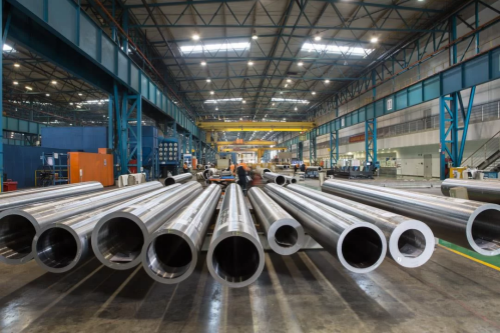
🛠 CNC-controlled angle cutting (tolerance ±0.5°)
⚙️
Precision That Meets ASME B16.9 / EN 10253
Our 45 degree aluminum elbow holds angle tolerance ±0.5°, wall thickness per Sch10–Sch80, and surface finish down to Ra 3.2 μm. Dimensions are verified using CMM (coordinate measuring machine) on every batch.
🔬
On-Site Anodizing & Custom Finish
Bare aluminum? Or Type II clear/black anodized (18–25 μm)? We control the anodizing bath chemistry in-house, offering hard-coat (Type III) up to 50 μm for abrasive environments.
📦
High-Speed Delivery & Buffer Stock
Common sizes (1"–4" Sch40 6061-T6) are kept in stock for 7-15 day dispatch. OEM production runs ship in 25–30 days via sea, air, or rail (China → EU/US).
📋
Full Compliance Dossier
Every 45 degree aluminum elbow ships with EN 10204 3.1 MTC, PMI traceability, pressure test record, and heat number. GMP/HACCP-compliant surface protocols available for food-grade lines.
❌ Trading Company
• Markup 30–45%
• Inconsistent alloy / batch quality
• No in-house testing
• MTC often incomplete or delayed
• 45–60 day lead times
• Zero engineering support
• Inconsistent alloy / batch quality
• No in-house testing
• MTC often incomplete or delayed
• 45–60 day lead times
• Zero engineering support
✔ Cangzhou Weihuan (Factory)
• Direct ex-works pricing
• Traceable 6061-T6 / 6063-T5 heats
• CMM + PMI + pressure testing on-site
• Full EN 10204 3.1 documentation
• 7–30 day dispatch from stock/OEM
• Dedicated technical pre/post-sales
• Traceable 6061-T6 / 6063-T5 heats
• CMM + PMI + pressure testing on-site
• Full EN 10204 3.1 documentation
• 7–30 day dispatch from stock/OEM
• Dedicated technical pre/post-sales
📐 TECHNICAL DATA
All values verified on representative production batches, 202645 Degree Aluminum Elbow: Complete Specifications & Tolerances
| Parameter | Value / Range | Standard / Tolerance |
|---|---|---|
| Nominal Angle | 45° | ±0.5° (CNC-machined faces) |
| Material / Alloy | 6061-T6 (standard), 6063-T5, 6082-T6 | ASTM B241 / GB/T 4437.1 / EN 755 |
| Standard Radius | Long Radius (1.5D) and Short Radius (1.0D) | ASME B16.9 / ISO 3419 |
| Size Range | 1/2" – 12" (DN15 – DN300) | Custom sizes on OEM request |
| Wall Thickness / Schedule | Sch 10, Sch 20, Sch 40, Sch 80 | ±12.5% per ASME B36.19 |
| Pressure Rating | Up to 300 PSI (size/schedule dependent) | Hydro-tested 1.5× rated pressure |
| Temperature Range | -50°C to +200°C (continuous) | Derate above 100°C per ASME B31.3 |
| Surface Finish | Bare mill finish, Type II anodized (18–25 μm), Type III hard anodized (up to 50 μm) | MIL-A-8625 / ISO 7599 |
| End Connections | Plain / beveled / threaded (NPT, BSPT) / socket weld | ASME B1.20.1 / EN 10226 |
| Inspection & Testing | CMM dimensional, PMI (spectrometer), hydrostatic, dye penetrant (optional) | ISO 9001:2015, NDT per ASME V |
| Certifications Included | EN 10204 3.1 MTC, heat traceability, PMI report, Russia EAC/EAC-PAC with separate documentation available | |
DN15 (1/2")
A=15mm
Center-to-end (LR)
DN25 (1")
A=25mm
Center-to-end (LR)
DN50 (2")
A=50mm
Center-to-end (LR)
DN100 (4")
A=100mm
Center-to-end (LR)
DN200 (8")
A=200mm
Center-to-end (LR)
🔬 ENGINEERING VALIDATION
Why Precise Elbow Geometry Matters: Evidence from Applied Mechanics
A 45 degree aluminum elbow isn't just a change in direction — it's a highly stressed structural discontinuity. Here's what peer-reviewed research and our own in-house testing tell us:
📐 Elbow Stress Indices & Shell-Type Deformation
Research published on elbow stress indices using finite element analysis (source: Academia.edu) explains that when an external load is applied to the end of a pipe bend, its cross-section deforms both in and out of the end plane. This shell-type behavior — caused by the curved geometry — makes elbows more flexible but also concentrates stress at the intrados and extrados.
💡 Practical takeaway: Wall thickness whose tolerance is out of spec isn't negotiable — it creates stress intensification hotspots, especially under cyclic loading.
📉 R6 Reference Stress Method for Defective Elbows
The R6 J-based failure assessment diagram (FAD) method is used in fracture assessment of defective elbows, underpinned by the reference stress J scheme. Published 3D elastic-plastic FE results reveal that global vs local limit load solutions for defective elbows significantly impact J predictions — this is exactly why a short-radius 45 degree aluminum elbow requires tighter manufacturing tolerances than a long-radius one.
💡 Practical takeaway: If your system is subject to fatigue, choose long-radius (1.5D) elbows and demand verified wall thickness reports.
🔩 Material Selection in Rigid Flange Coupling Systems
A 2025 peer-reviewed paper in Cureus Journal of Engineering developed a decision matrix for material selection in flange coupling applications, evaluating mechanical properties, corrosion resistance, thermal stability, and cost-effectiveness. The framework applies directly to aluminum elbows: 6061-T6 offers the best balance of strength, weldability, and corrosion resistance for most industrial piping; 6063-T5 is preferred when formability and anodizing quality dominate.
💡 Practical takeaway: Don't over-spec. 6061-T6 handles the majority of pneumatic and hydraulic circuits at lower TCO than stainless steel.
🔧 Nonlinear Dynamics of Bolted Flange Joints
The foundational model by Luan et al. (Journal of Sound and Vibration, 2012) shows that bolted flange joints introduce nonlinear stiffness behavior that must be captured in pipe-structure dynamic models. For a 45 degree aluminum elbow joining flange systems, even minor angle errors create asymmetric gasket compression, leaking and uneven bolt loads.
💡 Practical takeaway: A precision angle of 45° ±0.5° is not cosmetics — it's functional sealing integrity.
🏭 APPLICATION SCENARIOS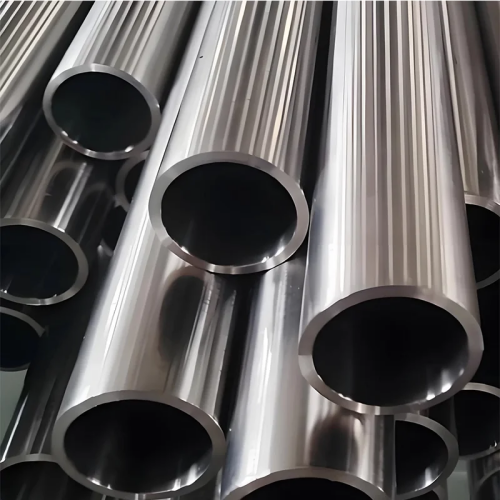
Where Our 45 Degree Aluminum Elbow Delivers Measurable Value
Field data from our customers across the USA, Europe, the Middle East, and Asia shows the same pattern: replacing iron/steel elbows with a 45 degree aluminum elbow reduces weight by 60-70%, cuts material handling time, and improves corrosion performance in non-sour environments.
🏭
Pneumatic Conveying Systems
In plastic pellet, cement, and food powder transport, the 45 degree aluminum elbow's low weight reduces support loading and its smooth internal surface (Ra ≤ 3.2 μm) minimizes material build-up. One US pneumatic conveying equipment manufacturer reported 22% faster line installation with aluminum elbows vs steel.
💧
Hydraulic & Lubrication Circuits
Lightweight aluminum elbows are used in mobile hydraulic equipment where every kilogram impacts fuel efficiency. We machine NPT/BSPT threads on demand; tested at 1.5× the working pressure. For extreme shock loads, specify Type III hard anodizing (50 μm) to resist abrasive wear.
🧪
Chemical Transfer & Water Treatment
For non-sour process lines, anodized aluminum offers excellent corrosion resistance to moderately acidic/basic media at reduced cost vs 316L stainless. Our food-grade (HACCP/GMP-compliant surface) option is already used in a German beverage line where downtime dropped 31% after replacing corroded steel elbows.
🌪️
HVAC & Ventilation Ducting
Large-diameter (6"–12") 45 degree aluminum elbows are common in industrial HVAC systems, where their low mass reduces rooftop structural reinforcements and speeds up assembly with bolted flange connections.
🛡️
Structural Handrails & Architectural Tubing
Architectural specifiers choose a 45 degree aluminum elbow in 6063-T5 with clear anodized finish for a modern, corrosion-proof appearance. Our factory can anodize in custom RAL colors and provide matched finishing for full project consistency.
⚡
Electrical Conduit & Cable Trays
For lightweight, non-magnetic raceway systems, the 45 degree aluminum elbow provides a clean, RF-transparent bend. Used by OEMs in the wind energy sector where non-ferrous materials are mandatory near sensitive control equipment.
🏆 SPOTLIGHT CASE STUDY
Swiss Chemical Plant: 37% TCO Reduction
A specialty chemical manufacturer in Basel replaced 1,240 carbon steel elbows with our anodized 45 degree aluminum elbow across a non-corrosive solvent transfer system. The result? 37% lower total installed cost, 68% weight reduction in the piping train, and no corrosion failures in the first 14 months. They've now standardized our elbows in their global plant design spec.
✔ CERTIFICATIONS & COMPLIANCE
Globally Recognized Quality Assurance
Every batch of 45 degree aluminum elbows we ship is backed by the certifications below, and we'll gladly share scanned copies for your QA files before you sign the PO.

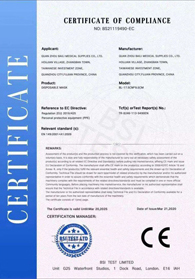

Trusted by Industrial Buyers Across 20+ Countries
We don't just sell elbows — we build long-term supply relationships with OEMs, EPC contractors, and system integrators.





⭐ Verified Reviews from 2025–2026 Buyers
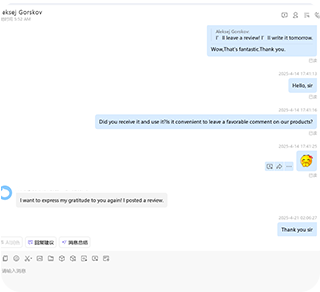
Real feedback from engineering, procurement, and operations leaders who source our 45 degree aluminum elbows direct from the factory.

Michael R.
Purchasing Manager, US Pneumatic Conveying OEM
"We used to buy 45 degree aluminum elbows from a Midwest distributor at $11.50 each. Weihuan's factory-direct price was $4.85, and the quality held up even better in our pressure cycling test. Our material cost dropped by 57% overnight. The EN 10204 3.1 docs were spotless."

Dr. Stefan K.
Technical Director, Machinery Builder, Germany
"I'm very picky about tolerances. We measured the angle of 200 pieces across three batches: all within ±0.4°, with excellent anodizing thickness at 23 μm average. The surface finish is consistent with ISO 7599. We have now specified Weihuan as an approved vendor in our ERP."

Sarah T.
Operations Manager, Potash & Mining, Canada
"The key issue for us was delivery reliability. Our previous supplier delayed twice. Weihuan shipped our 6" Sch 40 45-degree aluminum elbows in 11 days, as promised, with custom foam packing. No damage in transit — that never happened before."

James P.
Supply Chain Manager, Water Treatment Systems, UK
"Their team handled our compliance paperwork without us asking twice. Material certs, PMI, origin — all perfect. We now prefer Weihuan's 45 degree aluminum elbow for our water treatment skids. One container of 4,000 pcs last year, zero non-conformities."

Daniel L.
E-commerce Fittings Seller, Australia
"I resell industrial fittings on Amazon and eBay. The demand for lightweight aluminum elbows is growing fast. Weihuan gave me a mixed container of 20 SKUs at a price that allowed a healthy margin. Their packaging survived a 40-day sea freight to Melbourne with no dents."
Omar H.
C-Level, Petrochemical Services, UAE
"What impressed me was their ability to produce a small OEM batch (350 pcs) of custom-angle aluminum elbows with our logo laser-etched. This is the flexibility you cannot get from a massive multi-national."
❓ Frequently Asked Questions About 45 Degree Aluminum Elbow
Buying factory-direct doesn't have to be complicated. Here are the answers we give every day.
🛒 1. What is a 45 degree aluminum elbow used for?
A 45 degree aluminum elbow is a pipe fitting that changes the direction of a pipeline by 45°, typically used in pneumatic conveying, hydraulic lines, chemical transfer, HVAC ducting, and structural framing. Its lightweight aluminum body (about 60–70% lighter than carbon steel) reduces support loads and installation labor. It can be connected via plain, threaded, or socket-weld ends depending on your system spec.
📐 2. What is the angle tolerance on your 45 degree aluminum elbow?We hold a ±0.5° tolerance on the bending angle, verified with a digital protractor and CMM on every production batch. This is stricter than the ±1° commonly seen in the market, and it ensures smooth fit-up with flanged or welded assemblies.
🏭 3. Can you manufacture custom anodized aluminum elbows?Absolutely. Our on-site anodizing line supports Type II (clear, black, and RAL colors) with 18–25 μm thickness, and Type III hard anodizing up to 50 μm for abrasive applications. We can match your existing finish, laser-etch part numbers, and provide custom lengths or diameters with OEM/ODM engineering support.
📦 4. What is the MOQ for a 45 degree aluminum elbow?For standard sizes (1/2"–4", Sch 40, 6061-T6 bare or clear anodized), our MOQ is 200 pcs per size. For OEM custom dimensions, colors, or special packaging, the MOQ is typically 1,000 pcs, but we evaluate each project individually. We also offer sample orders (10–20 pcs) for pre-qualification.
💰 5. How does factory-direct pricing compare to distributors?Factory-direct normally saves our customers 30–45% compared to multi-tier distributors in the USA/Europe, because you eliminate import broker markups and regional warehouse costs. As a benchmark, a 2" Sch40 6061-T6 45 degree aluminum elbow from our factory often lands in the $4–7 range before freight, versus $10–12+ at a typical US distributor.
📄 6. What certifications and documents are included with each order?We provide EN 10204 3.1 Material Test Certificate (with chemical composition and tensile proof), heat traceability, PMI report, dimensional inspection report, pressure test certificate (when required), and commercial invoice with country of origin. Our factory holds ISO 9001, CE, RoHS, and can add EAC for the Russian market upon request.
🚢 7. What is the typical lead time for US/EU delivery?For stock sizes: 7–15 days to load container. For OEM production: 25–30 days. Ocean freight to the US West Coast is typically 12–18 days; to EU (e.g., Hamburg or Rotterdam), 25–35 days depending on service. We also ship by air for urgent orders (e.g., 2" elbows, 500 kg — can arrive in 5–7 days).
🚀 Get Your Factory Quote for 45 Degree Aluminum Elbows in 24 Hours
Send us your size, schedule, quantity, and target destination. We'll reply with a detailed ex-works / CIF / DDP quotation and a full technical datasheet. Risk-free sample program available.
⏳ Q2 2026 aluminum alloy contracts now open
🔒 Free sample available with prepaid freight
📋 Full MTC + PMI included at no extra cost
📍
Factory Address
Middle section of National Highway 338, Mengcun Hui Autonomous County, Cangzhou City, Hebei Province, China
🔒 Your inquiries and drawings are treated as confidential. We never resell your project data.

About the Author
Li Qiang
Senior Application Engineer & International Trade Lead at Cangzhou Weihuan Pipeline Equipment Co., Ltd. For over 14 years, Li has helped hundreds of industrial clients across 20+ countries select and execute pipe fitting specifications — from 45 degree aluminum elbows to complex flange assemblies. He writes regularly on ASME B31.3 topics and is a contributing member of local industry standards groups.
All technical data, certifications, and performance values are based on representative production samples and may vary with specifications. Product compliance with local regulations (e.g., EU Pressure Equipment Directive, US ASME codes) should be reviewed by the responsible engineer.
More from this supplier
Cangzhou Weihuan Pipeline Equipment Co.,Ltd.


