
Image not available
Plastics & rubber
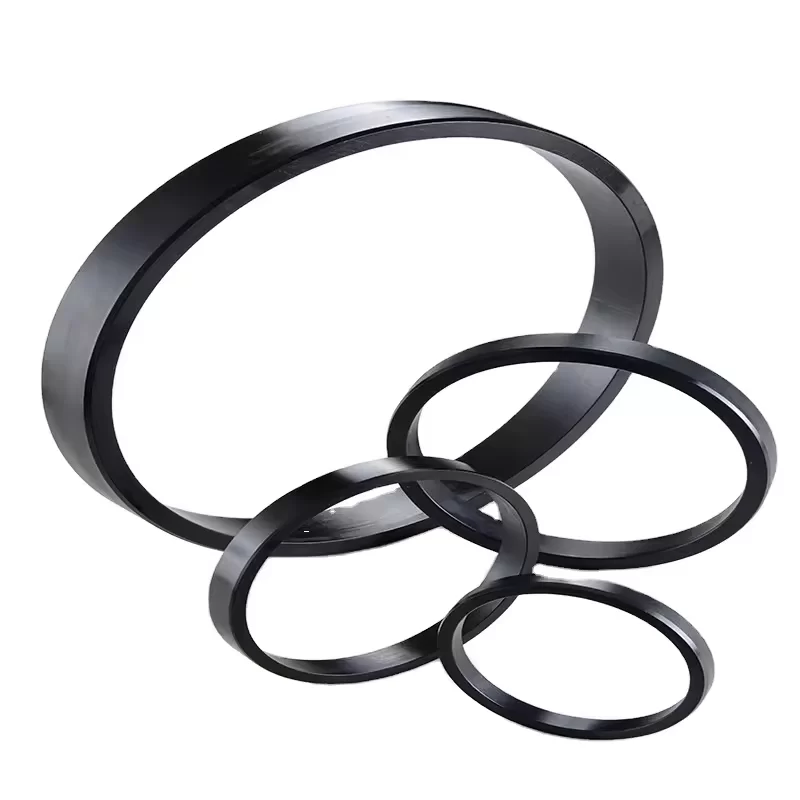
Rubber SealNBR Ring for Hydraulic Cylinders Piston
<p>The NBR Rubber Seal Ring for hydraulic cylinder pistons is a durable and oil-resistant sealing solution designed to ensure efficient pressure control and leak prevention in hydraulic systems. Made from high-quality Nitrile Butadiene Rubber (NBR), it offers excellent resistance to hydraulic oils, wear, and moderate temperatures.</p><p>This seal provides reliable performance between the piston and cylinder wall, ma…
SupplierShenZhen GuangYuFeng Rubber Co., Ltd.www.gyfsilicone.com
Source categories
About this product
Product information from the supplier.
The Rubber Seal NBR Ring for hydraulic cylinder pistons is a high-performance sealing component designed to ensure reliable fluid containment and stable system operation in hydraulic applications. Manufactured from Nitrile Butadiene Rubber (NBR), this seal offers excellent resistance to oil, hydraulic fluids, and moderate chemical exposure, making it one of the most widely used materials in hydraulic sealing systems.
NBR piston seals are specifically engineered to maintain a tight sealing interface between the piston and cylinder wall, preventing internal leakage and ensuring efficient pressure conversion. This helps hydraulic systems achieve consistent force output, improved energy efficiency, and reduced wear on internal components. The elasticity of NBR allows the seal to adapt to minor surface imperfections while maintaining strong sealing performance under dynamic pressure conditions.
One of the key advantages of NBR material is its excellent balance between mechanical strength and flexibility. It performs reliably in a wide temperature range, typically from -30°C to +100°C, depending on formulation. This makes it suitable for a variety of industrial environments, including construction machinery, agricultural equipment, manufacturing systems, and material handling machinery.
In addition to its oil resistance, NBR also provides good abrasion resistance, which is essential in hydraulic systems where continuous piston movement creates friction over time. The durability of the material helps extend service life and reduces maintenance frequency, contributing to lower operational costs and improved equipment uptime.
These piston seals are commonly used in single-acting and double-acting hydraulic cylinders, where maintaining consistent pressure separation between chambers is critical. Their precise dimensional stability ensures easy installation and reliable performance even under high-pressure conditions.
In summary, the Rubber Seal NBR Ring for hydraulic cylinder pistons is a cost-effective and dependable sealing solution that enhances hydraulic system efficiency, prevents leakage, and ensures long-term operational stability across a wide range of industrial applications.
Product Advantage
1.Excellent Oil Resistance
NBR material provides outstanding resistance to hydraulic oil and petroleum-based fluids, ensuring stable sealing performance without swelling or deterioration.
2.Strong Wear Resistance
Designed for continuous piston movement, the seal offers high abrasion resistance, helping to reduce wear and extend service life.
3.Reliable Sealing Performance
The elastic structure ensures tight contact between the piston and cylinder wall, effectively preventing internal leakage and maintaining system pressure stability.
4.Good Temperature Adaptability
NBR seals perform reliably within a wide operating temperature range, making them suitable for most standard hydraulic applications.
5.High Flexibility and Fit
The material adapts well to minor surface imperfections in the cylinder, ensuring consistent sealing even under dynamic working conditions.
6.Cost-Effective Solution
Compared with many advanced elastomers, NBR offers a balanced combination of performance and affordability, reducing overall maintenance and replacement costs.
NBR vs Silicone vs PU Seals: Which Is Better for Hydraulic Cylinders?
Hydraulic sealing systems rely heavily on material selection, as seal performance directly affects equipment efficiency, durability, and safety. Among the most commonly used materials are NBR (Nitrile Butadiene Rubber), FKM (Fluorocarbon Rubber), and PU (Polyurethane). Each has distinct properties that make it suitable for specific working conditions in hydraulic cylinders.
1. NBR (Nitrile Rubber) Seals
NBR is one of the most widely used materials in hydraulic sealing applications due to its excellent balance of cost and performance. It offers strong resistance to hydraulic oils, lubricants, and petroleum-based fluids, making it ideal for general industrial machinery.
Key advantages of NBR seals include:
Good oil and fuel resistance
Moderate temperature range (-40°C to 120°C)
Cost-effective solution for standard hydraulic systems
Reliable sealing performance under normal pressure
However, NBR is less suitable for extreme temperatures or aggressive chemical environments.
2. FKM (Fluorocarbon Rubber) Seals
FKM seals are designed for high-performance and extreme conditions. They provide superior resistance to heat, chemicals, and oxidation, making them ideal for demanding hydraulic systems in aerospace, automotive, and chemical industries.
Key advantages of FKM seals include:
Excellent high-temperature resistance (up to 200°C or more)
Strong chemical and corrosion resistance
Long service life in harsh environments
Stable performance under high pressure and vacuum
The main drawback is cost—FKM seals are significantly more expensive than NBR or PU options.
3. PU (Polyurethane) Seals
PU seals are known for their exceptional mechanical strength and wear resistance, making them ideal for high-pressure hydraulic cylinders. They outperform both NBR and FKM in abrasion resistance.
Key advantages of PU seals include:
Outstanding wear and tear resistance
High pressure tolerance
Excellent extrusion resistance
Long lifespan in dynamic applications
However, PU has limited resistance to high temperatures and certain chemicals compared to FKM.
NBR vs Silicone vs PU Seals: Which Is Better for Hydraulic Cylinders?
When comparing NBR, Silicone, and PU seals, the best choice depends on the application environment.
NBR seals are best for general hydraulic systems where oil resistance and affordability are key factors.
Silicone seals are mainly used in low-pressure or temperature-sensitive environments, such as food-grade or medical equipment, but they lack mechanical strength for heavy hydraulic loads.
PU seals are the top choice for high-pressure hydraulic cylinders due to their excellent wear resistance and durability.
There is no universal “best” material. For standard industrial hydraulics, NBR remains the most cost-effective solution. For extreme environments, FKM is unmatched in chemical and heat resistance. For heavy-duty and high-pressure systems, PU seals deliver the best mechanical performance.
What Is the Difference Between NBR, FKM, and PU Hydraulic Seals?
Hydraulic seals play a critical role in maintaining pressure, preventing fluid leakage, and ensuring the smooth operation of hydraulic cylinders. Among the most commonly used materials in hydraulic sealing systems are NBR (Nitrile Butadiene Rubber), FKM (Fluorocarbon Rubber), and PU (Polyurethane). Although they are all widely used in industrial applications, each material has distinct physical and chemical properties that make it suitable for different working environments.
NBR (Nitrile Butadiene Rubber) Hydraulic Seals
NBR is one of the most popular and cost-effective materials used in hydraulic sealing applications. It is especially known for its excellent resistance to petroleum-based oils, hydraulic fluids, and greases, making it a reliable choice for general-purpose hydraulic systems.
NBR seals typically perform well in a moderate temperature range, usually from -40°C to 120°C, depending on formulation. They offer a good balance between elasticity, durability, and cost efficiency, which makes them widely used in construction machinery, agricultural equipment, and standard industrial hydraulic systems.
However, NBR has limitations in extreme conditions. It is not highly resistant to ozone, strong acids, or high-temperature environments. Over time, exposure to harsh conditions can cause hardening or cracking, reducing sealing efficiency.
FKM (Fluorocarbon Rubber) Hydraulic Seals
FKM seals are designed for high-performance and extreme working environments. They provide outstanding resistance to heat, chemicals, and oxidation, making them ideal for demanding applications in aerospace, automotive engines, chemical processing, and high-end hydraulic systems.
One of the key advantages of FKM is its ability to maintain stable performance at temperatures up to 200°C or higher, depending on formulation. It also offers excellent resistance to aggressive fluids, fuels, and many industrial chemicals.
The main disadvantage of FKM seals is their cost. They are significantly more expensive than NBR and PU seals. However, in environments where failure is not an option, the extended service life and reliability of FKM often justify the investment.
PU (Polyurethane) Hydraulic Seals
PU seals are known for their exceptional mechanical strength, abrasion resistance, and load-bearing capacity. They are widely used in high-pressure hydraulic cylinders where durability and wear resistance are critical.
Compared to NBR and FKM, PU performs exceptionally well under high pressure and dynamic movement conditions. It resists extrusion and deformation, making it ideal for heavy-duty machinery such as excavators, loaders, and industrial presses.
However, PU has limitations in temperature and chemical resistance. It generally performs best in moderate temperature ranges and may degrade when exposed to high heat or certain aggressive chemicals over time.
Key Differences Summary
NBR: Best for general-purpose hydraulic systems, cost-effective, good oil resistance
FKM: Best for extreme heat and chemical environments, high cost, premium performance
PU: Best for high-pressure and high-wear applications, excellent mechanical strength
The choice between NBR, FKM, and PU hydraulic seals depends entirely on the working conditions of the hydraulic system. NBR is ideal for standard industrial use, FKM is preferred for harsh chemical and high-temperature environments, while PU is the best option for high-pressure and heavy-load applications. Selecting the right material ensures longer service life, improved system efficiency, and reduced maintenance costs.
More from this supplier
ShenZhen GuangYuFeng Rubber Co., Ltd.


