
Image not available

Non-metallic minerals
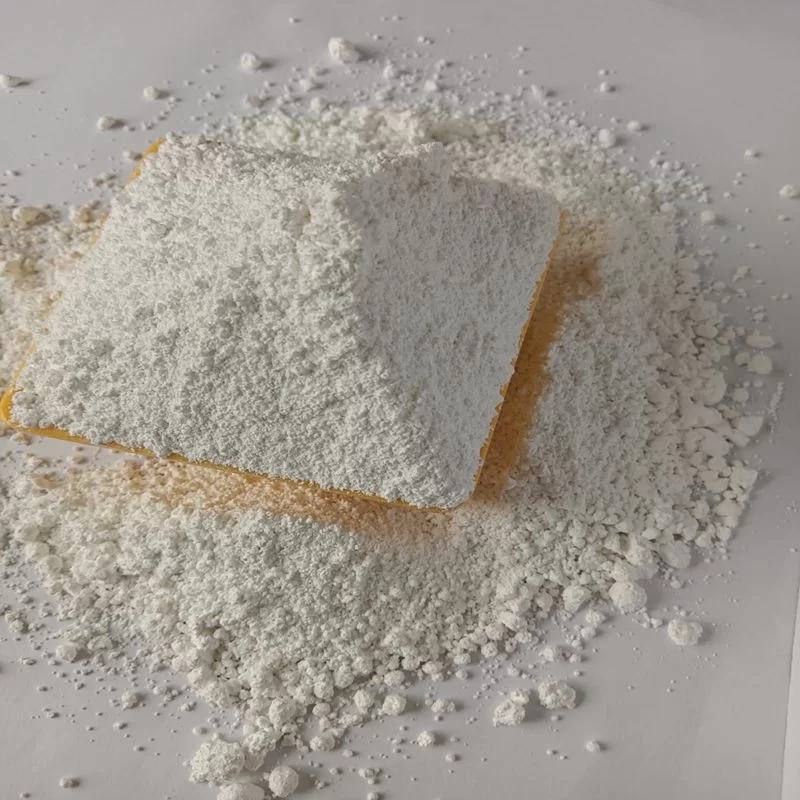
High Whiteness Precipitated Barium Sulfate China Factory and Suppliers
Premium high whiteness and high purity precipitated barium sulfate developed for interior coatings. Leading China factory and suppliers providing cost-effective TiO2 reduction solutions.
SupplierShijiazhuang Fengersheng Mining Co., Ltd.www.fesmining.com
Source categories
About this product
Product information from the supplier.
Our High Whiteness Precipitated Barium Sulfate is a premium functional filler jointly developed by Fengersheng Mining and Kansai Paint Co., Ltd. of Japan. Specifically engineered for high-end coating and ink applications, this product combines exceptional purity with superior dispersibility, allowing manufacturers to significantly reduce the reliance on expensive titanium dioxide without compromising the final visual quality.
By utilizing an ultra-fine particle size and high refractive index, this precipitated barium sulfate enhances light reflectivity and surface smoothness. It is an indispensable additive for industrial surface treatments, automotive finishes, and decorative coatings, ensuring a vivid, professional finish while optimizing overall production costs through efficient material extension.
Detailed Parameters
| Barium Sulfate | ≥ 95.0% (Test Value: 98.11%) | Volatile Substances | ≤ 0.50% (Test Value: 0.112%) |
|---|---|---|---|
| Water-soluble Substances | ≤ 0.50% (Test Value: 0.12%) | Oil Absorption | 10-30g (Test Value: 17.22g) |
| pH Value | 5.5-9.5 (Test Value: 7.1) | Iron (Fe) Content | ≤ 0.0005% (Test Value: 0.0005%) |
| Whiteness | ≥ 95.2% | 45μm Sieve Residue | ≤ 0.036% |
| Particle Size | 3000 Mesh (Customizable) | Standard Compliance | GB/T2899-2008 |
Key Advantages
Exceptional Whiteness
Provides superior brightness and clarity, enhancing light reflection for a cleaner and more vivid surface finish.
Cost Optimization
Effectively reduces the amount of TiO2 required, lowering raw material costs while maintaining high optical performance.
Ultra-Fine Smoothness
Fills microscopic gaps in coating films to eliminate roughness and pinholes, resulting in a professional, compact surface.
High Dispersibility
Easily integrates into acrylic, epoxy, and polyurethane resins without settling or agglomeration.
Optical Stability
Maintains long-term whiteness and resistance to yellowing, ensuring durable visual performance over time.
Chemical Inertness
Fully compatible with a wide range of additives and pigments, ensuring stability in complex formulations.
Product Gallery
Management Platforms
Quality Control
Strict adherence to GB/T2899-2008 standards for every production batch.
Customization
Tailored particle size and purity parameters to meet specific industrial needs.
R&D Partnership
Joint development with Kansai Paint Japan for cutting-edge filler technology.
Supply Chain
Reliable logistics and consistent supply for high-volume industrial demands.
Application Support
Expert guidance on formulation optimization for coatings, inks, and plastics.
Environmental Compliance
Sustainable mining and processing practices for eco-friendly material sourcing.
Investment Return Comparison
| Performance Metric | Standard Filler | Our Precipitated BaSO4 |
|---|---|---|
| TiO2 Consumption | High Requirement | Significantly Reduced |
| Surface Smoothness | Average/Rough | Ultra-Smooth/Compact |
| Optical Brightness | Standard | Enhanced High-Whiteness |
| Production Cost | Baseline | Lowered via Extension |
| Long-term Stability | Prone to Yellowing | Highly Stable/No Yellowing |
Frequently Asked Questions
Q: What are the primary benefits of using precipitated barium sulfate in coatings?
It improves brightness, surface smoothness, and opacity while reducing the need for expensive titanium dioxide, thus lowering total production costs.
Q: How does it affect the surface finish of industrial paints?
Its ultra-fine particle size fills microscopic gaps, reducing surface defects like pinholes and roughness for a high-quality, professional appearance.
Q: Is this product compatible with different resin systems?
Yes, it exhibits excellent dispersibility and compatibility with acrylic, epoxy, polyurethane, and alkyd coating systems.
Q: Can the particle size be customized for specific industrial needs?
Absolutely. While the standard is 3000 mesh, we support customized particle sizes, purity levels, and whiteness parameters to fit your formulation.
Q: How does it compare to natural barium sulfate in terms of purity?
Precipitated barium sulfate generally offers higher purity, more consistent particle size distribution, and superior whiteness compared to natural varieties.
Q: What other industries can utilize this high-whiteness filler?
Beyond coatings, it is widely used in fine plastics, rubber, medical imaging, paper, textiles, and electronic ceramics.
Ready to Optimize Your Coating Performance?
Contact UsMore from this supplier
Shijiazhuang Fengersheng Mining Co., Ltd.


