
Image not available

Electronics & appliances
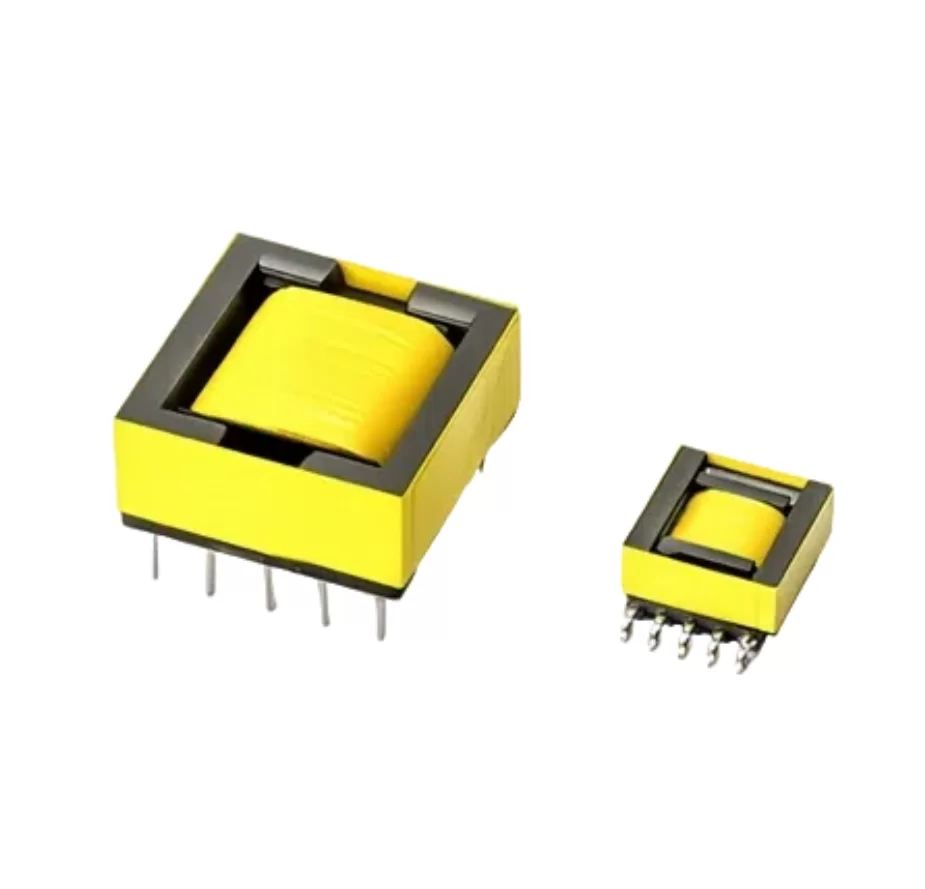
High Frequency EFD Type Transformer China Factory and Professional Suppliers
Looking for reliable EFD transformers? Our China factory provides cost-effective, ultra-low profile high frequency transformers with superior EMI performance. As leading suppliers, we offer OEM/ODM solutions for server and industrial power supplies.
SupplierHuizhou Xinchangda Electronic Co.,Ltd.www.xcdmagnetic.com
Source categories
About this product
Product information from the supplier.
The High Frequency Transformer EFD Type is a precision-engineered magnetic component designed for high-efficiency power conversion. Featuring an ultra-low profile height and a specialized square central column, these transformers are optimized for space-constrained environments without compromising on performance or thermal stability.
Engineered for versatility and reliability, the EFD series is an ideal choice for modern electronic assemblies requiring superior EMI performance. From server power supplies to industrial chargers, our EFD transformers ensure stable energy transmission and reduced electromagnetic interference in demanding high-frequency applications.
Detailed Parameters
| Available Models | EFD15, EFD20, EFD25, EFD30, EFD40 | Physical Profile | Extremely low profile height |
|---|---|---|---|
| Core Architecture | Square central column | Wing Design | Narrow side wings |
| Winding Space | Relatively small winding window | Core Advantage | Ultra-low profile & low cost |
| EMI Performance | Excellent electromagnetic interference suppression | Primary Applications | Server & Communication Equipment |
| Secondary Applications | Industrial Power Supplies & High-Power Chargers | Customization | OEM & ODM Support Available |
Key Advantages
Superior EMI Control
Optimized core geometry ensures excellent EMI performance, reducing noise in sensitive circuits.
Space Efficient
The extremely low profile design allows for higher PCB density and smaller chassis footprints.
Cost-Effective
Engineered for mass production to provide high-performance power conversion at a competitive cost.
Industrial Grade
Reliable performance across server, communication, and industrial power supply environments.
Precision Geometry
Square central column and narrow wings optimize flux distribution and efficiency.
Flexible Customization
Full ODM/OEM support for specific current, frequency, and size requirements.
Product Gallery
Management Platforms
OEM Production
High-volume manufacturing based on precise customer technical drawings.
ODM Design
Tailored solutions based on frequency, current, and dimensional needs.
Quality Control
Strict testing protocols to ensure every EFD transformer meets industry standards.
Supply Chain
Streamlined procurement and delivery for large-scale industrial projects.
Parameter Tuning
Professional adjustment of inductance and turns for optimal efficiency.
Application Support
Expert guidance on integrating EFD types into communication power supplies.
Investment Return Comparison
| Feature | Standard Transformer | EFD Type Transformer |
|---|---|---|
| Profile Height | Standard/High | Ultra-Low Profile |
| EMI Performance | Moderate | Excellent |
| Manufacturing Cost | Average | Low Cost |
| Space Utilization | Standard | Maximum Efficiency |
| Application Range | General Purpose | High-Power/Server Grade |
Frequently Asked Questions
Q: What makes the EFD type transformer different from other high-frequency transformers?
The EFD type is characterized by its extremely low profile height and square central column, making it ideal for slim power supplies while maintaining excellent EMI performance.
Q: Which applications are most suitable for EFD transformers?
They are widely used in Server and Communication equipment power supplies, industrial power units, and high-power chargers where space is limited.
Q: Do you provide customized solutions for specific electrical requirements?
Yes, we offer full ODM design services to customize transformers based on your specific requirements for current, frequency, and size.
Q: Can EFD transformers support bulk OEM production?
Absolutely. We support large-scale OEM manufacturing according to provided customer drawings with strict quality control.
Q: How does the EFD series handle electromagnetic interference (EMI)?
Thanks to its optimized core design and magnetic properties, the EFD type provides superior EMI suppression compared to traditional core shapes.
Q: What are the available sizes for the EFD series?
Our standard product line includes EFD15, EFD20, EFD25, EFD30, and EFD40 to accommodate various power levels and size constraints.
Need a Custom High Frequency Transformer Solution?
Contact UsMore from this supplier
Huizhou Xinchangda Electronic Co.,Ltd.


