
Image not available
Industrial manufacturing
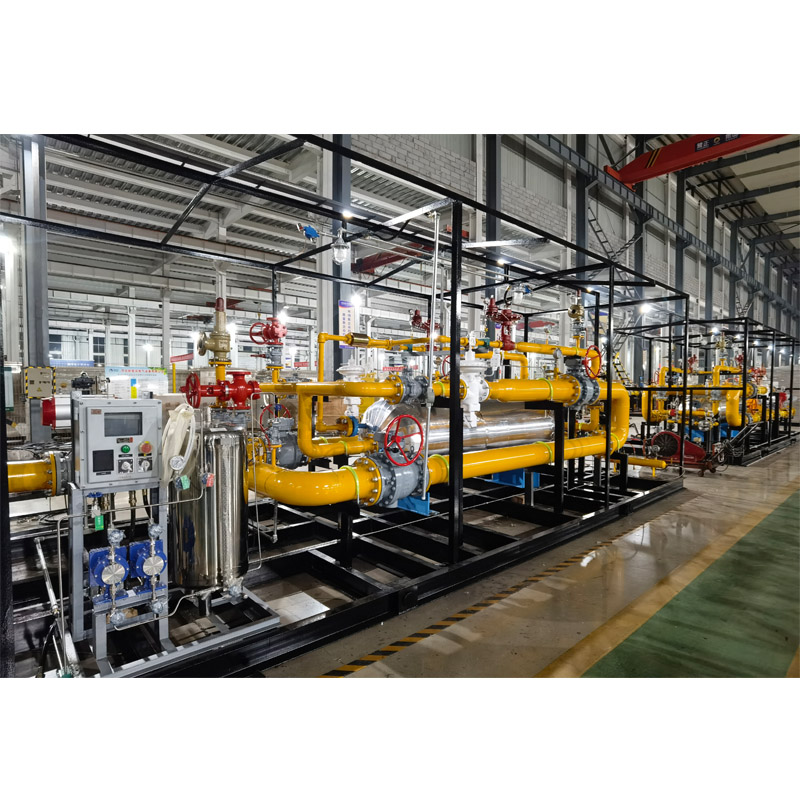
CNG Decompression Equipment
With the change of China's energy structure and the constant increase of environmental protection, the natural gas develops rapidly in development and utilization. After purifying and compressing the natural gas from the wellhead or pipeline, the CNG is stored and transported at high pressure to the place of use, and decompressed and directly delivered to the pipeline network through multi-stage heat exchange to sup…
SupplierHEBEI OUYINUO GAS EQUIPMENT CO.,LTD.www.gasouyinuo.com
Source categories
About this product
Product information from the supplier.
With the change of China's energy structure and the constant increase of environmental protection, the natural gas develops rapidly in development and utilization. After purifying and compressing the natural gas from the wellhead or pipeline, the CNG is stored and transported at high pressure to the place of use, and decompressed and directly delivered to the pipeline network through multi-stage heat exchange to supply various users.
The range of 300km between the CNG station and the place of use is economic, no more than 500km generally, with a supply scale of 2,000-4,000 households. The air supply of 200-5,000Nm3/h is appropriate. Too large or too small air supply will increase the unit gas costs.
The long-distance pipeline of this system has small investment scale, short construction period and quick payback. It can be served as the peak load and emergency gas sources of the long-distance pipeline in future.
Working principle of CNG station: Preheat the high pressure natural gas in the pry tank, depressurize gradually, and perform working procedures such as safety control, metering and deodorization to make the gas reach the pressure conforming to the specification requirements, then deliver to the pipeline.
The CNG station can be divided into two-staged pressure regulation and three-staged pressure regulation according to the pressure regulation mechanism.
According to the layout in the equipment station and the equipment function, the CNG station includes: Unloading system (high pressure hose, quick coupler and high-pressure valve), pressure regulating heat exchange system (high pressure emergency cutoff valve, heat exchanger, pressure regulator and relief valve), flow metering system (flowmeter), control system (central console) and heating system (gas boiler, hot water pump, etc.).
The natural gas in the pry car enters the pressure regulating heat exchange system via the unloading system for 2 heat exchanges, then enters the flow metering and odorization systems through 2 or 3 pressure regulations, then enters the pipeline network. The heating system provides the heat required for the gas pressure reducing process, and the control system monitors the whole system.
- A.Secondary pressure regulating technology: First, connect with the skid-mounted steel tanker by using the high-pressure hose and quick coupler. The CNG enters the primary heat exchanger through a ball valve and high-pressure cutoff valve to heat the gas, then is decompressed to 1.0-4.0MPa through the primary pressure regulator, and regulated to 0.1-0.4MPa through the heating of the secondary heat exchanger and the pressure regulation of the secondary pressure regulator, then enters the flowmeter for flow metering, finally odorizes the gas, and is delivered to the medium pressure pipeline network.
- All the gas pressures, temperatures, flow rates and water temperatures at different levels in the station, control of the key valves and the switch between 2 paths are interlocking-controlled by the console.
- B.Third pressure regulating technology: First, connect with the skid-mounted steel tanker by using the high-pressure hose and quick coupler. The CNG enters the primary heat exchanger through a ball valve and high pressure cutoff valve to heat the gas, then is decompressed to 3.0-7.5MPa through the primary pressure regulator, regulated to 1.6-2.5MPa through the heating of the secondary heat exchanger and the pressure regulation of the secondary pressure regulator, and regulated to 0.1-0.4MPa through the third pressure regulator, then enters the flowmeter for flow metering, finally odorizes the gas, and is delivered to the medium pressure pipeline network.
- All the gas pressures, swelling capacities, flow rates and water temperatures at different levels in the station, control of the key valves and the switch between 2 paths are interlocking-controlled by the console.
- CNG Decompression Equipment
Model
CNG-300
CNG-500
CNG-1000
CNG-2000
CNG-2000
CNG-3000
CNG-4000
CNG-5000
Hourly Maximum Flow Rate (Nm³/h)
300
500
1000
2000
2000
3000
4000
5000
Structure Form
One for use and one for backup
Pressure Regulation Level
Secondary pressure regulation
Third pressure regulation
Inlet Temperature
(°C)
65-85
65-85
65-85
65-85
65-85
65-85
65-85
65-85
Primary Heat Exchange Return Water Temperature
(°C)
60
60
60
60
60
60
60
60
Secondary Heat Exchange Return Water Temperature
(°C)
60
60
60
60
60
60
60
60
Outlet Gas Temperature
(°C)
10-20
10-20
10-20
10-20
10-20
10-20
10-20
10-20
(Mpa)
Primary Post-regulation Gas Pressure (Mpa)
1.0-6.0
1.0-6.0
2.0~ 6.0
2.0-6.0
3.0~ 7.5
3.0-7.5
3.0~ 7.5
3.0-7.5
Secondary Post-regulation Gas Pressure
(Mpa)
0.1 ~0.4
0.1-0.4
0.1-0.4
0.1-0.4
1.6-2.5
1.6-2.5
1.6-2.5
1.6-2.5
Third Post-regulation Gas Pressure
(Mpa)
-
-
-
-
0.1-0.4
0.1-0.4
0.1-0.4
0.1-0.4
Outlet Gas Pressure (Mpa)
0.1-0.4
0.1-0.4
0.1-0.4
0.1-0.4
0.1-0.4
0.1-0.4
0.1-0.4
0.1-0.4
Primary Release Pressure
(Mpa)
1.3 ~ 7.8
1.3 ~ 7.8
2.6 ~ 7.8
2.6 ~ 7.8
3.9-9.75
3.9- 9.75
3.9-9.75
3.9- 9.75
Secondary Release Pressure
(Mpa)
0.13-0.52
0.13-0.52
0.13-0.52
0.13-0.52
2.08-3.25
2.08-3.25
2.08-3.25
2.08-3.25
Third Release Pressure
(Mpa)
-
-
-
-
0.13 - 0.52
0.13 - 0.52
0.13 - 0.52
0.13 - 0.52
Inlet Diameter
DN25
DN25
DN25
DN40
DN40
DN50
DN50
DN50
Outlet Diameter
DN50
DN80
DN100
DN100
DN100
DN150
DN150
DN150
Dimensions (m)
6.5x2x2.3
6.5x2x2.3
6.5x2x2.3
6.5x2x2.3
6.5x2x2.3
6.5x2x2.3
6.5x2x2.3
6.5x2x2.3
Weight (t)
2.6
2.7
2.8
3
3.5
4
4.3
4.6
Optional Boiler Power
(Large Calorie)
2.0
2.5
5
10
10
15
20
25
More from this supplier
HEBEI OUYINUO GAS EQUIPMENT CO.,LTD.