Image not available
Industrial manufacturing
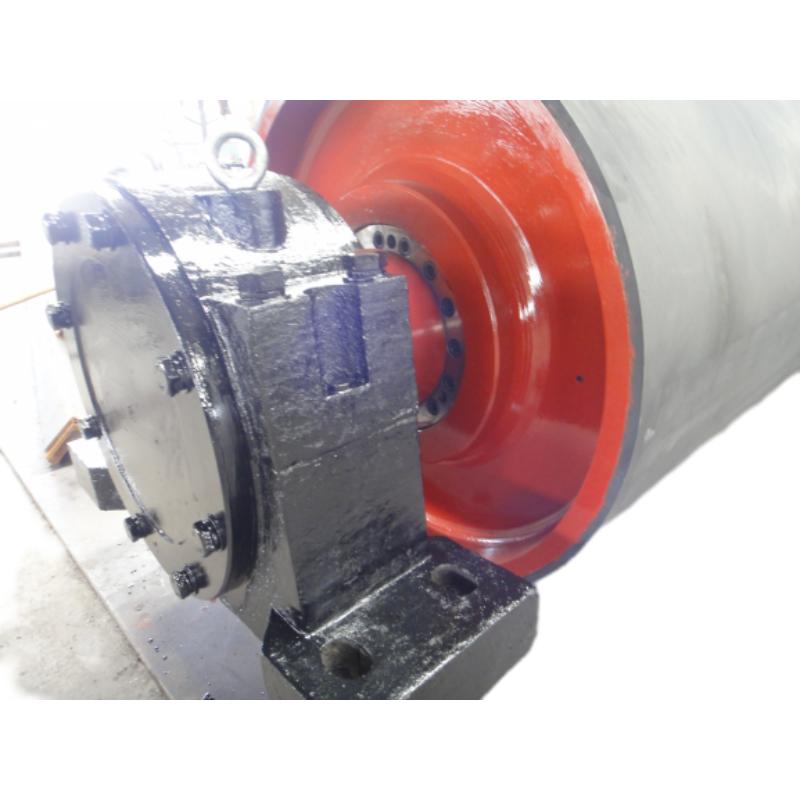
Premium Rubber Lagging Pulley China Factory and Trusted Suppliers
Looking for high-performance rubber lagging pulleys from a leading China factory? Our professional suppliers provide hot vulcanization and cold bonding solutions to reduce metal wear and extend conveyor belt service life with superior traction.
SupplierYanshan Aohua Machinery Equipment Manufacture Limited Companywww.idleraohua.com
Source categories
About this product
Product information from the supplier.
Our premium Rubber Lagging Pulleys are engineered to provide maximum traction and superior wear resistance for heavy-duty conveyor systems. By applying a high-performance rubber coating to the drum surface, these pulleys effectively eliminate belt slippage and protect the core metal from corrosive environments, ensuring a stable and efficient material transport process.
To meet diverse industrial demands, we offer a comprehensive range of rubber materials including NBR, CR, HYPLON, PU, SBR, and SR. Whether your operation requires extreme heat resistance, oil repellency, or high abrasion resistance, our lagging solutions are fully customizable to match your specific product design and environmental requirements.
Detailed Parameters
| Tensile Strength (Surface) | ≥18 MPa (Actual: 20 MPa) | Elongation at Break | ≥300% (Actual: 317%) |
|---|---|---|---|
| Hardness (Driving Pulley) | ≥70 Shore A | Abrasion Loss | ≤90 mm³ (Actual: 88 mm³) |
| Permanent Set (Pull-apart) | ≤25% (Actual: 24%) | Heat Resistance | 80°C (Actual: 85°C) |
| Adhesion Strength (Metal) | ≥4.0 MPa (Actual: 4.9 MPa) | Anti-breakdown Strength | ≥69 MPa (Actual: 80 MPa) |
| Post-Heat Adhesion | ≥3.2 MPa (Actual: 5 MPa) | Aging Coefficient | -25~+25% (Actual: 20%) |
Key Advantages
Superior Bonding
High adhesion strength between rubber and metal ensures the lagging remains secure even under extreme tension.
Extended Service Life
Low abrasion loss and high tensile strength significantly reduce maintenance frequency and downtime.
Material Versatility
Custom options including NBR, PU, and HYPLON to suit oil, chemical, or high-temperature environments.
Optimal Friction
Precision-engineered hardness levels maximize belt grip and prevent costly slippage during operation.
Thermal Stability
Excellent aging coefficients and heat resistance maintain performance in fluctuating climates.
Customized Design
Tailored specifications for belt width, diameter, and length to fit your existing machinery perfectly.
Product Gallery
Management Platforms
Material Selection
Expert guidance on choosing NBR, CR, or PU based on your operational environment.
Precision Engineering
Advanced manufacturing ensuring perfect concentricity and balanced weight distribution.
Quality Testing
Strict adherence to MPa tensile and abrasion loss standards for every batch produced.
Customization Flow
Seamless transition from technical drawing to final product according to your L1/L2 parameters.
Inventory Control
Optimized supply chain for rapid delivery of common rubber lagging sizes and types.
Installation Support
Technical documentation and support to ensure optimal fitment on your driving pulleys.
Investment Return Comparison
| Feature | Standard Rubber Lagging | Premium Lagging Solution |
|---|---|---|
| Service Life | 12-18 Months | 36-60 Months |
| Slippage Rate | Moderate | Ultra-Low |
| Maintenance Cost | High (Frequent replacement) | Low (Long-term stability) |
| Energy Efficiency | Standard | Increased (Better grip) |
| Durability | Basic Wear Resistance | Extreme Abrasion Resistance |
Frequently Asked Questions
Q: Which rubber material is best for oil-resistant conveyor environments?
For environments with high oil exposure, NBR (Nitrile Butadiene Rubber) is highly recommended due to its excellent oil and fuel resistance properties.
Q: How does rubber lagging improve conveyor belt performance?
Rubber lagging increases the coefficient of friction between the pulley and the belt, preventing slippage and reducing wear on the belt's carrying side.
Q: What is the importance of adhesion strength in lagging pulleys?
High adhesion strength prevents the rubber from peeling or delaminating from the metal drum under heavy loads and thermal expansion.
Q: Can you customize the hardness of the rubber lagging?
Yes, we customize hardness based on the pulley type; for example, Driving Pulleys typically require a hardness of ≥70 Shore A for maximum grip.
Q: What factors affect the wear rate of a Rubber Lagging Pulley?
Key factors include the choice of rubber compound, the abrasiveness of the conveyed material, operating temperature, and the belt tension settings.
Q: Do you provide technical drawings for customized pulleys?
Absolutely. We provide detailed diagrammatic drawings including parameters like belt width, diameter (Φ), and length (L) for client approval before production.
Request a Custom Quote for Your Conveyor System Today!
Contact UsMore from this supplier
Yanshan Aohua Machinery Equipment Manufacture Limited Company